

Key Takeaways
Our Verdict
Most cosmetic and routine maintenance tasks fall well within the reach of a prepared homeowner. However, any work touching electrical systems, gas lines, load-bearing structures, or the main plumbing stack carries significant safety and legal risk that warrants a licensed contractor. The distinction often comes down to permit requirements and consequences of failure — both of which escalate quickly in high-stakes systems.
| Best for | Recommended |
|---|---|
| Homeowners comfortable with basic tools and surface-level repairs | DIY approach |
| Work involving electrical panels, gas lines, or structural elements | Licensed professional |
| Repairs where permits or inspections are legally required | Licensed professional |
| Renters or first-time owners unsure of their home's systems | Licensed professional |
The Core Question: What Makes a Repair DIY-Safe?
Before picking up a tool, homeowners should ask three questions: What happens if it goes wrong? Does this work require a permit? And do I have the skills and equipment to do it safely? Cosmetic failures — a patched wall that looks uneven, a door that doesn't swing perfectly — are annoying but fixable. Failures in electrical, gas, or structural systems can cause fires, collapse, carbon monoxide exposure, or flooding that damages neighboring units.
Permit requirements vary by municipality, but most jurisdictions in the US require permits for electrical panel work, HVAC installation, structural modifications, and additions. Performing that work without permits can void your homeowner's insurance policy and create serious disclosure headaches when you sell. A home inspection will often surface unpermitted work, which buyers' lenders may refuse to finance.
Start With a Skill-Honest Assessment
Before starting any repair, honestly evaluate your experience level, not just your confidence. Watching a tutorial video is not the same as having done the task before. For first-time repairs, consider shadowing a professional or hiring someone who will walk you through the process — some contractors offer this as a paid consultation.
Repairs Most Homeowners Can Safely Handle
These tasks generally don't require permits, don't touch critical systems, and carry manageable consequences if something goes slightly wrong:
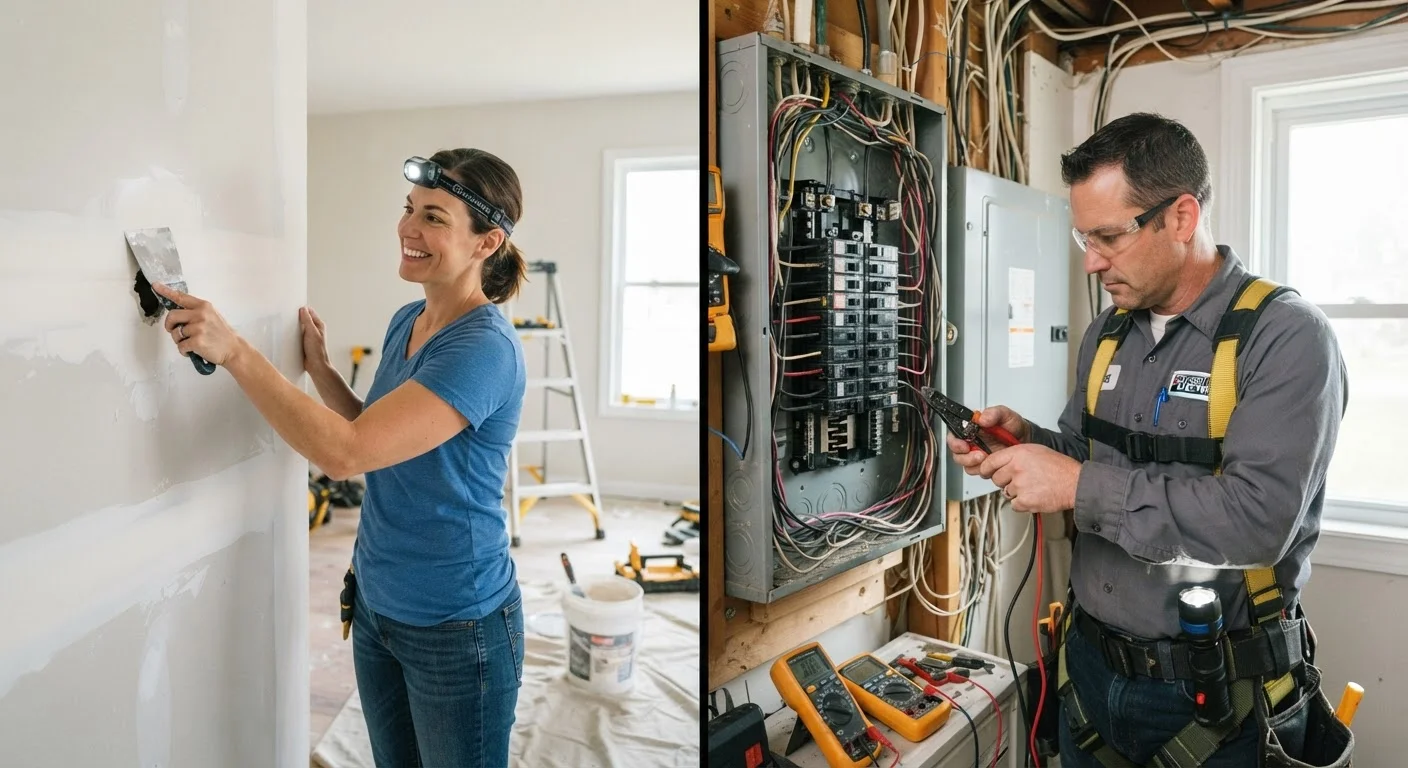
- Patching drywall — Small to medium holes can be filled with joint compound and a mesh patch. Larger sections require more skill but no permit.
- Painting interior and exterior surfaces — Prep work (cleaning, sanding, priming) is the bulk of the job; no licensing required.
- Caulking and weatherstripping — Replacing deteriorated caulk around tubs, windows, and doors prevents water intrusion and improves energy efficiency.
- Replacing light fixtures and outlets — Swapping a fixture on an existing, correctly wired circuit is manageable if the breaker is off and you verify the wiring is sound. Anything beyond a simple swap — adding circuits, upgrading a panel — crosses into licensed territory.
- Unclogging drains — A plunger or drain snake handles most blockages. Avoid chemical drain cleaners repeatedly; they can degrade older pipes.
- Replacing faucets and toilets — Shutting off the supply valve and swapping fixtures is within reach for most capable DIYers.
- Grouting and tile repair — Re-grouting a tub surround or replacing a cracked tile requires patience and the right materials, not a license.
For a broader look at maintenance tasks that prevent bigger problems, see our guide on routine home maintenance most owners overlook.
Jobs That Require a Licensed Professional
These repairs involve systems where errors can be catastrophic, where code compliance is legally mandated, or where the work must be inspected before it is covered up:
| Repair Type | DIY-Safe | Licensed Pro Required | Permit Typically Needed | |
|---|---|---|---|---|
| Drywall patching | Yes | No | No | |
| Replacing a faucet or toilet | Yes | No | No | |
| Adding a new electrical circuit | No | Yes | Yes | |
| Gas line repair or extension | No | Yes | Yes | |
| Removing a load-bearing wall | No | Yes | Yes | |
| Full roof replacement | No | Yes | Yes | |
| HVAC system installation | No | Yes | Yes | |
| Painting and caulking | Yes | No | No |
- Electrical panel upgrades or new circuit installation — Miswired panels are a leading cause of residential fires. Most states require a licensed electrician and a permit inspection before the wall is closed.
- Gas line work — Whether adding a gas line, relocating an appliance connection, or repairing a leak, gas work must be performed by a licensed plumber or gas fitter. A leak missed during an amateur repair can be fatal.
- Structural modifications — Removing or altering load-bearing walls requires engineering calculations and permits. What looks like a non-structural partition may be holding up a floor above it.
- Roof replacement — Beyond patching a few shingles, full roof replacement involves flashing, underlayment, and ventilation that must meet local code. Improper installation can void manufacturer warranties.
- HVAC system installation — Replacing a furnace or central air unit requires refrigerant handling certification (EPA Section 608) in addition to local permits.
- Main plumbing stack or sewer line work — Work on the main drain line typically requires a permit and licensed plumber, especially where it connects to municipal sewer or septic systems.
If your home is already showing warning signs — flickering lights, water stains on ceilings, or foundation cracks — don't wait. Our article on signs your home needs immediate attention covers which symptoms warrant urgent professional evaluation.
Unpermitted Work Can Backfire Badly
If you sell your home, a buyer's inspector may flag unpermitted additions or alterations. Lenders can refuse to finance a purchase until violations are remediated — sometimes requiring demolition of completed work. Homeowner's insurance policies may also deny claims for damage traced to unpermitted modifications. The permit fee is almost always cheaper than the alternative.
The Gray Zone: When DIY Becomes a Liability
Some repairs sit in the middle. Replacing a water heater, for example, involves plumbing connections, gas or electrical hookups, and pressure-relief valve installation — and most jurisdictions require a permit. Similarly, adding a bathroom exhaust fan that vents to the exterior requires cutting through a wall or roof and may involve electrical work. The combination of trades raises the risk profile considerably.
The safest rule for gray-zone work: call your local building department before you start. Many offer free guidance on whether a permit is needed for a specific task. If a permit is required and you proceed without one, you may be ordered to tear out completed work for inspection — at your own expense.
Renters face a different version of this problem. Most leases prohibit structural alterations without landlord approval, and even seemingly minor changes can affect your security deposit. Our resource on common renter oversights includes guidance on understanding your lease's maintenance and alteration clauses before touching anything.
This article is for general informational purposes only and does not constitute legal, financial, or professional contracting advice. Permit requirements, licensing rules, and safety codes vary by state and municipality. Always verify local requirements with your building department and consult a licensed contractor before undertaking regulated work.