

Key Takeaways
Option A
Gulf Coast
The calm, warm, and family-friendly shore.
Best for: Travelers seeking gentle surf, warm water temperatures, and quieter beach towns with a laid-back pace.
Option B
Atlantic Coast
The livelier, more connected, surf-ready shoreline.
Best for: Visitors who want ocean energy, proximity to major cities, and a broader range of activities beyond the beach.
If you're traveling with young children or prefer calm water
Gulf Coast
The Gulf's gentle waves and warm, shallow waters make it safer and more comfortable for families with small kids.
If you want surf, water sports, or ocean energy
Atlantic Coast
The Atlantic's stronger swells and consistent wind conditions are far better suited to surfing and active water recreation.
If you're combining a beach trip with city sightseeing
Atlantic Coast
Miami, Fort Lauderdale, and Orlando's attractions are all within easy reach of Atlantic Coast beach towns.
If you prioritize scenic sunsets and a slower pace
Gulf Coast
West-facing Gulf beaches offer world-class sunsets, and towns like Sanibel and Anna Maria Island are known for their unhurried character.
If you're planning a spring or fall visit to avoid peak crowds
Gulf Coast
The Gulf Coast's shoulder seasons offer warm water, fewer tourists, and more affordable accommodations than peak winter months.
Water Conditions and Beach Character
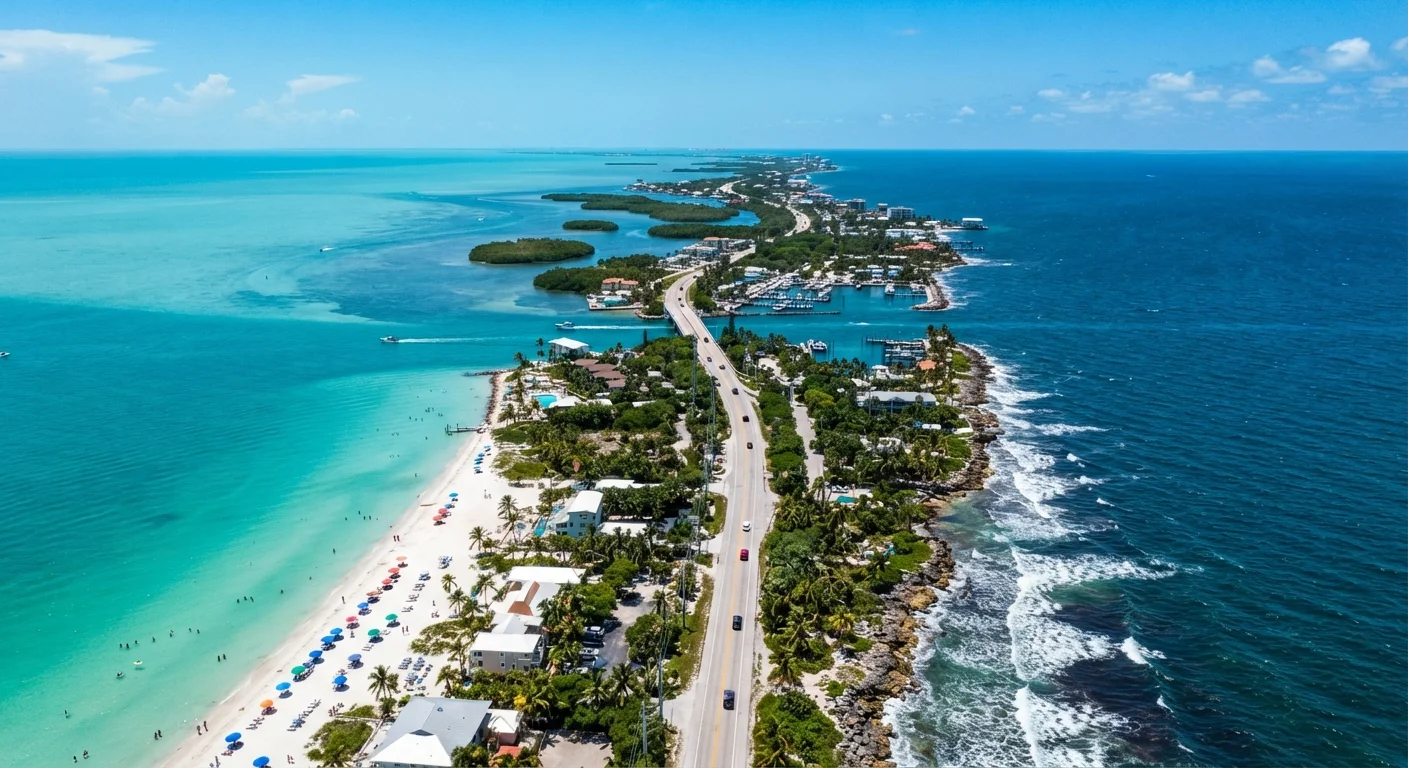
The most immediate difference between Florida's two coasts is felt the moment you step into the water. The Gulf of Mexico is a semi-enclosed body of water, which means its temperatures run warmer — typically several degrees above the Atlantic — and its wave action is significantly calmer. For most of the year, Gulf waters are glassy or gently lapping, making them ideal for wading, paddleboarding, and young swimmers.
The Atlantic, open to the full fetch of the ocean, generates more consistent wave activity. Water temperatures are cooler, particularly from fall through early spring, and the surf can be unpredictable. For anyone who has been surfing on Florida's Treasure Coast or Space Coast, this is exactly the draw — the Atlantic delivers conditions the Gulf simply cannot match.
Sand composition differs as well. Gulf Coast beaches, especially in the Panhandle — Destin, Panama City Beach, Pensacola — are famed for their powdery white quartz sand that stays cool underfoot. Atlantic beaches tend toward coarser, darker sand, which absorbs more heat and has a different visual character. Neither is objectively better; they suit different expectations.
| Criterion | Gulf Coast | Atlantic Coast |
|---|---|---|
| Water temperature | Warmer year-round | Cooler, especially fall–spring |
| Wave conditions | Calm, gentle | Stronger, more variable |
| Sand quality | Fine, white quartz | Coarser, darker |
| Surfing suitability | Poor — minimal swell | Good — consistent surf spots |
| Urban access | More isolated towns | Near Miami, Jacksonville, Orlando |
| Overall pace | Relaxed, resort-oriented | Varied, from lively to quiet |
| Best travel window | Nov–April (dry season) | Year-round; strong winter demand |
| Family-friendliness | High — safe wading conditions | Moderate — varies by location |
Town Character and Regional Atmosphere
Beyond the water, the two coasts have developed distinct regional personalities shaped by geography, demographics, and decades of tourism patterns.
The Gulf Coast, stretching from the Panhandle down through Naples and Marco Island, has historically attracted visitors seeking relaxation over stimulation. Towns like Sanibel Island are deliberately quiet — no traffic lights, no high-rise hotels on the beach. Naples leans upscale and unhurried. Even the more popular stretches like Clearwater and Fort Myers Beach maintain a pace that prioritizes leisure over spectacle.
The Atlantic Coast encompasses a much wider range of environments. Miami Beach is one of the world's most recognized urban resort destinations, dense with nightlife, dining, and cultural energy. Moving north, Fort Lauderdale, Palm Beach, and Vero Beach each have distinct characters — from luxury to low-key. Daytona Beach and Cocoa Beach carry the surf town tradition, and Jacksonville's beaches serve a large metropolitan population year-round.
If you're weighing a beach escape against a broader US islands trip, it's worth reading how Florida compares in context — our piece on Hawaii vs. the US Virgin Islands explores how domestic beach destinations differ from one another in meaningful ways.
~1,350 miles
Total Florida tidal shoreline
According to NOAA, Florida has approximately 1,350 miles of tidal shoreline, the longest of any contiguous US state.
~85°F
Average summer Gulf water temp
Gulf of Mexico surface temperatures along Florida's west coast commonly reach 84–86°F in summer, warmer than most Atlantic readings.
Top 3
Florida's rank for US domestic tourism
Florida consistently ranks among the top three most-visited US states, according to the US Travel Association's annual reports.
Seasonal Considerations and Planning Tips
Both coasts share Florida's broad seasonal rhythms — a dry season roughly from November through April and a wet, humid summer that coincides with hurricane season (officially June through November). However, the two coasts are not equally affected by all storms, and storm tracks vary considerably from year to year. Travelers should always monitor NOAA advisories and purchase appropriate travel protection before any Florida trip during or near hurricane season.
The Gulf Coast is particularly popular from December through March, when snowbirds from the Northeast and Midwest arrive to escape cold winters. This drives up accommodation prices significantly. The Atlantic side — particularly South Florida — also peaks in winter but sustains strong demand year-round due to its urban infrastructure and international visitor base.
Verify Entry and Safety Information Before You Go
Local beach conditions, water quality ratings, rip current advisories, and road access can change rapidly — especially following storms. Always check with local beach authorities, the National Weather Service, and Florida's official tourism resources before finalizing travel plans. Do not rely solely on any single article or third-party source for safety-critical details.
Spring break brings large crowds to both coasts, concentrated in late March and April. If your goal is a quieter experience, early December or late September often offer favorable weather with fewer visitors and lower rates — though always verify current conditions before committing to travel during shoulder seasons.
For those considering a water-based itinerary beyond Florida, our comparison of Caribbean vs. Mediterranean cruises can help frame a broader trip decision if you're thinking about combining a Florida stay with a sailing departure from Miami or Port Canaveral.