

Key Takeaways
Option A
Caribbean Cruises
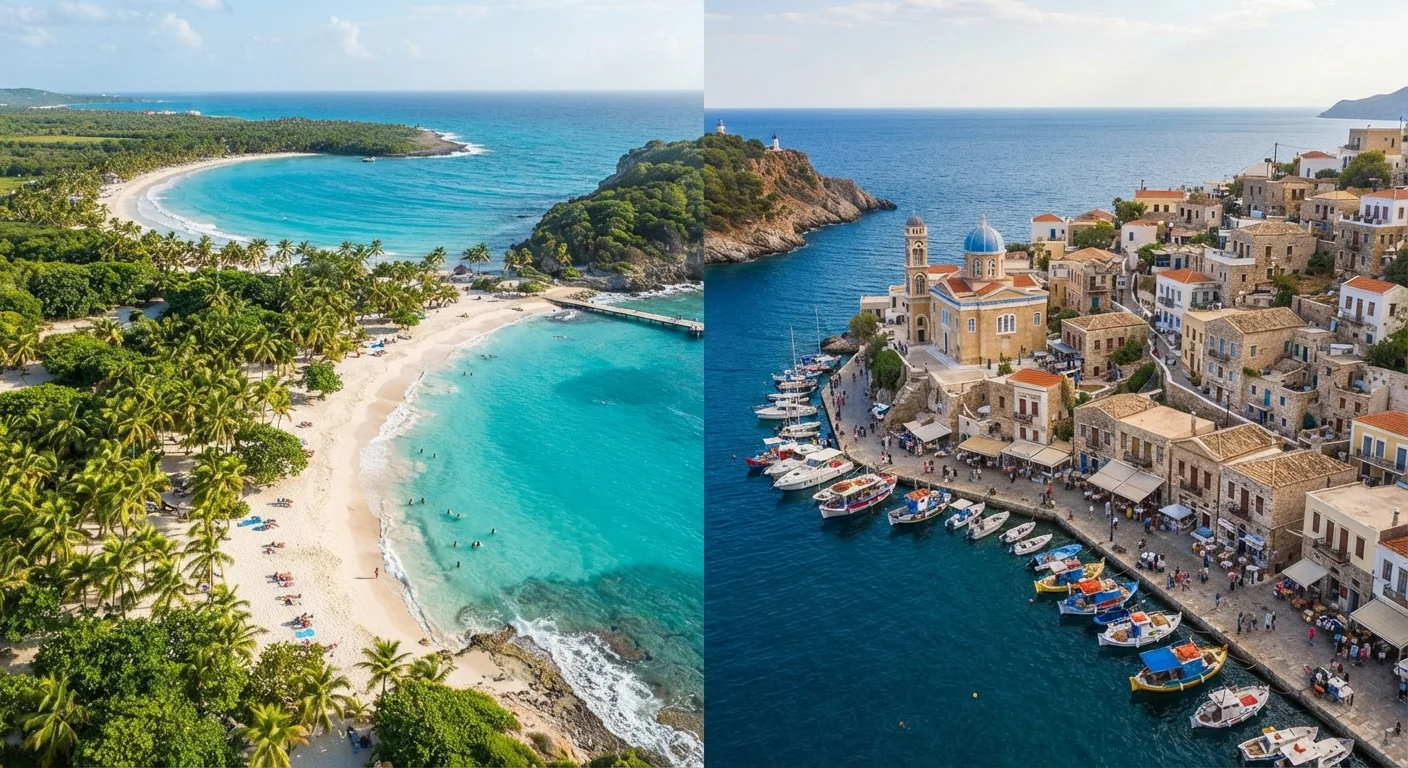
The classic warm-weather, beach-focused escape.
Best for: Travelers seeking relaxed beach days, water activities, and warm weather year-round with easy departure options from US ports.
Option B
Mediterranean Cruises
The culture-rich, port-intensive European adventure.
Best for: Travelers who want to explore ancient history, diverse cuisines, and iconic cities across multiple countries in a single trip.
If you want a relaxed first cruise with minimal travel complexity
Caribbean Cruises
Flights from most US cities are short and affordable, and many sailings depart from Florida, Texas, or New York. The learning curve is lower, and the warm weather is nearly guaranteed.
If history, culture, and culinary variety are your top priorities
Mediterranean Cruises
A single Mediterranean itinerary can take you through Rome, Athens, Barcelona, and Istanbul — a density of world-class destinations unmatched by any other cruising region.
If you're traveling with children or prioritizing beach and water activities
Caribbean Cruises
Crystal-clear shallow water, snorkeling, and family-friendly port infrastructure make the Caribbean a consistently strong fit for families.
If you have more than 10 days and want to maximize destination variety
Mediterranean Cruises
Longer Med itineraries routinely call at six to ten distinct countries, offering a level of geographic and cultural diversity that makes extended trips feel especially worthwhile.
If budget is a primary constraint and you want the most straightforward value
Caribbean Cruises
Lower airfare, more competitive cabin pricing, and no need to plan a separate European arrival make Caribbean cruising the more accessible choice for cost-conscious travelers.
How the Two Regions Compare at a Glance
Choosing between a Caribbean and a Mediterranean cruise often comes down to a few core questions: How much time do you have? What matters most — beaches or history? How much do you want to spend getting to the ship? Understanding how these two regions differ across key dimensions makes that decision far clearer.
| Criterion | Caribbean Cruises | Mediterranean Cruises |
|---|---|---|
| Typical sailing season | Year-round (peak: Dec–Apr) | May–October |
| US departure logistics | Many US homeports available | Transatlantic flight required |
| Primary port experience | Beaches, water sports, nature | History, culture, city exploration |
| Countries visited | Island nations, often similar character | Multiple distinct European countries |
| Typical itinerary length | 5–10 nights | 7–14 nights |
| Weather predictability | High (outside hurricane season) | Moderate (season-dependent) |
| Overall cost (total trip) | Generally lower for US travelers | Higher due to flights and pre-cruise stays |
For a deeper look at how your chosen itinerary type should shape other planning decisions — including cabin selection — see our guide on choosing the right stateroom.
Climate and Timing: When You Go Changes Everything
The Caribbean operates on a distinct seasonal rhythm. Warm, sunny weather persists year-round, but the Atlantic hurricane season runs from June through November, with peak risk between August and October. Many cruisers aim for winter and early spring sailings — roughly December through April — for the most settled conditions. That said, itineraries continue throughout the summer, and cruise lines often adjust routes during hurricane season to safer areas.
The Mediterranean is far more seasonal. The most popular sailing window runs from May through October, with July and August bringing peak crowds and heat — particularly in ports like Santorini and Dubrovnik. Shoulder seasons in May, June, and September often offer a more comfortable pace. Sailings outside this window become sparse, and some ports reduce services considerably in winter.
Hurricane Season Is Not a Hard Stop
Cruise lines do not simply cancel Caribbean sailings during hurricane season. They monitor conditions closely and re-route ships when storms develop. While this means your original itinerary could change, it also means you're rarely left without a destination. Travel protection that covers itinerary changes is worth considering if you book a summer Caribbean sailing — verify coverage details with a licensed insurance provider.
If you're still deciding which Caribbean island or sub-region fits your preferences, the questions worth answering before booking a Caribbean island can help narrow it down.
Port Experiences: Beaches vs. Cities
Port character varies enormously between the two regions. Caribbean ports — places like St. Maarten, Grand Cayman, and Cozumel — are often oriented around outdoor recreation: snorkeling, beach clubs, and water sports. Shore days tend to feel leisurely, with excursions measured in sun exposure as much as sightseeing.
Mediterranean ports lean heavily on urban and historical exploration. A day in Split, Croatia or Valletta, Malta puts you immediately into ancient architecture, open-air markets, and local restaurant culture. These ports reward walkers and curious travelers willing to venture beyond the immediate pier area.
3,000+
Islands in the Caribbean Sea
The Caribbean basin encompasses more than 3,000 islands, cays, and islets, giving cruise itineraries a wide variety of port combinations to choose from.
20+
Countries bordering the Mediterranean
The Mediterranean coastline touches more than 20 countries across Europe, North Africa, and the Middle East, making it one of the most culturally diverse cruising regions in the world.
How much you explore independently versus booking through the ship matters in both regions. Our guide to shore excursions: ship tours vs. going independently walks through the practical trade-offs for each approach.
Cost Considerations Beyond the Cabin Price
The headline cruise fare is rarely the full story. For Caribbean sailings, many US travelers can drive to the homeport or book an inexpensive domestic flight. Ships depart from Miami, Port Canaveral, Galveston, and New York, among others. That proximity keeps total trip costs manageable and makes shorter 5–7 night itineraries genuinely practical.
Mediterranean cruises require a transatlantic flight, which adds both expense and travel time. Most travelers fly into a gateway city — Barcelona, Rome, Athens, or Venice are common embarkation points — ideally arriving a day early to buffer against delays. That pre-cruise night adds hotel and meal costs. The result is that even a comparable cabin price often means a meaningfully higher total spend for a Mediterranean voyage.
Once you're ready to move from comparison to planning, the full cruise planning timeline from booking to boarding covers every stage from selecting an itinerary through arriving at the pier.