

Key Takeaways
Start here
Embarkation Day: Boarding the Ship
Next
Your First Hours Onboard
Then
Life at Sea: What Happens Between Ports
Explore
Ports of Call: Going Ashore
Plan ahead
Onboard Costs First-Timers Overlook
Wrap up
Disembarkation: Getting Off the Ship
Embarkation Day: Boarding the Ship
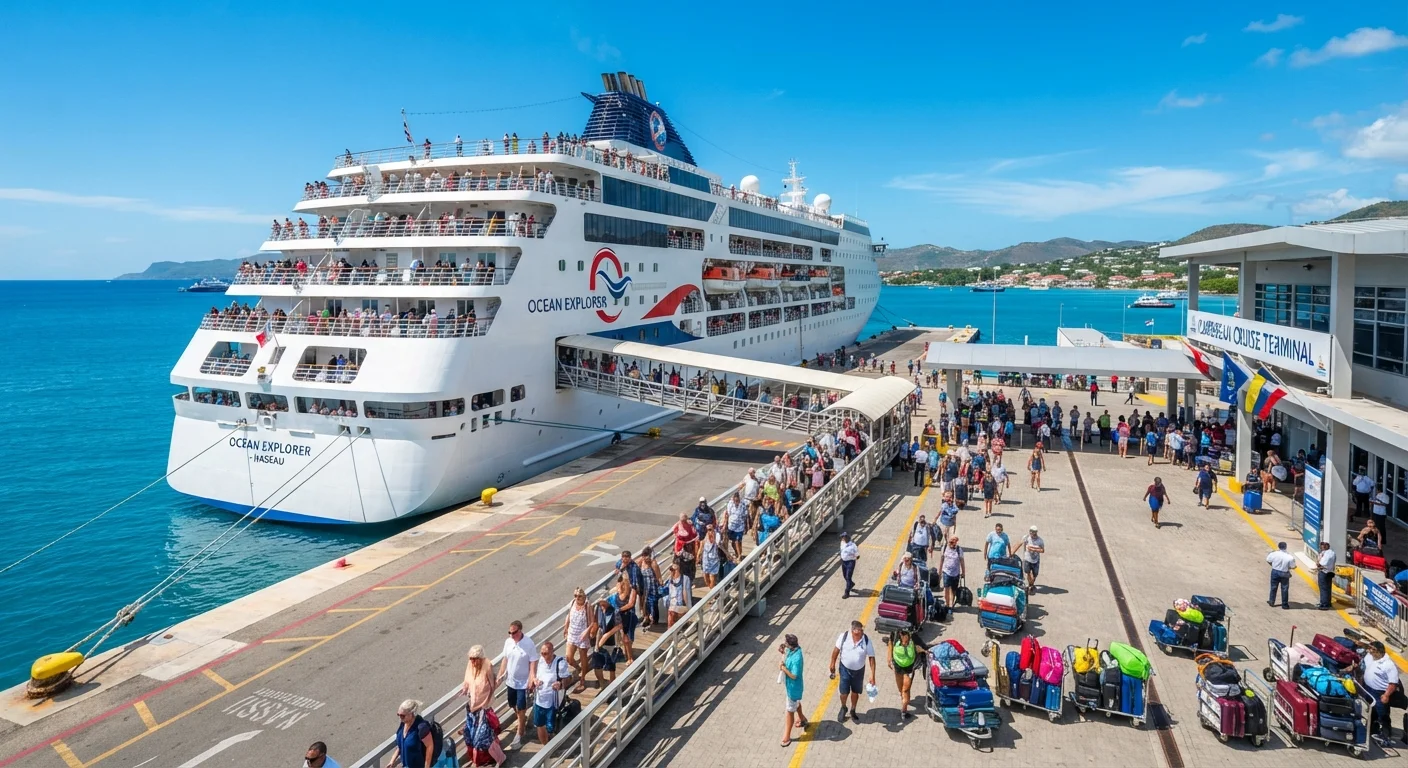
Embarkation — the industry term for boarding — follows a structured sequence that can feel overwhelming without context. Before you ever walk up the gangway, you will pass through a terminal check-in process that resembles a combination of an airport and a hotel front desk.
Arrive at the cruise terminal with your passport or accepted ID, booking confirmation, and any pre-filled health or customs forms the cruise line requested. Luggage tagged with your stateroom number can be handed to porters at the curb; it will be delivered to your cabin later in the day, so pack a well-prepared carry-on with essentials you will need for the first several hours.
After security screening, you will complete check-in, receive your stateroom key card — which also functions as your onboard charge account — and have an embarkation photo taken. Once cleared, you walk the gangway and you are on the ship.
Complete Online Check-In Before You Arrive
Most cruise lines allow — and encourage — passengers to complete check-in forms, upload a photo, and select an arrival window through their website or app before embarkation day. Doing this in advance significantly shortens your time in the terminal queue. Have your passport details, emergency contacts, and credit card for onboard charges ready when you log in.
Your First Hours Onboard
Staterooms are typically not accessible until early-to-mid afternoon, so your first few hours are spent exploring the ship's common areas. Head to the buffet for lunch, locate the pool deck, and get a feel for the layout — modern ships can hold thousands of passengers across a dozen or more decks.
A mandatory safety drill (called a muster drill) takes place before the ship departs. Cruise lines are required to conduct this briefing, and all passengers must participate. Many lines now offer a digital check-in version completed via app, though you should verify your line's specific requirements.
Once your cabin is ready, stow your carry-on, check that your checked luggage has arrived, and review the daily program — a schedule of onboard events, dining times, and port information typically left in your cabin or available via the ship's app.
Embarkation
The process of boarding the cruise ship at the start of your voyage, including check-in, security, and walking the gangway.
Disembarkation
The organized process of leaving the ship at the end of the cruise, including luggage collection and customs clearance.
Port of Call
A scheduled stop where the ship docks or anchors so passengers can go ashore and explore before returning to the vessel.
Sea Day
A day when the ship is sailing between destinations with no port stop, and passengers spend the full day onboard.
Muster Drill
A mandatory safety briefing held before departure that teaches all passengers emergency procedures and lifeboat station locations.
Tendering
A method of going ashore at ports where the ship cannot dock directly; passengers ride smaller boats called tenders to reach land.
Key Card
A card issued at check-in that serves as your cabin door key and your account for all onboard purchases.
All-Aboard Time
The strict deadline by which all passengers must return to the ship at a port of call; the ship will depart without latecomers.
Life at Sea: What Happens Between Ports
Sea days are full days spent entirely on the ship, with no port stop scheduled. For many cruisers, these become the highlight of the voyage. Pools, fitness centers, live entertainment, cooking demonstrations, trivia contests, and spa services all fill the calendar. The main dining room typically operates on a set schedule, while the buffet remains open for most of the day.
Onboard spending happens through your key card, meaning it is easy to accumulate charges without noticing. Drinks packages, specialty dining reservations, and casino visits all appear on a final bill. Our guide to how cruise rookies overspend covers the most common traps and how to sidestep them.
Staying well at sea is also worth thinking through in advance. Frequent handwashing, staying hydrated, and knowing where the ship's medical center is located are all sensible precautions. For a fuller picture, see our overview of staying healthy at sea.
Ports of Call: Going Ashore
A port of call is a scheduled stop where passengers can leave the ship to explore. Time in port typically ranges from four to ten hours. The ship will post an all-aboard time — the hard deadline by which everyone must be back. Missing that time means the ship leaves without you.
You have two broad choices ashore: book a cruise-line organized excursion or explore independently. Ship excursions offer the guarantee that the vessel will wait for a delayed tour group; independent exploration gives you flexibility and often lower cost. Both approaches have merit depending on the destination and your comfort level. For a detailed look at the trade-offs, see our guide to ship tours vs. going independently.
Some ports require tendering — passengers are ferried ashore in smaller boats — rather than docking directly. Tender tickets are distributed in a specific order, so budget extra time on tender days.
Verify Entry Requirements for Each Port
Visa rules, vaccination requirements, and local regulations vary by destination and can change with limited notice. Do not rely solely on cruise line communications for this information. Check official government travel advisory sites for each country on your itinerary well before departure, and consult your cruise line for any destination-specific documentation they require.
Onboard Costs First-Timers Overlook
Your base cruise fare covers your cabin, main dining, and most onboard entertainment. It does not automatically cover alcoholic beverages, specialty restaurant meals, spa treatments, shore excursions, internet access, or gratuities. These additions accumulate quickly.
Gratuities — also called service charges — are typically added daily per person to your onboard account. Some lines include them in the fare; most do not. Port taxes and fees are separate charges that appear at checkout if not already included in your quoted price. Our plain-language guide to cruise fees breaks down exactly what each line item covers.
Watch Your Onboard Account Closely
It is easy to reach the end of a cruise with a bill far larger than anticipated. Check your onboard account balance via the ship's TV system or app every day or two rather than waiting until the final morning. Disputes and corrections are much easier to handle before disembarkation than after you have left the ship.
Disembarkation: Getting Off the Ship
Disembarkation — leaving the ship at the end of the voyage — is a staged process managed by the cruise line. The night before arrival, you will receive instructions and luggage tags color-coded to a departure group. Place tagged bags outside your cabin door by the requested time; they will be collected and organized in the terminal by group.
Groups are called in sequence, typically starting from early morning. Self-assist disembarkation (carrying all your own luggage off the ship) usually allows the earliest departure. Once ashore, you collect checked bags from the terminal floor, clear customs, and arrange your onward transportation.
If you have a flight home, allow substantial buffer time — customs lines and baggage retrieval can take longer than expected. Booking a flight for the afternoon of disembarkation day rather than the morning is a common recommendation among experienced cruisers.
For everything that happens before you even reach the terminal, our full cruise planning timeline walks you through every stage from booking to boarding day.