

| Typical daily gratuity range | $16–$25 per person, per day (General industry range; varies by cruise line and cabin category) |
| Who receives gratuities | Cabin stewards, dining staff, and other service crew |
| Port charges — passenger control | None — mandatory and set by port authorities |
| Bar & spa gratuity | Typically 18–20% added automatically (Standard across major cruise lines) |
| Pre-paid gratuity option | Available on most cruise lines at booking |
| Onboard currency | US dollars on most ships departing from US ports |
What You're Actually Paying Beyond the Ticket Price
The fare you see when shopping for a cruise rarely reflects what you'll pay in total. Cruise lines typically separate the base cabin price from a range of mandatory and discretionary fees, which are disclosed in booking terms but often come as a surprise to first-time passengers. Understanding each charge category before you sail is the most straightforward way to budget accurately.
For a broader look at what comes included versus extra on a typical sailing, see what 'all-inclusive' actually means on a cruise ship.
| Typical daily gratuity range | $16–$25 per person, per day (General industry range; varies by cruise line and cabin category) |
| Who receives gratuities | Cabin stewards, dining staff, and other service crew |
| Port charges — passenger control | None — mandatory and set by port authorities |
| Bar & spa gratuity | Typically 18–20% added automatically (Standard across major cruise lines) |
| Pre-paid gratuity option | Available on most cruise lines at booking |
| Onboard currency | US dollars on most ships departing from US ports |
Daily Gratuities: How They Work and Who Benefits
Most cruise lines apply an automatic daily service charge — commonly called a gratuity or crew appreciation fee — to every passenger's onboard account. This amount is pooled and distributed among crew members across housekeeping, dining, and other guest-facing departments. The daily rate generally ranges from roughly $16 to $25 per person depending on the cruise line and cabin category, with suite passengers typically paying a higher rate.
Gratuities are distinct from any tip you choose to give directly in cash to an individual crew member for exceptional service. Many experienced cruisers do both: allow the automatic charge to stand and offer a small personal tip to a cabin steward or waiter they found outstanding.
Adjusting Automatic Gratuities
Most cruise lines allow guests to modify or remove automatic daily gratuities by visiting guest services onboard. However, doing so reduces the pooled income that many crew members depend on as a significant part of their compensation. If you receive genuinely poor service from a specific crew member, speaking directly with a supervisor is generally a more targeted approach than removing gratuities entirely.
Some cruise lines offer a pre-paid gratuity option at booking, which locks in the current rate and removes the daily charge from your onboard account. This can simplify budgeting, especially for families or groups. You can read more about planning strategies in our cruise planning timeline.
Port Charges, Government Taxes, and Fuel Supplements
Port charges are fees levied by each port of call to cover docking infrastructure, security, and local port authority costs. These are passed directly to passengers and are non-negotiable — neither the cruise line nor the passenger can waive them. Depending on the itinerary, they can add anywhere from $50 to well over $200 per person to the total cost of a voyage.
Government taxes and fees work similarly: they reflect mandatory charges imposed by federal, state, or foreign authorities related to the destinations on your itinerary. A Caribbean cruise departing from Miami, for example, will include both US federal fees and applicable foreign port fees.
Some booking contracts also reference a fuel supplement that cruise lines may add if global oil prices rise substantially. In practice this charge is rarely activated, but passengers should be aware it can appear in the fine print.
$16–$25
Daily gratuity per person
This is the general industry range for automatic daily service charges across major cruise lines, varying by cabin tier.
18–20%
Auto-gratuity on bar and spa purchases
Most major cruise lines add this percentage automatically to beverage and spa service receipts.
$50–$200+
Typical port charges per person
Port and government fees vary widely depending on itinerary length and destinations visited.
Discretionary Onboard Charges to Anticipate
Beyond mandatory fees, most sailings carry a range of optional charges that can add up quickly. Bar purchases, spa treatments, and specialty restaurant meals each typically carry an automatic service charge of 18–20%. Wi-Fi packages, shore excursions booked through the ship, casino play, and photo packages are all separately priced and billed to your onboard account.
Specialty dining surcharges are worth noting specifically: while main dining rooms and buffets are included in the base fare on most lines, signature restaurants charge a per-person fee that can range from $30 to $75 or more. If you plan to dine at specialty venues most nights, that cost should factor into your total trip budget.
For a deeper look at how these costs pile up — and strategies for managing them — see our guide on why cruise rookies overspend onboard.
Key Terms to Know Before You Read Your Bill
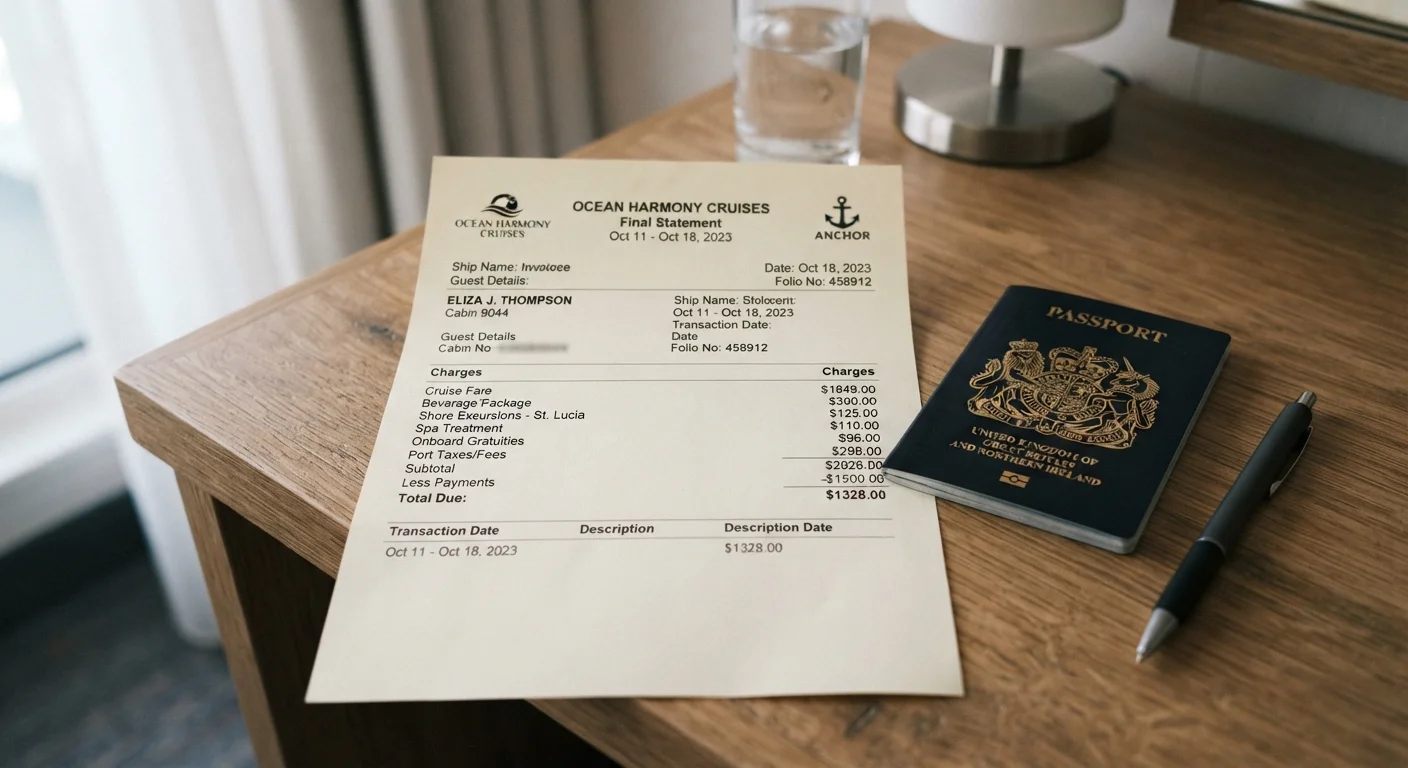
Your final onboard statement will use specific terminology that can be confusing at first glance. The glossary below defines the terms most commonly found on cruise invoices and booking confirmations.
Daily Service Charge
A per-person, per-day fee added to your onboard account that is distributed to crew members across departments such as dining, housekeeping, and guest services. Sometimes called an automatic gratuity.
Port Charges
Fees levied by the ports a ship visits to cover docking, security, and infrastructure costs. These are typically non-negotiable and passed directly to passengers.
Government Taxes & Fees
Mandatory charges imposed by federal, state, or foreign governments related to the cruise itinerary. Like port charges, these cannot be waived by the cruise line.
Onboard Credit (OBC)
A dollar amount applied to your onboard account, often given as a booking incentive or promotion. OBC can offset discretionary charges but typically cannot be used toward mandatory fees.
Specialty Dining Surcharge
An extra fee charged to dine at a restaurant that falls outside the ship's complimentary main dining venues. Prices are set per person and vary by cruise line and restaurant.
Fuel Supplement
An additional charge some cruise lines reserve the right to add if global fuel prices exceed a set threshold. Not commonly applied in practice, but permitted in many booking contracts.
If you're sailing for the first time and want a full picture of what to expect from check-in through disembarkation, our first-cruise guide walks through the complete experience step by step.