

Travel

Pre-Cruise Packing: What Belongs in Your Carry-On vs. Checked Luggage

Share
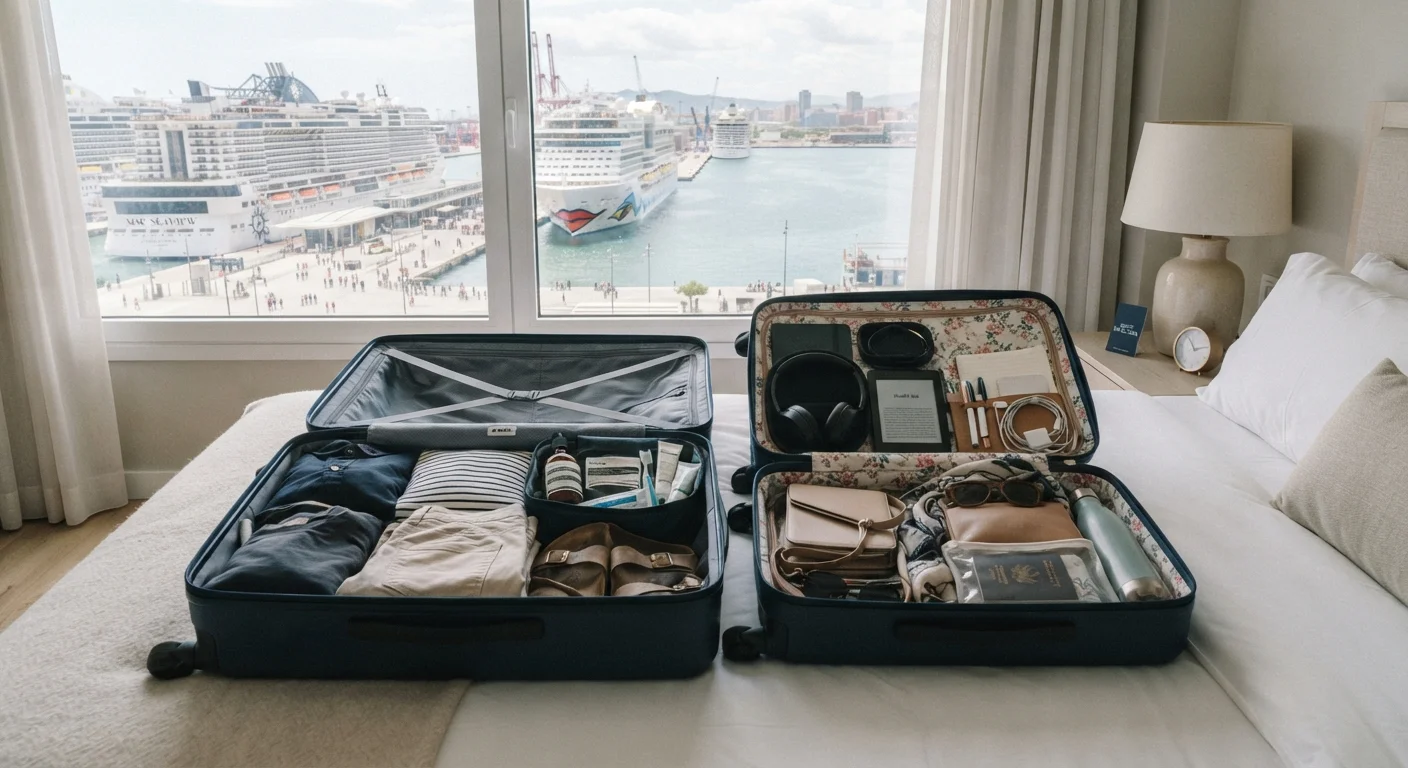
Open suitcase and carry-on bag packed with cruise essentials laid out on a bed near a port window.

Key Takeaways

Your carry-on should hold everything you'd need if checked luggage is delayed by several hours.
Checked bags are collected at the port and may not reach your cabin until mid-afternoon or later.
Cruise lines follow TSA-style prohibited-item rules — liquids over 3.4 oz belong in checked bags.
Travel documents, medications, and valuables should never go in checked luggage.
A well-packed carry-on lets you board, explore the ship, and attend muster drill without waiting.
20–40 min

Summary

22 items · 20–40 minutes

Why the Carry-On vs. Checked Split Matters on Cruise Day

Embarkation day is unlike a standard hotel check-in. When you arrive at the cruise terminal, your large checked bags are typically collected by porters and transported to the ship separately — arriving at your cabin anywhere from early afternoon to early evening. That gap can span four hours or more while you board, complete safety muster drills, and begin exploring the ship.

That window is exactly why what you put in your carry-on matters so much. If your medication, boarding documents, or a change of clothes is locked inside your checked bag sitting in a luggage hold, your embarkation experience can turn stressful quickly. First-time cruisers are often caught off guard by this logistics reality — it's one of the common misconceptions about cruising that's worth clearing up well before sailing day.

Think of your cruise carry-on the same way you would a domestic flight carry-on: it needs to sustain you independently for the first half of your day. For a broader look at getting every pre-departure detail right, the pre-trip planning checklist for US travel covers the full picture from booking through boarding.

Required

Cruise line's prohibited items list

Verify which items are banned from carry-on and checked bags before you finalize packing.

Required

Luggage scale

Weigh checked bags at home to avoid airline overweight fees on the way to the embarkation port.

Optional

Packing cubes

Organize clothing by category or day inside checked luggage for easy access throughout the voyage.

Required

Printed or digital document folder

Keep passport, boarding pass, insurance documents, and itinerary accessible in one place during embarkation.

What to Pack in Your Carry-On Bag

Your carry-on is your lifeline during embarkation. Every item here should answer the question: Would I need this before my checked bag arrives? If yes, it belongs with you.

Carry-On Essentials

Pack your passport, boarding pass, and any required visas — these are required to board and should never leave your person during embarkation. Must
Bring all prescription medications in their original labeled containers for the full duration of the voyage, including any daily medications you'll need before bags arrive. Must
Carry your cruise travel insurance documents and emergency contact numbers in printed or easily accessible digital form. Must
Keep your phone, laptop, tablet, and all charging cables with you — electronics left in checked bags risk damage and are not the cruise line's liability. Must
Include a change of clothes and swimwear so you can use the pool deck or attend dinner if your cabin bags are delayed until evening. Should
Pack a small toiletry kit with essentials — toothbrush, deodorant, sunscreen — for the hours before your checked bag arrives. Should
Carry any valuables such as jewelry, camera equipment, or cash in your carry-on rather than checked luggage. Must
Include any over-the-counter medication you might need immediately, such as motion sickness tablets, antihistamines, or pain relievers. Should

Checked Luggage Packing

Pack the bulk of your clothing — evening wear, port excursion outfits, casual daywear — organized by packing cubes or day-by-day bundles. Must
Place full-size toiletries, bottles of shampoo, conditioner, or lotion over 3.4 oz in your checked bag to comply with terminal security screening rules. Must
Include a small power strip or multi-outlet adapter — many cabins have very few outlets, and a power strip without a surge protector is typically permitted (verify with your cruise line first). Should
Pack formal or themed-night attire such as cocktail dresses, blazers, or costumes that you won't need before reaching your cabin. Should
Store beach and water gear — snorkel sets, reef-safe sunscreen, waterproof sandals — in checked luggage for access once you're settled. Should
Include a soft day bag or backpack for port excursions, packed flat inside your checked luggage to save carry-on space. Nice to have
Add a small first-aid kit with bandages, blister pads, and antacids for excursion days when you'll be far from the ship's medical center. Should
Pack a reusable water bottle — most ships have filling stations, and having one for port days reduces plastic waste and saves money ashore. Nice to have

Pre-Pack Verification

Cross-check your cruise line's prohibited items list before finalizing both bags — common restrictions include irons, candles, and certain extension cords. Must
Confirm your checked bag weight with your airline if flying to the embarkation port — overweight fees apply before you even reach the ship. Must
Attach a luggage tag with your name and cabin number to checked bags using the tags provided by your cruise line before handing them to the port porters. Must
Take a photo of your packed checked bag contents before closing it — useful if you need to file a delayed or lost luggage report. Nice to have
Review your travel insurance policy to confirm coverage for delayed, lost, or damaged luggage before departure. Should

Never Check Your Travel Documents

Passports, boarding passes, and visas are non-negotiable carry-on items — full stop. Without these documents in hand at the terminal, you cannot board regardless of the circumstances. Store them in a secure inner pocket of your carry-on bag or a travel wallet worn on your person, and check for them before leaving your hotel or parking area. For comprehensive coverage of cruise-specific insurance needs, see our guide on cruise travel insurance coverage.

What Can Go in Your Checked Luggage

Checked bags handle the bulk of your cruise wardrobe and gear. Since they're stored in your cabin closet for the entire voyage, organization pays dividends — packing cubes by day, activity type, or destination port helps enormously.

If you're still building your full cruise plan, the full cruise planning timeline walks through every stage from itinerary selection to port arrival. And if you're sailing for the first time, what to expect from embarkation to disembarkation explains exactly how the boarding process unfolds.

Prohibited Items Can Cause Boarding Delays

Cruise terminals use X-ray screening similar to airport security, and prohibited items — including candles, electrical items with heating elements, and certain knives — will be confiscated. This can slow your embarkation and hold up other travelers behind you. Always consult your specific cruise line's prohibited items list before packing, as rules vary between lines.

Don't Rely on the Ship's Pharmacy for Prescription Needs

Most ships carry a limited supply of common over-the-counter medications, but prescription refills are rarely available at sea. Carry enough of any essential medication for the entire voyage plus a buffer day or two, and keep it in your carry-on where it's immediately accessible.

Travel Editorial Team is the collective byline for our editorial team and contributor network. Articles published under this byline or an editorial pen name are researched, written, and reviewed according to our editorial standards for clarity, consistency, and independence before publication.

View all articles by Travel Editorial Team →
Disclaimer: The content on this site is for informational purposes only and is not a substitute for professional advice. Always consult a qualified professional for guidance specific to your situation.