

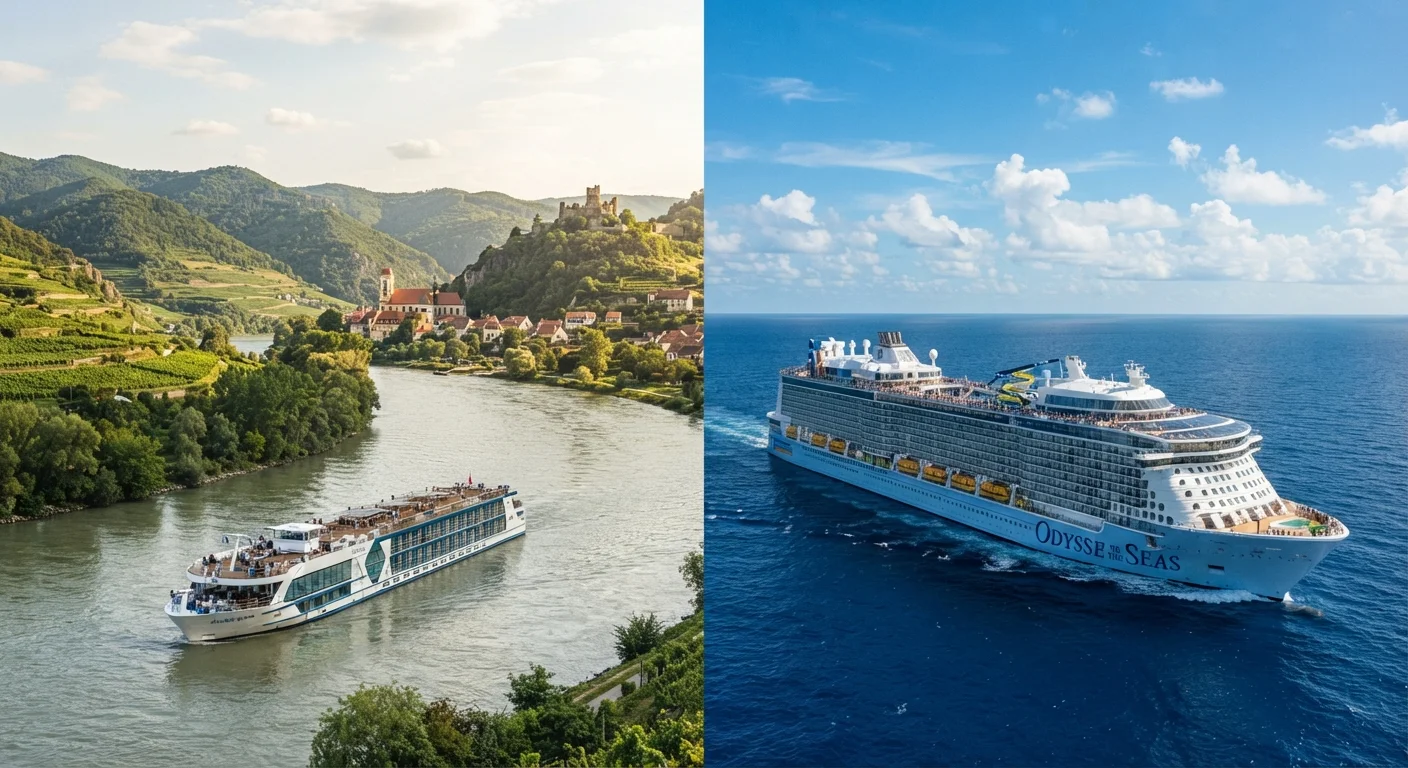
Key Takeaways
Option A
River Cruising
The intimate, immersive way to explore inland Europe, Asia, and beyond.
Best for: Travelers who want deep cultural immersion, smaller ships, and port-heavy itineraries.
Option B
Ocean Cruising
The classic, amenity-rich experience crossing open seas to iconic destinations.
Best for: Travelers who want onboard entertainment, a wide range of destinations, and resort-style facilities.
If you want to explore European history and culture in depth
River Cruising
River ships dock in city centers and small towns daily, letting you walk directly into historic sites without long transfers or tender boats.
If you're traveling with children or a multigenerational group
Ocean Cruising
Large ocean ships offer dedicated kids' clubs, varied dining, and enough onboard activity to satisfy very different age groups simultaneously.
If you're a first-time cruiser on a flexible budget
Ocean Cruising
Ocean itineraries span a wide price range and depart from many US home ports, making them an accessible entry point for new cruisers.
If you prefer a quiet, conversation-focused travel pace
River Cruising
Smaller passenger counts and the absence of casinos or loud entertainment venues create a more relaxed, social atmosphere.
If you want to island-hop or reach remote coastal destinations
Ocean Cruising
Only ocean-going vessels can access Caribbean islands, Norwegian fjords, Alaskan coastlines, and other sea-bound destinations.
Ship Size and Onboard Atmosphere
The most immediate difference between river and ocean cruising is scale. River vessels are purpose-built to navigate narrow waterways, low bridges, and river locks — which caps their size significantly. A typical river ship carries between 100 and 200 passengers across three to four decks. Ocean ships range from small expedition vessels to mega-ships carrying 5,000 or more guests.
That size gap shapes everything about the atmosphere onboard. River ships feel more like a boutique hotel: you'll recognize fellow passengers by name within a day or two, mealtimes tend to be communal, and there's little of the anonymity found on larger vessels. Ocean ships, by contrast, offer genuine resort-scale facilities — multiple pools, Broadway-style theaters, full casinos, climbing walls, and dozens of dining options. For travelers who want the destination to be the ship itself, ocean cruising delivers that in ways river vessels simply cannot.
| Criterion | River Cruising | Ocean Cruising |
|---|---|---|
| Typical passenger count | 100–200 guests | 500–5,000+ guests |
| Ship size | Small, narrow-draft vessels | Large to mega-ship scale |
| Port frequency | Daily port stops | Mix of port days and sea days |
| Excursions included | Often included in fare | Typically sold separately |
| Onboard entertainment | Lectures, small lounges | Theaters, pools, casinos |
| Cabin balcony style | French balcony common | Full walk-out balcony available |
| Destination access | Inland waterways only | Coastal and island destinations |
| Weather disruption risk | Water level sensitivity | Storm routing and seasickness |
Itinerary Style and Port Experience
River itineraries are almost entirely port-focused. Ships typically dock each morning in a new town or city, often mooring right in the historic center rather than at a dedicated cruise terminal miles away. Passengers step directly onto cobblestone squares, vineyard paths, or medieval waterfronts. Guided excursions are frequently included in the cruise fare rather than sold as add-ons.
Ocean itineraries balance sea days with port visits. Some itineraries are port-intensive (the Caribbean or Greek islands), while others involve long open-water transits between destinations. Ports on ocean ships are accessed via the ship's own gangway when docked, or by tender boat when anchored offshore — a process that takes additional time. For more on making the most of limited time ashore, see our guide on ports of call worth going ashore for. If you're weighing whether to book a ship-organized excursion or explore independently, shore excursions: ship-organized tours vs. going independently covers the trade-offs in detail.
~150
Average river ship passenger capacity
Most purpose-built river cruise vessels carry between 100 and 200 guests, a fraction of even mid-size ocean ships.
7–14 days
Typical river cruise duration
Most river itineraries in Europe range from one to two weeks, often covering multiple countries along a single waterway.
20+
Dining venues on large ocean ships
Mega-ships commonly offer more than 20 distinct restaurant and dining concepts, from buffets to chef's table experiences.
Practical Considerations: Cost, Cabins, and Risk
River cruises generally have a higher base price per person than comparable ocean sailings, but that fare typically includes more: most meals, guided excursions, port charges, and often wine or beer with dinner. Ocean cruise fares can look lower upfront, but specialty dining, gratuities, excursions, and drinks packages add up quickly. First-time ocean cruisers in particular can be caught off guard — something our article on why cruise rookies overspend onboard addresses directly.
Cabin choices differ structurally as well. River ship staterooms are compact, and balconies — where available — are often French balconies (floor-to-ceiling sliding doors rather than a walk-out terrace). Ocean ships offer a full spectrum from interior cabins to expansive suites. For a clear breakdown of cabin categories, inside cabin, ocean view, or balcony is a useful reference.
Risk profiles also differ. River cruises can be disrupted by low or high water levels — a drought year on the Danube or Rhine can reroute or cancel sailings. Ocean cruises are more susceptible to weather routing changes and, in some regions, tropical storm seasons. Whatever format you choose, cruise travel insurance works differently from standard travel policies and is worth understanding before you book.
River Water Levels: A Real Booking Risk
Low water levels — caused by summer droughts or seasonal variation — can force river ships to change routes, substitute buses for sailing portions, or cancel departures entirely. This is a documented disruption pattern on European rivers, particularly the Rhine and Danube. Travelers considering river cruises should review a line's disruption policies and understand what protections, including travel insurance, apply before booking.
Which Type of Cruiser Are You?
River cruising tends to attract travelers who are already comfortable with travel, want a structured but culturally rich pace, and prefer smaller social settings. It's a strong fit for those exploring Europe's interior — the Rhine, Danube, Seine, Douro, and Moselle are among the most traveled routes — or Asia's Mekong and Irrawaddy rivers.
Ocean cruising casts a wider net. It works for first-timers who want predictability and variety, families seeking shared activities, and those drawn to specific ocean destinations like the Caribbean or Mediterranean. If you're comparing ocean regions, Caribbean vs. Mediterranean cruises explores the key differences in climate, ports, and itinerary style. Both formats support loyalty programs for repeat travelers — see how cruise loyalty programs generally work for an overview of how those rewards are structured.
Neither format is universally superior. The right choice depends on what you want the travel itself to feel like — and how you weigh the hours spent onboard versus the hours spent ashore.