

Key Takeaways
Continuous passive health and fitness monitoring
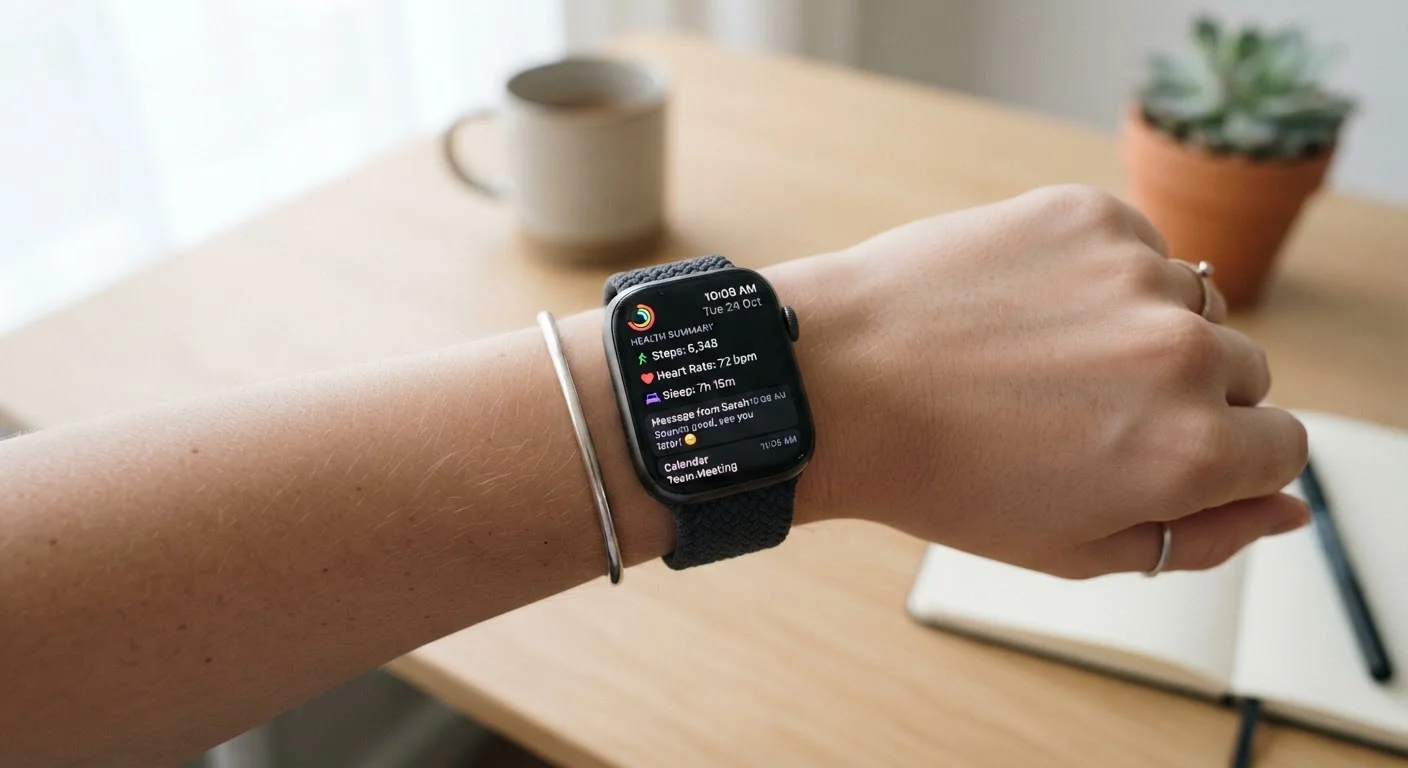
Smartwatches track heart rate, steps, and sleep automatically without requiring the user to actively log anything, making long-term trend data practical to collect.
Quick access to notifications without phone use
Glancing at a wrist for a notification takes seconds and is far less disruptive in social or professional settings than pulling out a smartphone.
Safety features like fall detection and emergency SOS
Several models include sensors that can detect a hard fall and automatically contact emergency services if the user doesn't respond within a set window.
Motivational nudges support activity goals
Activity rings, step goals, and movement reminders provide low-friction prompts that many users find effective for maintaining daily movement habits.
Contactless payment from the wrist
Supported smartwatches allow users to pay at NFC-enabled terminals without a wallet or phone, which is convenient during workouts or quick errands.
Frequent charging disrupts daily routine
Most smartwatches require charging every one to two days, which can interrupt overnight sleep tracking and creates a dependency on remembering to charge.
Notification volume can increase distraction
Without deliberate configuration, a smartwatch can vibrate dozens of times per day for low-priority alerts, creating more interruption than a phone in a pocket.
Health data accuracy has meaningful limits
Consumer-grade sensors for heart rate and blood oxygen are useful for trends but are not medical-grade instruments and can be affected by movement, skin, and fit.
Continuous biometric data raises privacy concerns
Health and location data syncs to manufacturer cloud servers, and default privacy settings often share more than users realize without active review.
Durability varies; screen and water resistance differ
Water resistance ratings don't always cover all real-world exposures, and display glass on many models scratches more readily than traditional watch crystals.
Upfront and replacement costs add up over time
Smartwatches typically need replacement every few years as software support ends, making the long-term cost of ownership higher than a conventional watch.
Our Verdict
Smartwatches deliver real value for people who want passive health monitoring and quick access to communication on their wrist. However, the daily charging requirement, notification fatigue, and ongoing data privacy considerations mean the device isn't a friction-free upgrade for everyone. The more you rely on health tracking and smartphone integration, the more the benefits tend to outweigh the inconveniences.
Best suited to health-conscious users, fitness enthusiasts, and people who want quick communication access without reaching for their phone throughout the day.
What a Smartwatch Actually Does Day-to-Day
A smartwatch is a wrist-worn computer that pairs with a smartphone to surface notifications, track health metrics, and run lightweight apps. Most models monitor heart rate continuously, track steps and activity, estimate sleep quality, and some include features like blood oxygen sensing or fall detection. On the communication side, they mirror calls, texts, and app alerts directly to your wrist.
For many users, the appeal is reducing how often they pick up their phone — a glance at the wrist can answer whether an alert needs immediate attention. For fitness-oriented users, the continuous health data forms a picture of long-term trends that a casual phone check can't replicate. Understanding these everyday functions helps frame whether the trade-offs are worth it for your specific habits. For a broader look at managing all your connected devices, see our complete consumer electronics ownership guide.
Continuous passive health and fitness monitoring
Smartwatches track heart rate, steps, and sleep automatically without requiring the user to actively log anything, making long-term trend data practical to collect.
Quick access to notifications without phone use
Glancing at a wrist for a notification takes seconds and is far less disruptive in social or professional settings than pulling out a smartphone.
Safety features like fall detection and emergency SOS
Several models include sensors that can detect a hard fall and automatically contact emergency services if the user doesn't respond within a set window.
Motivational nudges support activity goals
Activity rings, step goals, and movement reminders provide low-friction prompts that many users find effective for maintaining daily movement habits.
Contactless payment from the wrist
Supported smartwatches allow users to pay at NFC-enabled terminals without a wallet or phone, which is convenient during workouts or quick errands.
The Real Costs: Charging, Durability, and Distraction
The most consistent friction point smartwatch owners report is battery life. Unlike a traditional watch that can sit unworn for years, most smartwatches need charging every one to two days. That adds a nightly routine and creates gaps in health tracking data if you forget. Some thinner models with always-on displays drain even faster.
Durability is another variable that catches users off guard. While many smartwatches carry water-resistance ratings, those ratings apply to specific depths and don't always cover chlorinated pool water or saltwater over extended exposure. Display scratch resistance also varies — glass screens on some models scratch more easily than sapphire crystal alternatives.
Perhaps the most underappreciated downside is notification overload. A device designed to surface alerts can quickly become a source of near-constant interruption. Vibrating with every promotional email or social media like can feel intrusive in ways that a silent phone in your pocket does not. Managing this well takes deliberate setup time. Smarter notification management can significantly improve the day-to-day experience.
Frequent charging disrupts daily routine
Most smartwatches require charging every one to two days, which can interrupt overnight sleep tracking and creates a dependency on remembering to charge.
Notification volume can increase distraction
Without deliberate configuration, a smartwatch can vibrate dozens of times per day for low-priority alerts, creating more interruption than a phone in a pocket.
Health data accuracy has meaningful limits
Consumer-grade sensors for heart rate and blood oxygen are useful for trends but are not medical-grade instruments and can be affected by movement, skin, and fit.
Continuous biometric data raises privacy concerns
Health and location data syncs to manufacturer cloud servers, and default privacy settings often share more than users realize without active review.
Durability varies; screen and water resistance differ
Water resistance ratings don't always cover all real-world exposures, and display glass on many models scratches more readily than traditional watch crystals.
Upfront and replacement costs add up over time
Smartwatches typically need replacement every few years as software support ends, making the long-term cost of ownership higher than a conventional watch.
Health Tracking: What the Data Can and Can't Tell You
Smartwatch health features have become genuinely sophisticated, but it's important to understand their limits. Consumer heart rate monitors and blood oxygen sensors provide useful trend data, but they are not medical-grade diagnostic tools. Readings can be affected by skin tone, tattoos, wrist placement, and movement artifacts.
Health Data Is Informational, Not Diagnostic
Smartwatch health metrics — including heart rate, blood oxygen, and sleep stages — are intended to support general wellness awareness, not to diagnose or monitor medical conditions. If you notice irregular readings that concern you, consult a qualified healthcare professional rather than relying on wearable data alone. Always treat your device's health features as one data point among many, not a substitute for clinical evaluation.
Sleep tracking offers another example of this nuance. Smartwatches detect movement and heart rate changes to estimate sleep stages, but the accuracy of stage detection — light, deep, REM — is considerably less reliable than clinical sleep studies. The data is useful for spotting patterns over weeks, not for drawing conclusions from a single night. If you're interested in how this ties into broader fitness goals, the fitness hub covers exercise and recovery topics in depth.
1–2 days
Typical smartwatch battery life
Most mainstream smartwatches require charging every one to two days under typical use with always-on display and health tracking enabled.
~30%
US adults who own a smartwatch
Pew Research Center surveys have found roughly three in ten US adults report owning a smartwatch or fitness tracker, a figure that has grown steadily.
Privacy: The Data Your Wrist Collects
Smartwatches collect a continuous stream of biometric data — heart rate, movement patterns, sleep behavior, and in some cases GPS location. This data is typically stored by the device manufacturer and synced to cloud servers. How that data is used, retained, or potentially shared depends on each manufacturer's privacy policy, which most users don't read at setup.
For users who take privacy seriously, it's worth reviewing what data your device collects, whether you can opt out of data sharing for product improvement, and how long the manufacturer retains your health records. Privacy settings on both the watch and its companion app often have more controls than the default configuration exposes. For practical guidance on locking down connected devices, privacy settings worth knowing is a useful starting point.