

Key Takeaways
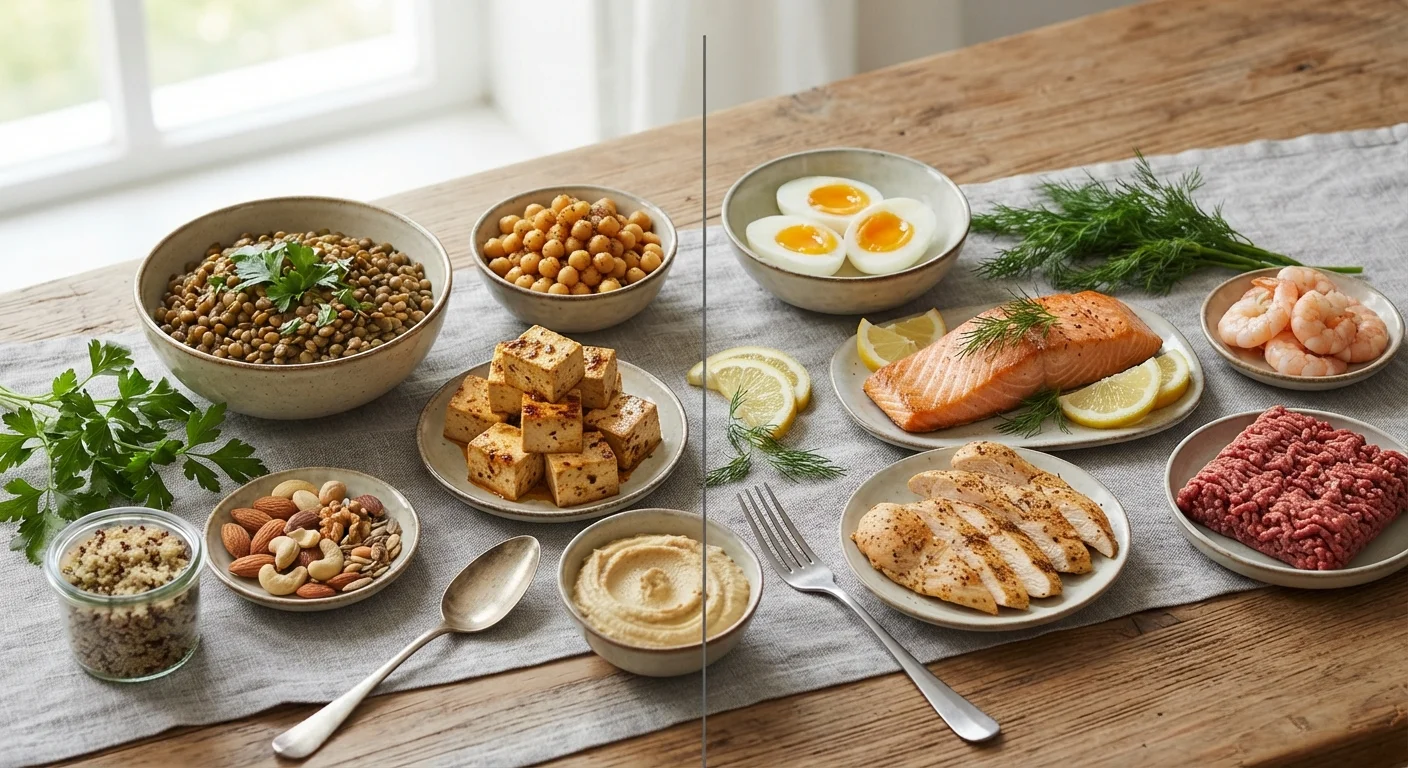
Option A
Plant Protein
The fiber-rich, environmentally lighter protein source.
Best for: Adults seeking to diversify protein intake, reduce saturated fat, or follow vegetarian and vegan eating patterns.
Option B
Animal Protein
The nutritionally complete, bioavailable protein staple.
Best for: Adults prioritizing high amino acid completeness and bioavailability, particularly during periods of higher protein need.
If you follow a vegan or vegetarian diet
Plant Protein
A well-planned variety of legumes, grains, soy, and nuts can meet all essential amino acid needs without animal foods.
If you need maximum protein bioavailability with minimal meal planning
Animal Protein
Animal proteins are complete and highly digestible, requiring less dietary strategy to meet amino acid requirements.
If you want to reduce saturated fat and increase dietary fiber
Plant Protein
Plant protein sources such as legumes and soy provide protein alongside fiber and minimal saturated fat.
If you have higher protein needs, such as older adults or athletes
Animal Protein
High bioavailability and leucine content in animal proteins support muscle protein synthesis more efficiently per gram consumed.
If you want the benefits of both sources
Plant Protein
Eating a predominantly plant-based diet with moderate amounts of animal protein combines the advantages of both, per research on the Mediterranean dietary pattern.
What Makes a Protein 'High Quality'?
Protein quality is assessed on two main dimensions: amino acid completeness and digestibility. Proteins are built from 20 amino acids, nine of which are classified as essential — meaning the body cannot synthesize them and must obtain them from food.
A widely used scientific measure is the DIAAS, which scores a protein based on how well it provides each essential amino acid relative to human needs, accounting for how much is actually absorbed. Animal proteins — including eggs, dairy, fish, and meat — consistently score at or above 1.0 on the DIAAS scale, indicating they meet or exceed requirements for all essential amino acids. Most isolated plant proteins score below 1.0, though soy protein is a notable exception, performing comparably to many animal sources.
It's worth noting that DIAAS scores apply to individual foods. A dietary pattern that combines multiple plant proteins across the day can collectively cover all essential amino acids. This is an important distinction often lost in simplified comparisons. For a broader look at how food quality extends beyond single nutrients, see our guide on whole foods versus ultra-processed foods.
| Criterion | Plant Protein | Animal Protein |
|---|---|---|
| Amino acid completeness | Often incomplete (soy is an exception) | Complete in all essential amino acids |
| Digestibility (DIAAS) | Generally lower; improved by cooking | Generally higher; well-absorbed |
| Leucine content | Moderate; lower in most legumes | High, especially in eggs and dairy |
| Saturated fat | Typically very low | Variable; higher in red/processed meat |
| Dietary fiber | Present; supports gut health | Absent |
| Cardiovascular associations | Generally favorable in research | Varies by type (fish/dairy vs. processed meat) |
| Meal planning complexity | Requires variety for completeness | Simpler to meet amino acid needs |
Plant Proteins: Strengths, Gaps, and Smart Combinations
The most common plant protein sources include legumes (lentils, chickpeas, black beans), whole grains (quinoa, oats, brown rice), soy products (tofu, edamame, tempeh), and nuts and seeds. Each has a distinct amino acid profile. Legumes tend to be low in the amino acid methionine; grains tend to be low in lysine. This complementarity means that eating a variety of plant foods — not necessarily in the same meal — closes most amino acid gaps.
Plant proteins also carry nutritional co-benefits: they arrive packaged with dietary fiber, phytonutrients, and generally lower saturated fat compared to many animal sources. Regular legume consumption is associated with improved cardiovascular risk markers and gut microbiome diversity in observational research.
The trade-off is digestibility. Antinutrients such as phytates and lectins found in raw legumes and grains can reduce protein absorption. Cooking, soaking, fermenting, and sprouting these foods substantially reduces antinutrient content, improving bioavailability. Tempeh and tofu, for example, are more digestible than whole soybeans.
~0.96
DIAAS score for soy protein isolate
The Food and Agriculture Organization (FAO) places soy protein isolate among the highest-scoring plant proteins, approaching the digestibility of many animal sources.
~30%
Lower protein digestibility in raw legumes vs. cooked
Research published in nutrition journals indicates cooking legumes significantly reduces antinutrient content and improves protein bioavailability.
1 in 5
US adults meeting plant protein recommendations
According to Dietary Guidelines Advisory Committee analyses, most Americans consume less than the recommended variety of plant protein foods weekly.
Animal Proteins: Completeness, Bioavailability, and Dietary Context
Animal proteins — including meat, poultry, fish, eggs, and dairy — provide all essential amino acids in proportions closely aligned with human physiological needs. They are generally digested and absorbed efficiently, with DIAAS scores often exceeding 1.0.
Among essential amino acids, leucine plays a particularly important signaling role in stimulating muscle protein synthesis. Animal proteins, especially whey and eggs, are especially leucine-rich, which is one reason they are extensively studied in sports nutrition and aging-related muscle preservation research.
However, the health impact of animal protein is highly context-dependent. Red and processed meats, for instance, carry different health associations than fish, eggs, or dairy. Epidemiological research — including large cohort studies summarized by the Harvard T.H. Chan School of Public Health — links high consumption of processed red meat to elevated risk of cardiovascular disease and certain cancers. Unprocessed animal proteins show more neutral or even favorable associations in comparable research. These distinctions matter when evaluating animal proteins as a category.
For those exploring structured dietary frameworks that incorporate animal proteins thoughtfully, our comparison of Mediterranean, DASH, and plant-based diets provides useful context.
A Note on Protein Quantity vs. Quality
Much of the public debate focuses on protein quality (amino acid profile), but daily protein quantity also matters. The general recommended dietary allowance (RDA) for adults is 0.8 grams of protein per kilogram of body weight, though needs may be higher for older adults and those who are very active. Whether your protein comes primarily from plants or animals, meeting total daily needs is foundational. A registered dietitian can help determine what intake level is appropriate for your specific situation.
Practical Guidance: Putting Protein in Context
For most healthy US adults, the central question isn't whether to choose plant or animal protein exclusively — it's how to build a dietary pattern that supports overall health, meets individual protein needs, and is sustainable long-term. The DGA recommends that adults consume a variety of protein foods, including both plant and animal sources, to support nutritional adequacy.
Key practical points supported by current evidence:
- Variety matters more than purity: A mixed diet that includes legumes, whole grains, seafood, dairy, and moderate amounts of poultry or eggs tends to perform well across multiple health outcomes.
- Prioritize food quality within each category: Whole, minimally processed plant proteins and unprocessed animal proteins outperform their highly processed counterparts regardless of origin.
- Higher-need populations should consult professionals: Older adults at risk of sarcopenia (age-related muscle loss), pregnant individuals, and competitive athletes have protein requirements and considerations that go beyond general guidance.
Use our weekly meal planning checklist to evaluate whether your current diet covers adequate protein variety across the week.
This article is for general informational purposes only and does not constitute medical or dietary advice. Consult a registered dietitian or qualified healthcare professional for guidance tailored to your individual health needs.