

Key Takeaways
Summary
22 items · 20–45 minutes
Why a Weekly Audit Matters
Most Americans eat in patterns — the same rotating meals week after week. While routine has its advantages, repeated patterns can quietly create nutritional blind spots: too little fiber, insufficient iron-rich foods, or a near-absence of leafy greens. Auditing your upcoming week's meals before you shop gives you a low-effort opportunity to course-correct.
This checklist is designed for general planning purposes, not as a substitute for personalized dietary guidance. If you have a specific health condition, food allergy, or medical nutritional need, a registered dietitian is the right resource. For everyone else, this framework offers a practical weekly reset grounded in established dietary guidelines from sources like the USDA's Dietary Guidelines for Americans and guidance from the Academy of Nutrition and Dietetics.
Meal planning also has a financial dimension. Knowing what you'll eat before you shop reduces impulse purchases and food waste — two common budget drains. See our guide to eating well on a budget for strategies that pair well with this checklist. If you're already doing monthly financial reviews, the monthly budget reset checklist can help you integrate grocery spending into your broader financial picture.
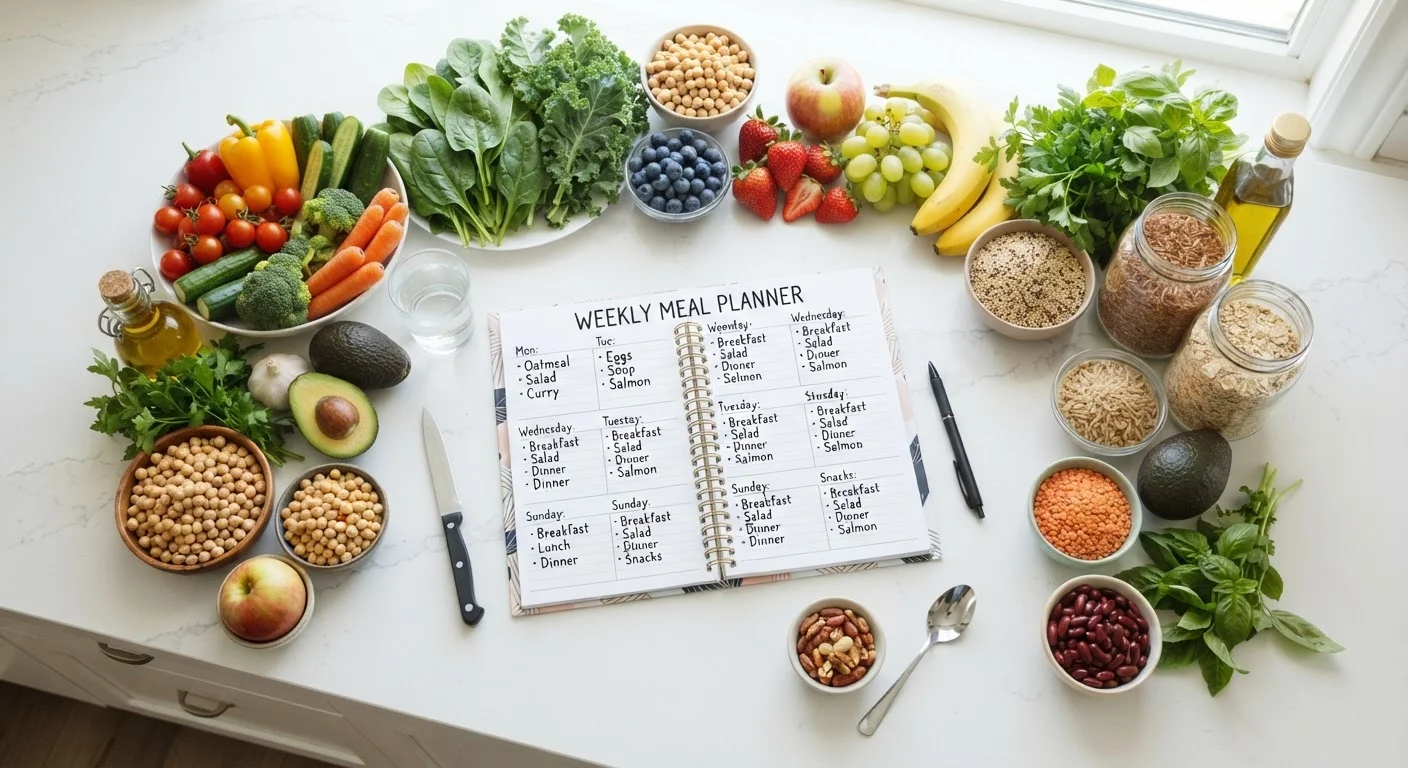
Weekly Meal Plan Template (printable or digital)
Provides a structured grid to map out breakfasts, lunches, dinners, and snacks for all seven days before auditing.
USDA MyPlate Visual Guide
Offers a free, evidence-based visual reference for food group proportions recommended for most US adults.
Nutrition Facts Label
Used to check sodium, added sugar, fiber, and key micronutrient content on packaged foods included in your plan.
Grocery List App or Notepad
Helps translate your finalized meal plan into an organized shopping list, reducing missed items and impulse purchases.
Registered Dietitian Consultation
Recommended for individuals with specific health conditions, food allergies, or medically supervised nutritional needs.
How to Use This Checklist
Set aside 20 to 45 minutes once a week — ideally the day before your regular grocery run. Write out or sketch your planned meals for all seven days, then work through each checklist group below. Check off items you've already covered and flag gaps you want to address. You don't need to achieve perfection across every category every week; the goal is consistent improvement and awareness over time.
Nutritional needs vary by age, sex, activity level, and health status, so treat the items below as general evidence-based benchmarks rather than personal prescriptions. For deeper reading on vitamins and minerals referenced in this checklist, our micronutrients reference guide provides a concise overview of key nutrients and their food sources.
This Checklist Is General Guidance Only
The items in this checklist reflect broad, population-level dietary guidance and are not tailored to your individual health status, age, or medical history. People managing chronic conditions such as diabetes, kidney disease, or cardiovascular disease may have specific nutritional needs that differ from general recommendations. Always consult a registered dietitian or your healthcare provider before making significant changes to your diet.
Food Group Coverage
Protein & Fat Quality
Fiber & Hydration
Micronutrient Variety
Sodium & Added Sugar Awareness
Practical Preparation
Putting It All Together
Once you've completed the checklist, take stock of any unchecked items. A few gaps are normal — the point is to notice them before the week begins rather than after. Swap in a leafy green where you'd planned a starchy side, add a handful of berries to a breakfast, or replace a second serving of red meat with a legume-based meal. Small, intentional swaps accumulate meaningfully over time.
Meal planning pairs naturally with an active lifestyle. If you're also structuring your physical activity for the week, our article on what a well-rounded weekly exercise plan looks like explains how nutrition and movement goals can reinforce each other. Explore additional strategies in our fitness hub for routines that complement a balanced diet.
Special Populations Need Professional Guidance
Pregnant or breastfeeding individuals, young children, older adults, and anyone with a chronic illness or eating disorder have nutritional requirements that go well beyond what a general checklist can address. Please work with a qualified healthcare professional to develop a meal plan appropriate to your specific situation. Do not rely on general frameworks as a substitute for personalized care.
This article provides general nutritional information for educational purposes only and is not a substitute for personalized medical or dietary advice. Consult a qualified healthcare professional or registered dietitian before making significant changes to your diet, particularly if you have a medical condition or specific nutritional needs.