
Nutrition Across Life Stages: How Dietary Needs Shift from Young Adulthood to Older Age

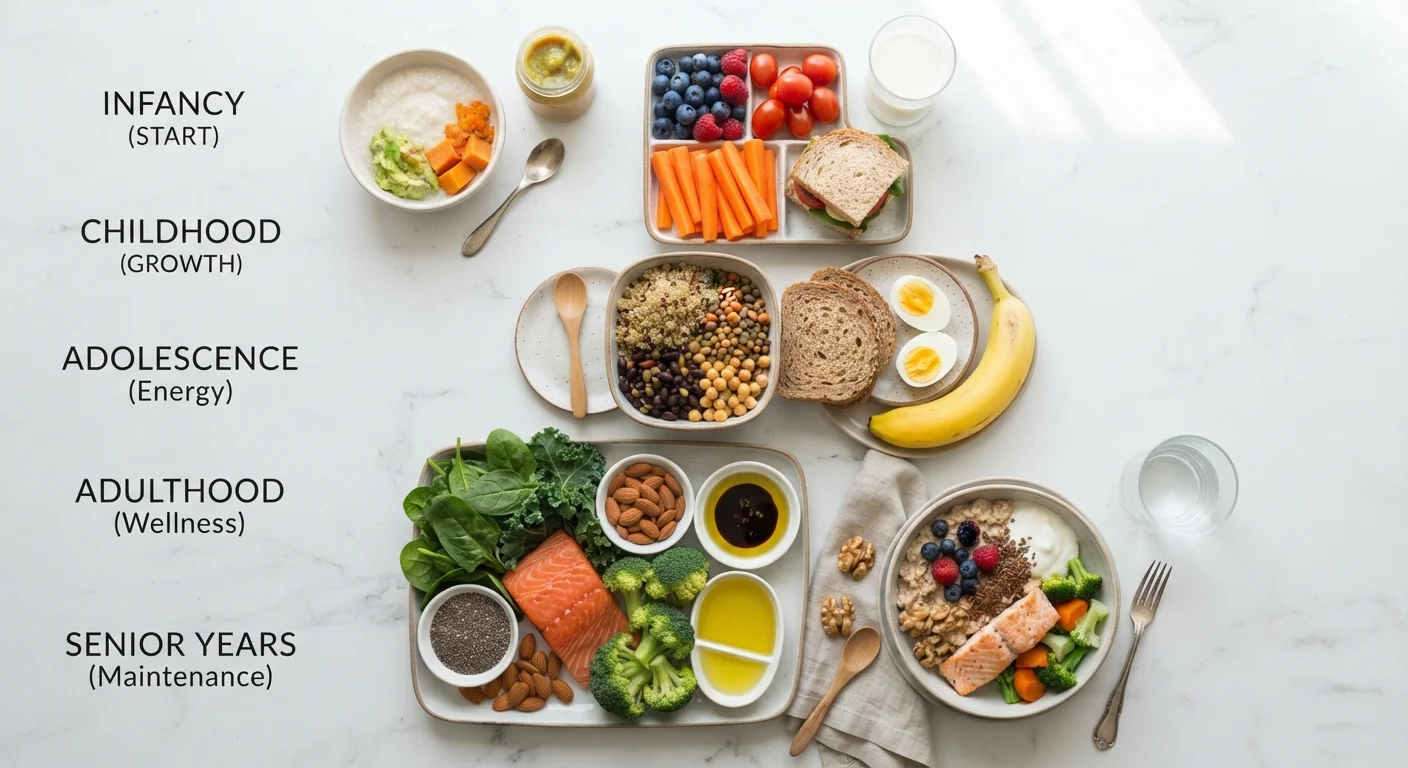
Key Takeaways
Why Nutritional Needs Change With Age
Food does far more than fuel daily activity — it supplies the raw materials for cellular repair, immune defense, hormonal regulation, and bone maintenance. As the body moves through different life stages, its physiological demands shift in ways that make a one-size-fits-all diet unrealistic.
Several key factors drive these changes. Basal metabolic rate — the energy the body burns at rest — tends to decline gradually from young adulthood onward, partly because lean muscle mass decreases over time. Digestive efficiency, hormone levels, and the body's ability to absorb specific nutrients also evolve. At the same time, risk profiles for conditions like cardiovascular disease, type 2 diabetes, and osteoporosis shift with age, influencing which nutrients deserve particular attention.
Understanding these patterns provides a useful framework for making more informed food choices at every stage. For condition-specific guidance, the Health Conditions resource hub offers evidence-based information on a wide range of common concerns.
~2%
Decline in metabolic rate per decade after age 20
Research published in science literature estimates basal metabolic rate decreases gradually from young adulthood, contributing to shifting calorie needs across life stages.
1,200 mg
Daily calcium recommended for women over 50
The National Institutes of Health Office of Dietary Supplements recommends increased calcium intake after menopause to help maintain bone density.
<15 g
Average daily fiber intake among US adults
According to the Dietary Guidelines for Americans, most adults consume less than half the recommended daily fiber intake of 25–38 grams.
Young Adulthood (Ages 18–30): Building a Strong Foundation
The late teens and twenties represent a critical window for establishing lifelong dietary habits. Bone density peaks during this period — primarily by the mid-to-late twenties — making adequate calcium (around 1,000 mg per day for most adults) and vitamin D essential. Iron is also a priority, particularly for women of reproductive age, who have higher requirements than men.
Calorie needs are generally at their highest during this stage, especially for those who are physically active. However, high calorie requirements do not translate to a license for nutrient-poor eating. Whole foods — vegetables, fruits, whole grains, lean proteins, and legumes — should form the bulk of the diet.
In your twenties, prioritize variety over perfection — exposing your palate and gut microbiome to a wide range of plant foods early on supports long-term digestive and immune health.
Microbiome diversity, influenced by dietary variety, is associated with better metabolic and immune outcomes in research on gut health and chronic disease prevention.
Spread protein intake across all three meals rather than loading it at dinner — this approach better supports muscle protein synthesis throughout the day.
Studies on protein distribution suggest that the body utilizes amino acids more effectively when intake is evenly spread rather than concentrated in a single large meal.
To understand what's actually in packaged foods during this or any stage, learning to read a nutrition label is a foundational skill worth developing early.
Midlife (Ages 31–50): Maintaining Health and Managing Change
Calorie needs begin to ease modestly in the thirties and forties as metabolic rate slows. Yet the demand for quality nutrients remains high. This is the stage where dietary patterns often start to have more visible effects on weight, energy levels, and longer-term health markers like blood pressure and cholesterol.
Fiber becomes increasingly important during midlife for digestive health, blood sugar regulation, and cardiovascular protection. The Dietary Guidelines for Americans recommends approximately 25–38 grams of fiber per day for adults, yet most Americans fall well short of this target. Legumes, oats, vegetables, and whole grains are reliable, affordable sources — see the guide to eating well on a budget for practical approaches.
Muscle preservation also begins to merit attention in the forties. Adequate protein intake — distributed across meals rather than concentrated in one sitting — supports muscle protein synthesis. Pairing this with resistance exercise is especially effective, as explored in our strength training guidance for adults over 40.
Make Fiber a Daily Priority in Midlife
Gradually increase fiber intake to avoid digestive discomfort, and pair fiber-rich foods with adequate water. Swap refined grains for whole grain versions, add legumes to soups and salads, and include at least one vegetable serving with every meal. Small, consistent changes are more sustainable than dramatic overhauls.
Older Adulthood (Ages 51–70): Adapting to New Physiological Demands
Several meaningful nutritional shifts occur around and after age 50. Women entering menopause experience a drop in estrogen that accelerates bone loss, raising the recommended calcium intake to 1,200 mg per day. Vitamin D requirements increase as well, since the skin becomes less efficient at synthesizing it from sunlight and kidney conversion declines with age.
The body's ability to absorb vitamin B12 from food can also diminish as gastric acid production decreases — a process common among older adults and those using certain medications. Fortified foods or supplements may be appropriate in some cases, but this is a decision to make in consultation with a healthcare provider.
For a concise overview of the vitamins and minerals most relevant at this stage, the micronutrients reference guide is a practical starting point.
Do Not Self-Diagnose Nutrient Deficiencies
Symptoms like fatigue, brain fog, or muscle weakness can have many causes. Assuming a vitamin or mineral deficiency and self-supplementing without testing can occasionally cause harm — for example, excess vitamin D can lead to toxicity. Always work with a healthcare provider to identify and address any suspected deficiencies.
Adults 70 and Beyond: Prioritizing Nutrient Density
By the eighth decade of life and beyond, appetite often decreases while nutrient requirements remain stable or increase. This creates a practical challenge: getting more nutritional value from fewer calories. Nutrient-dense foods — those that deliver substantial vitamins, minerals, and protein relative to their calorie content — become the clearest dietary priority.
Protein needs may actually rise in older adults relative to body weight, since muscle protein synthesis becomes less efficient. Research suggests that older adults may benefit from higher protein intakes compared to the standard Recommended Dietary Allowance, though individuals with kidney disease require careful medical supervision before increasing protein. Lean meats, eggs, dairy, fish, and legumes are all strong sources.
Hydration is another frequently overlooked concern. Older adults have a diminished sense of thirst and are at greater risk of dehydration, which can impair cognition, kidney function, and physical performance. Encouraging regular fluid intake — particularly water and hydrating foods — is a practical and important goal.
Kidney Disease Changes Protein Guidance
For adults with chronic kidney disease, higher protein intakes may accelerate kidney decline. If you or a family member has been diagnosed with kidney disease, dietary protein recommendations should be discussed specifically with a nephrologist or renal dietitian — general guidance does not apply.
Practical Strategies for Every Stage
Regardless of age, a few broad principles hold across the lifespan. Diets built around vegetables, fruits, whole grains, quality proteins, and healthy fats provide the best overall nutritional foundation. Ultra-processed foods high in added sugars, refined starches, and excess sodium tend to crowd out more beneficial options and are consistently linked in research to poorer health outcomes.
Dietary needs are also highly individual. Age-related guidelines represent population-level averages. Personal health conditions, activity level, medications, and genetic factors all influence what a person actually needs. A registered dietitian nutritionist (RDN) is the most qualified professional to provide personalized dietary guidance.
“Food is our common ground, a universal experience — but what our bodies need from that food is anything but universal. Age, activity, health history, and genetics all shape the picture.”
— Walter Willett, Professor of Epidemiology and Nutrition, Harvard T.H. Chan School of Public Health
For those curious about how financial planning also evolves over time, the parallel between adjusting a diet and adjusting an investment portfolio across life stages is worth noting — the asset allocation across life stages article explores a similarly evidence-informed framework for financial decisions.
This article is for general informational and educational purposes only and is not a substitute for professional medical or nutritional advice. Always consult a qualified healthcare provider or registered dietitian before making significant changes to your diet, especially if you have an existing health condition or are taking medications.
MyPlate — USDA Dietary Guidelines
The USDA's MyPlate resource provides accessible, evidence-based eating guidance for US adults at various life stages, including specific recommendations by age group and sex.
NIH Office of Dietary Supplements — Fact Sheets
The NIH provides detailed, science-backed fact sheets on individual vitamins and minerals, including recommended intakes by age, food sources, and signs of deficiency or excess.
Academy of Nutrition and Dietetics — Find a Dietitian
Use this tool to locate a registered dietitian nutritionist (RDN) in your area who can provide personalized dietary guidance based on your specific health needs and life stage.