

Key Takeaways
Why the Nutrition Facts Label Looks the Way It Does
The Nutrition Facts label is a federally standardized format regulated by the U.S. Food and Drug Administration (FDA). Its current design — updated in 2020 — was revised to reflect advances in nutrition science and to make the most actionable information more prominent. Serving sizes were updated to better reflect amounts people actually eat, and added sugars became a mandatory separate line item.
Understanding the label's structure means you're applying the same analytical framework to every packaged food you pick up, regardless of the product. For a broader look at how these numbers fit into an overall healthy diet, our guide to building a balanced plate is a practical companion read.
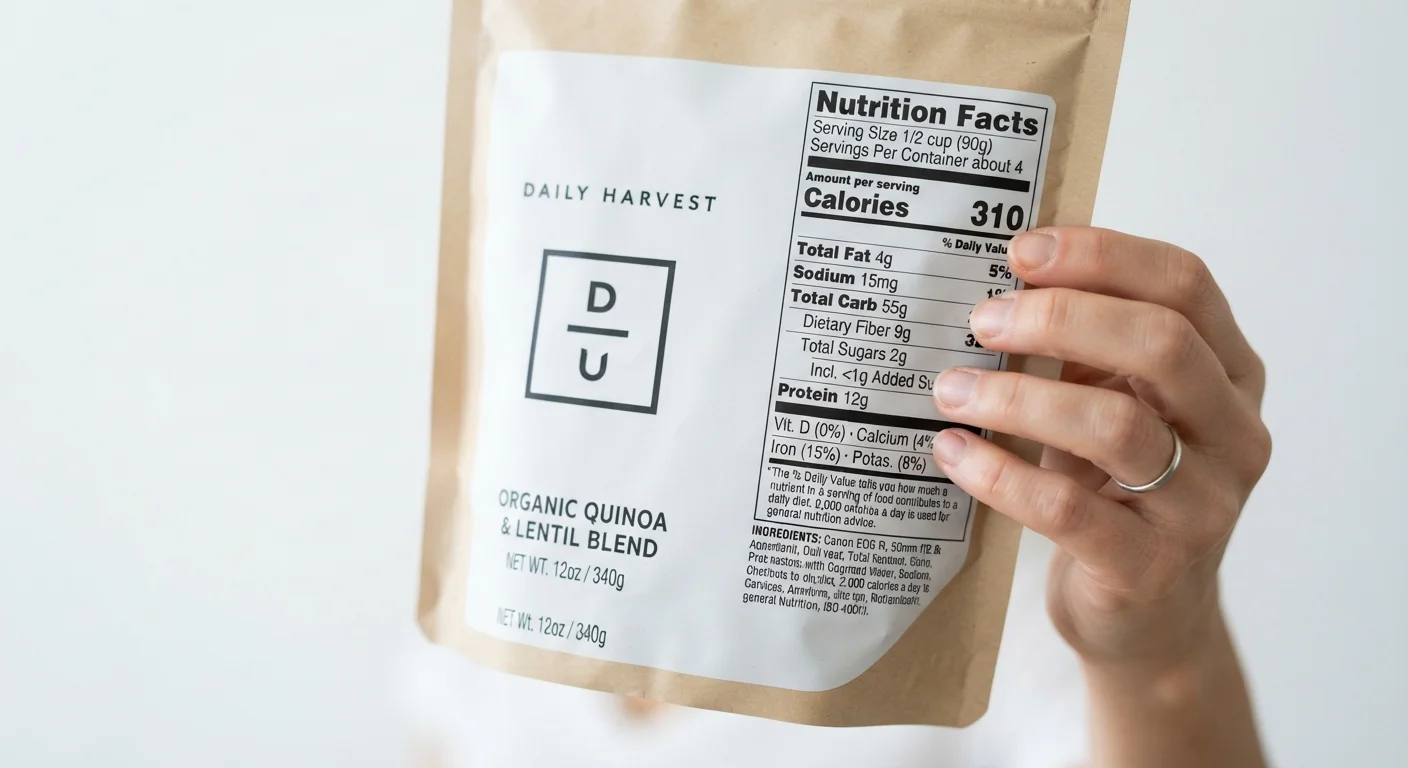
Packaged food product
Provides a real Nutrition Facts label to practice reading alongside these steps.
FDA's interactive Nutrition Facts label guide (fda.gov)
An official visual reference that labels each section of the panel with plain-language explanations.
Step-by-Step: How to Read the Label
Work through the Nutrition Facts panel in order from top to bottom — the layout is intentional. Follow the steps below with an actual product in hand for the most useful practice.
What you will need
Find the serving size and servings per container
The very first line of the Nutrition Facts panel lists the serving size — for example, "2 crackers (30g)" — followed immediately by servings per container. Every calorie count, gram, and percentage on the rest of the label is based on this one serving, not the whole package.
If a bag of chips lists 3 servings and you eat the entire bag, you triple every number shown. This single step prevents the most common misreading of nutrition labels.
Check the calorie count
Calories are displayed in the largest font on the label — they represent the total energy in one serving from all three macronutrients (fat, carbohydrate, and protein) combined. Neither low-calorie nor high-calorie automatically makes a food good or bad; context and overall diet pattern matter far more than any single number.
Scan nutrients to limit: saturated fat, sodium, and added sugars
These three nutrients appear together in the middle of the panel. Consuming too much of any of them over time is associated with elevated cardiovascular and metabolic health risks, according to federal dietary guidance.
- Saturated fat — listed in grams and as a % DV under total fat.
- Sodium — particularly relevant for people managing blood pressure; many packaged foods are surprisingly high.
- Added sugars — a mandatory line since the FDA's 2020 label update, indented below total sugars. Unlike naturally occurring sugars in fruit or dairy, added sugars provide energy with minimal nutritional benefit. See our guide to natural vs. added sugars for deeper context.
Look for nutrients to get enough of
Below the nutrients to limit, the label lists nutrients many Americans under-consume: dietary fiber, vitamin D, calcium, iron, and potassium. Higher % Daily Values for these nutrients are generally desirable. Dietary fiber, for instance, supports digestive health and is linked to a range of longer-term benefits — our fiber overview explains why most adults fall short. For a broader look at vitamins and minerals, see Micronutrients at a Glance.
Interpret the % Daily Value column
The % Daily Value (% DV) column runs down the right side of the panel. It tells you what percentage of a recommended daily amount one serving provides, based on a 2,000-calorie diet. Use it as a quick comparative tool: it lets you rank two similar products side-by-side at a glance without doing math. The Dietary Guidelines for Americans inform these reference values.
Read the ingredients list
Immediately below the Nutrition Facts panel you'll find the ingredients list, which is ordered by weight from most to least. The first two or three ingredients make up the bulk of the product. If refined flour or multiple forms of added sugar appear near the top, the product leans heavily on those inputs. This list is especially useful for identifying allergens (required to be declared) and for understanding how processed a product is — a concept explored further in our whole foods vs. ultra-processed foods guide.
Use % DV for Quick Comparisons
When choosing between two similar products, skip the gram math and compare % Daily Values directly. A higher % DV for fiber and a lower % DV for saturated fat and sodium generally indicates a more nutrient-favorable choice. This shortcut works reliably because % DVs are calculated on the same standard reference, making them directly comparable across different labels.
Putting It in Context: Labels Are One Tool, Not the Whole Picture
Nutrition labels provide useful data, but no single food determines diet quality. A product high in sodium can still fit a well-balanced diet if the rest of your day's meals are low in sodium. Conversely, a food with an excellent label profile can be over-consumed in ways that undermine its benefits.
People with specific health conditions — such as diabetes, kidney disease, or cardiovascular concerns — may need to pay closer attention to particular nutrients than the general guidance here suggests. If you have a diagnosed condition or are managing your diet under medical supervision, work with a registered dietitian or your healthcare provider to interpret labels in the context of your individual needs. See our Health Conditions hub for condition-specific informational guides.
Nutritional needs also shift across life stages — what to prioritize at 25 looks different at 65. Our article on nutrition across life stages covers how those priorities evolve.
"Low Fat" Doesn't Mean Low Everything
Front-of-package claims like "low fat," "reduced sugar," or "light" describe only the nutrient they reference — other nutrients may be high. A "low-fat" product may compensate with added sugar to maintain palatability. Always flip to the Nutrition Facts panel to evaluate the full picture rather than relying on front-of-package marketing language.
This article is for general informational and educational purposes only and is not a substitute for professional medical or dietary advice. Consult a qualified healthcare provider or registered dietitian for guidance specific to your health situation.