

Key Takeaways
Option A
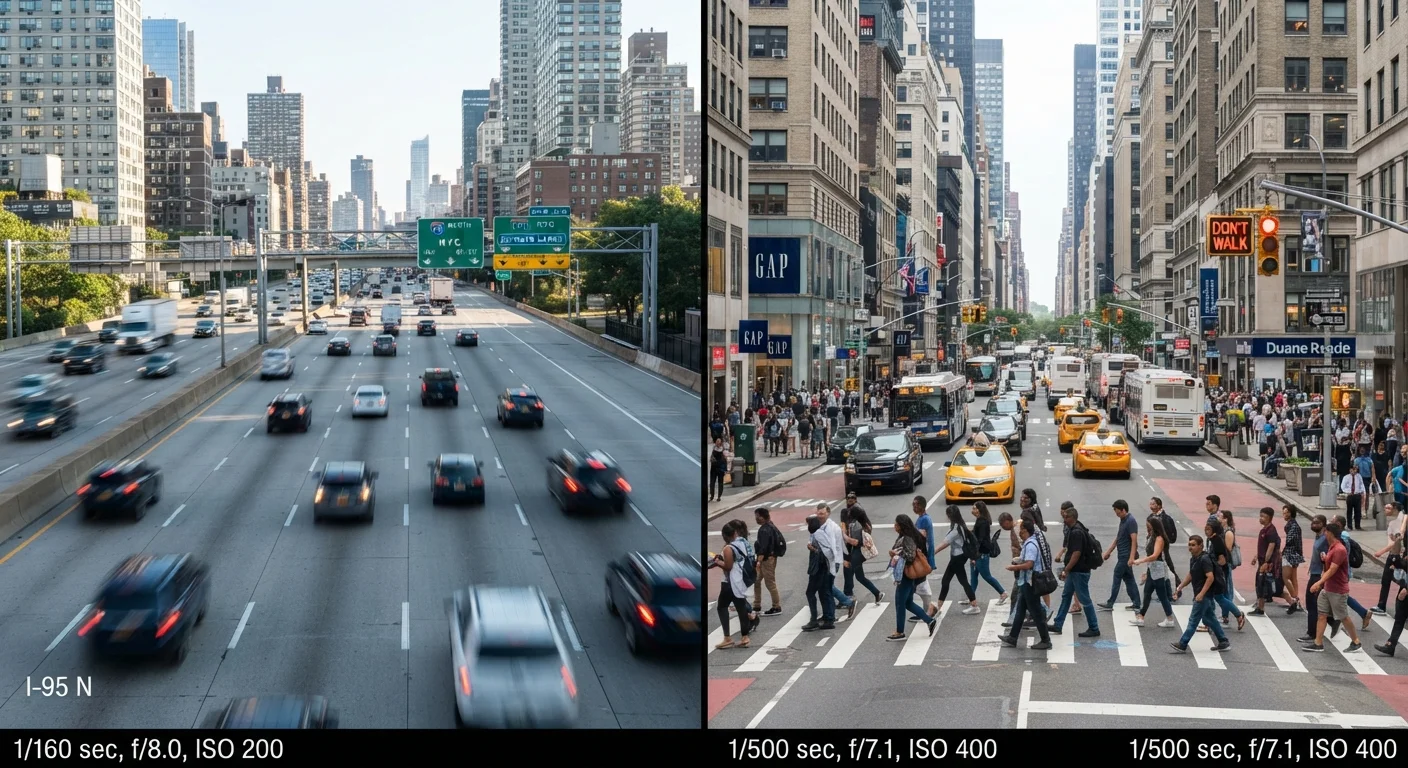
Highway Driving
High-speed, sustained attention in a controlled environment.
Best for: Long-distance travel where maintaining consistent speed and following distance are the primary safety disciplines.
Option B
City Driving
Low-speed, high-complexity navigation through unpredictable conditions.
Best for: Short-distance trips through dense traffic where scanning intersections and anticipating pedestrians are essential moment-to-moment skills.
If you primarily commute long distances on freeways
Highway Driving
Mastering space management, lane discipline, and fatigue awareness will address your highest daily risk factors on open roads.
If you mostly navigate dense urban neighborhoods
City Driving
Sharpening intersection awareness, pedestrian anticipation, and slow-speed hazard scanning matters most in stop-and-go urban environments.
If you are a new driver building foundational skills
City Driving
Urban driving exposes you to the widest variety of hazards at manageable speeds, building situational awareness that transfers to all environments.
Why These Two Environments Demand Different Instincts
Most US drivers regularly switch between highways and city streets without consciously adjusting their approach. That mental autopilot carries real risk. Highway and city driving present categorically different hazard profiles - one environment penalizes lapses in speed and spacing, the other punishes inattention to what's happening at close range.
According to the National Highway Traffic Safety Administration (NHTSA), fatal crash patterns differ between urban and rural roadways, with speed-related factors more prominent on high-speed roads and intersection-related crashes clustering in urban areas. Recognizing these patterns is the first step toward adapting your habits deliberately.
For a broader look at building safe habits across all conditions, see the complete road safety guide for US drivers. New drivers in particular benefit from understanding these environmental differences early - the guide for new US drivers going solo covers these distinctions alongside core lane and intersection fundamentals.
| Criterion | Highway Driving | City Driving |
|---|---|---|
| Primary speed range | 55-75 mph | 15-45 mph |
| Dominant hazard type | Speed, spacing, fatigue | Intersections, pedestrians, cyclists |
| Recommended following distance | 4-6 seconds minimum | 2-3 seconds; full stop gap |
| Fatigue risk level | Higher - monotony accelerates it | Lower - frequent stimulation |
| Distraction risk level | Moderate - high-cost errors | High - frequent decision points |
| Lane change complexity | High speed, large blind spots | Low speed, multiple road users |
| Key skill to develop | Speed matching and merging | Intersection and crosswalk scanning |
Highway Driving: The Safety Habits That Matter Most
Following distance. At 65 mph, a vehicle travels roughly 95 feet per second. The standard three-second following rule becomes inadequate in adverse conditions - safety experts generally recommend four to six seconds on highways, particularly in heavy traffic or poor weather. Rain, snow, and fog compress stopping distances further and demand even greater spacing.
Merging technique. Entering a highway requires matching freeway speed before joining the travel lane - not slowing at the end of the on-ramp and hoping for a gap. Premature braking on a ramp is a significant rear-end crash trigger. The rules around merging and right-of-way are frequently misunderstood and worth reviewing specifically.
Fatigue management. Highway monotony accelerates driver fatigue faster than urban driving. NHTSA data consistently links drowsy driving to high-speed roadway crashes. Scheduling regular stops on long trips - roughly every two hours - reduces this risk more reliably than caffeine alone.
Speed and crash physics. The relationship between speed and crash severity is not linear. Doubling speed roughly quadruples kinetic energy at impact. The safety trade-offs of driving faster are often underestimated by drivers who view speeding as a minor infraction rather than a compounding risk factor.
~36%
US fatal crashes involving speeding
NHTSA data indicates speeding is consistently a factor in roughly one-third of all traffic fatalities in the United States.
40%+
Crashes occurring at or near intersections
The Federal Highway Administration estimates that a large proportion of all reported crashes in the US involve intersections, underscoring city driving risk.
3 sec
Minimum highway following distance rule
Safety guidance from NHTSA recommends at least a three-second gap under ideal conditions, increasing to four or more seconds at higher speeds or in poor weather.
City Driving: The Safety Habits That Matter Most
Intersection scanning. Urban intersections account for a disproportionate share of crashes involving cross-traffic, turning vehicles, and pedestrians. Treating a green light as permission to accelerate without checking cross-traffic is a common and dangerous reflex. Pausing briefly before moving on a fresh green - sometimes called a "defensive start" - gives time to confirm the intersection is clear.
Pedestrian and cyclist awareness. City environments require continuous scanning beyond the vehicle directly ahead. Pedestrians step off curbs between parked cars; cyclists filter through gaps; delivery vehicles create blind spots when double-parked. Adjusting mirror checks and expanding your scan zone to the sidewalk level are habits that don't apply on open highways but are essential here.
Distraction risk. Low speeds create a false sense of safety that lowers a driver's guard. Research consistently shows that cognitive distraction - including hands-free phone calls - degrades hazard detection regardless of speed. Distracted driving myths are worth understanding before concluding that city speeds make inattention acceptable.
Road rage exposure. Stop-and-go traffic, contested parking, and frequent cut-ins concentrate frustration in city environments. Recognizing escalation patterns early matters more in dense urban traffic than on open roads. Recognizing and avoiding road rage offers practical de-escalation guidance relevant to everyday urban commuting.
Night Driving Adds Another Layer
Both highway and city driving become meaningfully more hazardous after dark. Reduced visibility, driver fatigue, and a higher proportion of impaired drivers on the road change the risk profile of both environments. The night driving risks that daytime experience won't prepare you for are worth reviewing separately from the daytime habits covered here.