

Key Takeaways
Why Weather Conditions Fundamentally Change Driving Physics
Most drivers learn road skills in dry, daylight conditions - yet rain, snow, and fog each alter the basic physics of vehicle control in ways that dry-road instincts don't account for. Traction drops, stopping distances grow, and visibility narrows, all at the same time. Understanding the mechanism behind each condition is the first step to managing it safely.
Rain reduces friction between tires and pavement. Snow and ice reduce it further, often dramatically. Fog doesn't change traction, but it compresses your available reaction time by shrinking what you can see. These aren't just inconveniences - they're genuine changes to the driving environment that call for adjusted technique. The principles of defensive driving become even more critical when conditions deteriorate.
21%
Of US crashes are weather-related
According to the Federal Highway Administration, approximately 21% of vehicle crashes in the US each year are weather-related, involving rain, snow, ice, or fog.
10x
Longer stopping distance on ice vs. dry road
Safety researchers estimate that stopping distances on ice can be up to ten times greater than on dry pavement at the same speed.
Driving in Rain: Traction, Hydroplaning, and Visibility
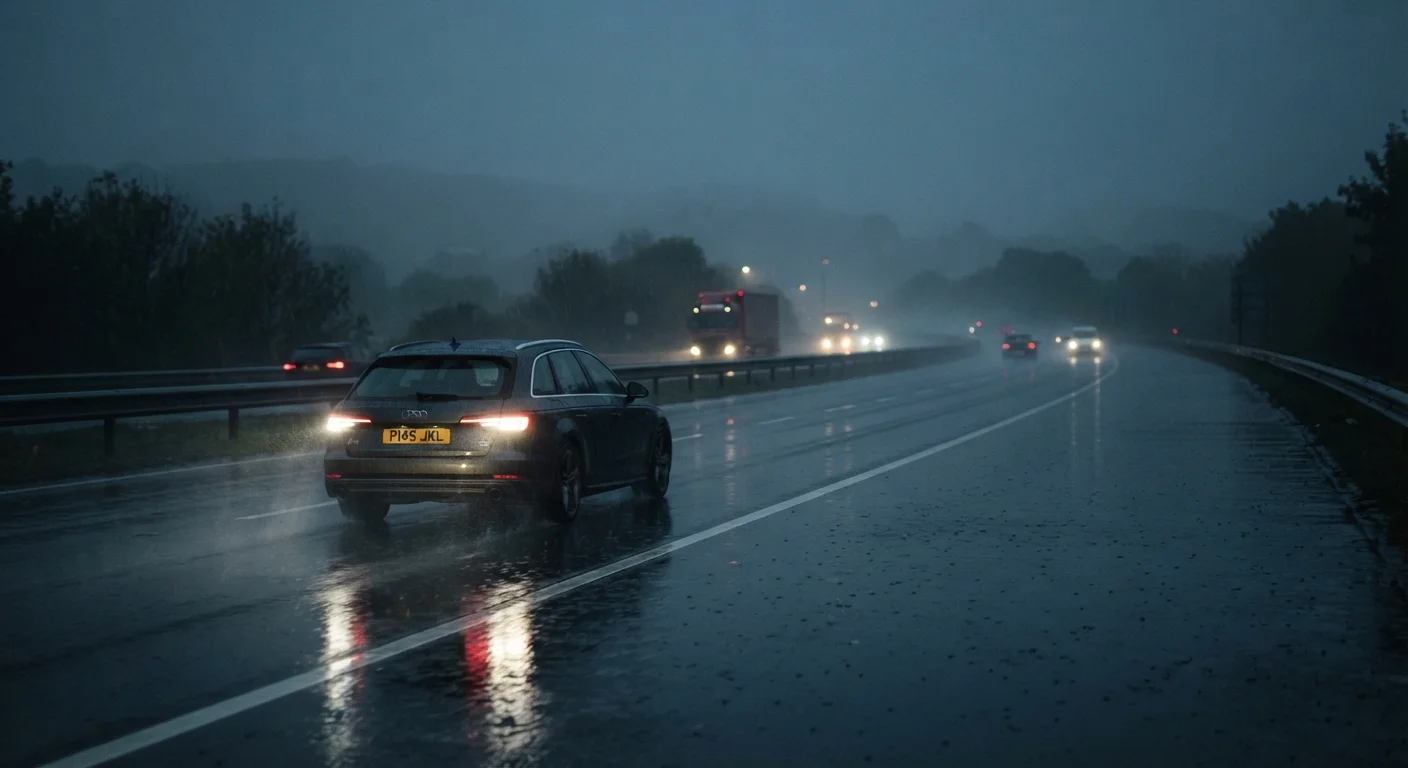
Light rain can actually be more dangerous than a heavy downpour during its first few minutes - it lifts road oils to the surface before washing them away, creating slicker conditions than most drivers expect. Once heavier rain begins, the primary risk shifts to hydroplaning, where your tires ride on a film of water and lose contact with the road surface entirely.
To reduce hydroplaning risk, slow down - particularly above 35 mph where the risk rises sharply - avoid standing water, and ensure your tires have adequate tread depth. If you do hydroplane, ease off the accelerator gently and steer straight; do not brake hard. Rain also reduces visibility, so turn on your headlights (required by law in most US states when wipers are in use) and increase your following distance to at least four seconds from the vehicle ahead.
Watch for the First Few Minutes of Rain
Roads are often most slippery at the start of a rain shower, before water washes away accumulated oil and rubber deposits. Treat the first ten minutes of rainfall as higher-risk than steady rain - ease off the accelerator and increase your following distance even if the rain seems light.
Snow and Ice: When Stopping Distance Multiplies
On packed snow, stopping distances can be three times longer than on dry pavement. On ice, that figure can reach ten times or more. This single fact should recalibrate how fast you travel and how much space you leave. Posted speed limits reflect ideal conditions - in snow or ice, driving significantly below them is not timid; it is correct.
Black ice - a thin, nearly transparent layer of ice - is particularly hazardous because it is visually indistinguishable from wet pavement. It forms most readily on bridges, overpasses, and shaded stretches of road at temperatures near or just below freezing. If your vehicle begins to slide on ice, steer gently in the direction you want to go and avoid sudden braking. Drivers with anti-lock brakes (ABS) should apply firm, steady pressure; those without should threshold-brake carefully. For context on how emergency vehicle dynamics work, see our guide on handling vehicle emergencies.
Reduce speed well below the posted limit on snow or ice.
Posted speed limits assume dry, clear conditions. Snow and ice multiply stopping distances dramatically, making limit-speed travel genuinely dangerous even for experienced drivers.
Increase your following distance to at least four seconds in rain, more in snow and ice.
Following distance is your primary safety buffer. Reduced traction means your vehicle will take longer to stop, so the gap that feels normal in dry weather becomes dangerously short in wet or icy conditions.
Never use high beams in fog; use low beams and dedicated fog lights if equipped.
High beams reflect off fog particles and create a blinding glare that reduces your own visibility. Low beams project light downward, cutting under the fog layer more effectively.
Steer gently and avoid abrupt braking if you begin to skid or slide.
Sudden steering or braking inputs during a skid can amplify the loss of control rather than correct it. Smooth, deliberate inputs give the tires a better chance of regaining traction.
Pull off the road safely if conditions exceed your ability to manage them.
Continuing to drive in conditions beyond your vehicle's or your own capabilities is a significant crash risk. Recognizing when stopping is the right call is a skill, not a failure.
Fog: Managing Low Visibility with Correct Lighting
Fog is one of the most consistently mismanaged conditions on US roads, largely because of lighting confusion. High beams are counterproductive in fog - the light reflects back off water droplets and reduces your forward visibility further. Use low beams, and if your vehicle has dedicated front fog lights, engage them. Rear fog lights, where fitted, help following drivers see you.
Reduce speed enough that you can stop within the distance you can actually see - this is a principle sometimes called «driving within your headlights.» Increase following distance substantially, and use the road's edge markings as a guide rather than relying on taillights of the car ahead, which can disappear without warning. If visibility drops to near zero, it may be safer to exit the road, turn on your hazard lights, and wait - do not stop on the travel lane itself. Fog conditions share some risk characteristics with night driving, particularly around compressed reaction time.
General Principles That Apply Across All Adverse Conditions
Regardless of whether you're navigating rain, snow, or fog, a set of core adjustments applies universally. Slow down, increase following distance, turn on your headlights, and eliminate distractions. Check your vehicle's condition before winter arrives - tire tread, wiper blades, and battery health all matter more when conditions are harsh.
For new or less experienced drivers, adverse weather can be genuinely disorienting. Our guide on what new US drivers should know covers foundational skills that apply in all conditions. And for a comprehensive look at road safety from preparation through emergency response, see Road Safety From Start to Finish. The key principle is simple: adverse conditions shrink your margin for error, so expand every buffer you have - space, time, and speed - accordingly.
State Laws on Headlights and Weather
Most US states require headlights to be on when windshield wipers are in use, and some extend this requirement to any condition that reduces visibility. Requirements vary by state, so check your state's Department of Motor Vehicles guidelines. When in doubt, lights on is always the safer default.