

Key Takeaways
Vehicle Blind Spot
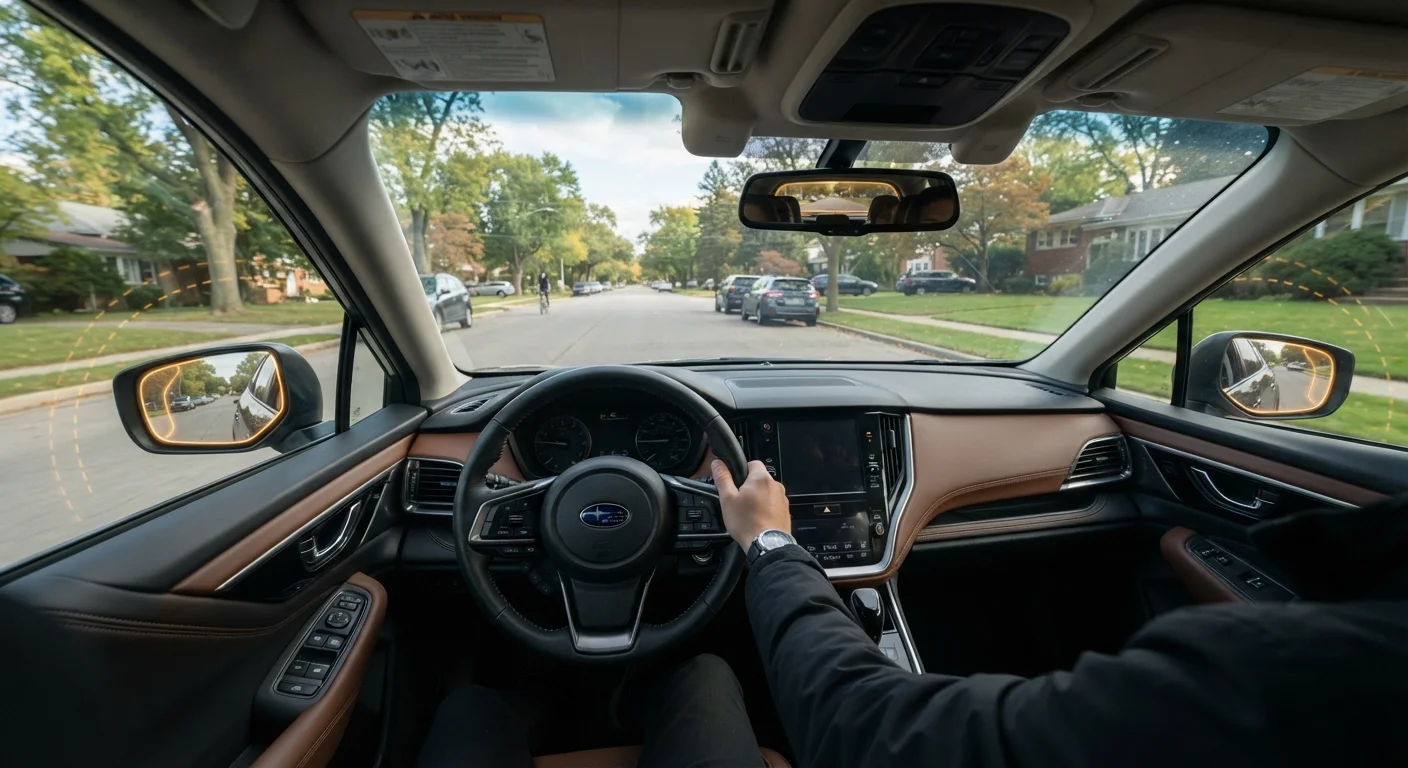
A blind spot is any area around your vehicle that your mirrors and direct line of sight cannot adequately cover. These zones exist in every car, truck, and SUV - they vary in size depending on the vehicle's design, mirror placement, and your seating position. Drivers who don't account for blind spots risk missing pedestrians, cyclists, or other vehicles positioned just outside their field of view.
Blind spots are formally studied in vehicle ergonomics and crash causation research. The Society of Automotive Engineers (SAE) has published standards on mirror field-of-view requirements, though real-world gaps vary considerably by vehicle class.
Why Mirrors Only Tell Part of the Story
Most drivers assume their mirrors provide a complete picture of the space around their vehicle. In practice, even a well-adjusted three-mirror setup leaves meaningful gaps. A standard interior rearview mirror covers the narrow band directly behind the car. Side mirrors extend that view outward, but only within the angle at which they're set - and most drivers angle them too far inward, effectively duplicating the rearview rather than extending it.
The result is a pair of triangular zones - one on each rear flank - where another vehicle, cyclist, or pedestrian can sit entirely unseen. On a typical four-door sedan, these zones can be large enough to hide a motorcycle or compact car. On larger vehicles, the gap is proportionally wider.
Understanding this isn't about criticizing mirrors - it's about knowing what they're designed to do and what they're not. Mirrors are fixed-angle snapshots of limited arcs. The space around a moving vehicle is three-dimensional and constantly changing. Highway merging and city lane changes both expose these gaps in different ways, which is why technique matters in both environments.
Mapping the Blind Zones on a Typical Vehicle
It helps to think of blind spots by position rather than treating them as a single concept:
- Rear corners (left and right): The most consequential zones. When changing lanes, a vehicle traveling in the adjacent lane at roughly the same speed can sit squarely in this gap - visible neither in the side mirror nor the rearview.
- Direct rear: Anything low and close behind the vehicle disappears entirely, which is why backup cameras became federally required on all new passenger cars sold in the US after May 2018.
- Front corners and hood: Particularly relevant in parking and slow-speed maneuvers. Taller vehicles with long hoods have a pronounced forward blind zone that can conceal children or small obstacles.
- The B-pillar zone: The structural post between the front and rear side windows creates a narrow but real blind zone to the driver's right when looking over the shoulder.
The size of each zone shifts with your seat height and position, the vehicle's design, and whether rear passengers or cargo are blocking your interior view. New drivers often underestimate just how much the vehicle's geometry shapes what they can and cannot see.
840,000+
Annual US crashes linked to blind spots
According to estimates cited by the National Highway Traffic Safety Administration (NHTSA), blind spot-related incidents account for hundreds of thousands of crashes each year in the United States.
~20%
Of vehicle perimeter not covered by standard mirrors
Research on vehicle sight-line geometry suggests that even properly adjusted mirrors leave roughly a fifth of the surrounding perimeter uncovered on a standard passenger sedan.
2018
Year rear backup cameras became federally required on new US cars
The NHTSA's rear visibility rule mandated backup cameras on all new passenger vehicles sold in the US, phased in fully by May 2018, addressing the most acute low-rear blind zone.
Mirror Adjustment: The Technique That Matters
Proper mirror setup is the first line of defense - and it's widely misunderstood. The goal isn't to see the side of your own car; it's to see as far into the adjacent lanes as possible.
A commonly recommended approach: lean your head to touch the left window, then set the left mirror so your car's flank is just visible at the inner edge. Do the same from center for the right mirror. From your normal driving position, your own vehicle will have nearly disappeared from the side mirrors, replaced by a much wider view of adjacent traffic.
The rearview mirror should be centered on the rear window, adjusted so the full window frame is visible with minimal head movement. If your rearview is aimed at an angle for comfort, you're narrowing the field it covers.
Recalibrate If You Share the Vehicle
If multiple people drive the same car, mirrors will likely be in different positions when you get in. Make mirror adjustment part of your startup routine - alongside seat position and steering wheel height - before pulling out of the driveway. It takes under 30 seconds and ensures your blind zones are as small as possible from the first mile.
Even with optimal adjustment, the rear-corner gap doesn't disappear - it shrinks. A quick head check over the appropriate shoulder before any lane change or merge remains the most direct way to confirm those zones are clear.
Technology as a Layer, Not a Replacement
Modern driver-assist systems have meaningfully extended what drivers can detect without turning their heads. Blind spot monitoring systems use radar or cameras to flag vehicles in adjacent lanes, typically alerting the driver through a light in the mirror housing. Cross-traffic alert systems warn of approaching traffic when reversing out of a parking space. Rear cameras, now standard on new US vehicles, eliminate much of the low-rear blind zone.
These tools are genuinely useful. However, they carry important limitations:
- Radar-based BSM systems can struggle to detect fast-approaching motorcycles or cyclists in some conditions.
- Camera systems have fixed fields of view and perform worse in rain, mud, or low light.
- Alerts can be delayed in rapidly evolving situations.
- System malfunctions or sensor blockages can cause false confidence.
Safety researchers and driving instructors consistently treat these systems as supplements to - not replacements for - the head check and proper mirror technique. Over-relying on technology introduces its own form of inattention risk. The physical act of turning your head also signals to nearby drivers that you're actively checking - a communication benefit no sensor replicates.
Technology Availability Varies by Vehicle
Not all blind spot monitoring systems perform identically. The sensor type (radar versus camera), placement, and software logic differ across manufacturers and model years. If you're evaluating a vehicle's safety tech, the Insurance Institute for Highway Safety (IIHS) and NHTSA publish independent assessments of driver-assist system performance that can help you understand how a specific system performs in standardized tests.
Practical Habits That Close the Gap
Blind spot awareness isn't a one-time adjustment - it's an ongoing driving habit. A few practices that reduce risk in everyday driving:
- Check mirrors every 5-8 seconds in moving traffic to maintain an updated mental picture of surrounding vehicles.
- Signal before moving, not simultaneously. Early signaling gives other drivers time to react and move out of your intended path.
- Avoid lingering in other drivers' blind spots. If you can see a truck driver's mirrors, they can see you - if you can't, you're likely invisible to them.
- Before reversing, walk around the vehicle when conditions allow. This is especially important in parking lots where children may be behind the car.
- Adjust for passengers and cargo. A fully loaded rear seat or covered trunk window changes your interior sightlines. Compensate with increased reliance on mirrors and cameras.
These habits compound. Drivers who check mirrors consistently, signal early, and perform head checks before lane changes are operating with a significantly more complete picture of the space around their vehicle. See our pre-trip vehicle safety checklist for additional steps to take before heading out.