

Key Takeaways
Our Verdict
Neither approach is universally superior - the right choice depends on how much time and effort a seller is willing to invest versus how quickly they need to move on. Private sales reward patience with higher returns, while trade-ins reward convenience with a streamlined experience.
| Best for | Recommended |
|---|---|
| Sellers prioritizing maximum return and willing to handle the process independently | Private Party Sale |
| Those who value speed, simplicity, and a one-stop transaction | Dealership Trade-In |
| Buyers purchasing a new vehicle and wanting to reduce out-of-pocket costs at signing | Dealership Trade-In |
The Core Difference Between the Two Paths
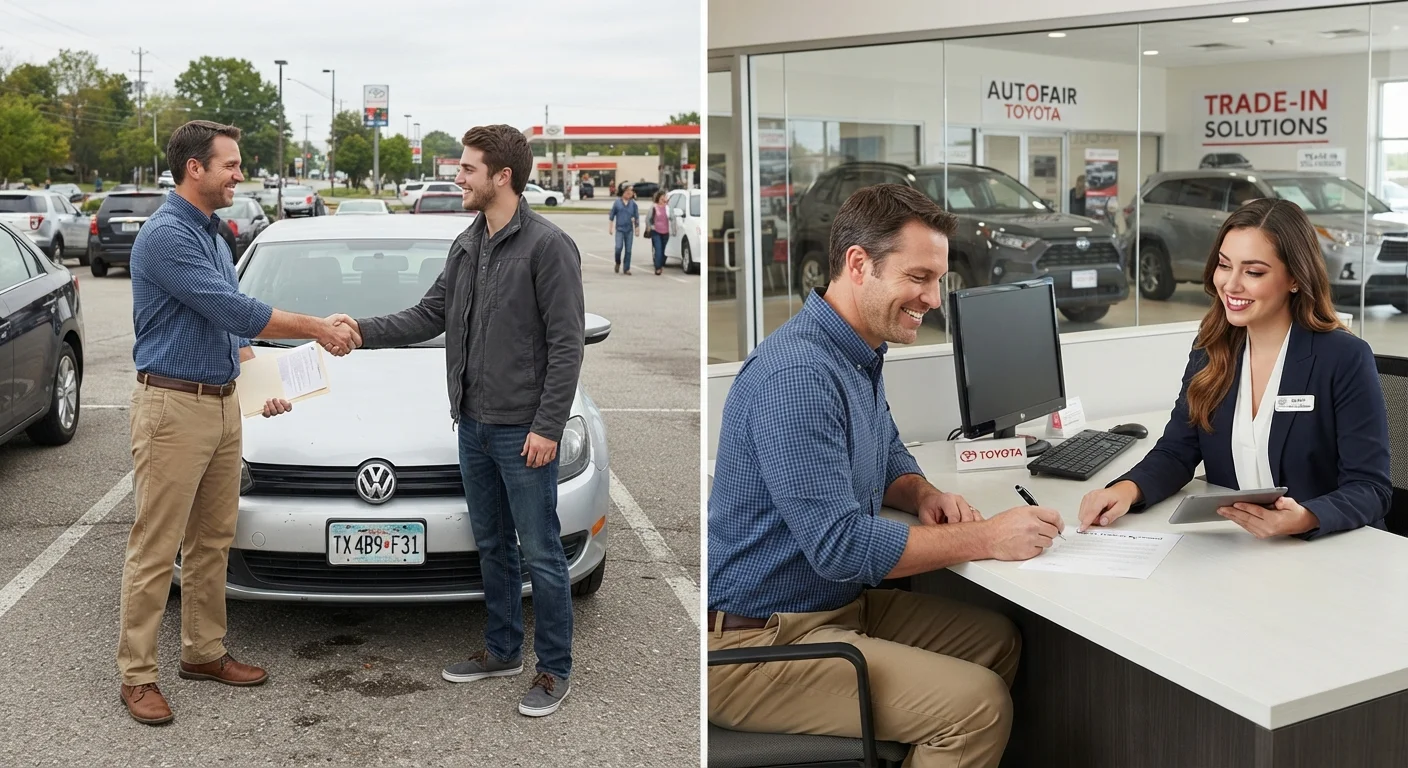
When it's time to part ways with a vehicle, US owners generally face two primary options: selling directly to another individual (a private party sale) or turning the car over to a dealership as a trade-in against another vehicle purchase. On the surface, both result in the same outcome - the car changes hands. In practice, the process, timeline, documentation, and financial result can differ substantially.
Understanding how your vehicle's value has changed over time is useful context before pursuing either route, since depreciation directly shapes what offers you're likely to receive.
| Private Party Sale | Dealership Trade-In | |
|---|---|---|
| Typical Return | Higher - closer to retail market value | Lower - wholesale or below-market offer |
| Time Required | Days to several weeks | Often same day as new car purchase |
| Paperwork Handled By | Seller manages most documents | Dealership manages most documents |
| Loan Payoff Coordination | Seller arranges with lender | Dealer typically facilitates payoff |
| Buyer Vetting | Seller's responsibility | Not applicable |
| Sales Tax Benefit on New Car | None | May reduce taxable amount in many states |
What a Private Party Sale Actually Involves
Selling your car privately means handling most steps yourself. The process typically begins with researching your vehicle's fair market value using reference sources such as Kelley Blue Book or NADA Guides, then creating a listing with photos and accurate details. Sellers generally field inquiries, schedule test drives, and negotiate directly with prospective buyers.
Once a buyer is found and a price agreed upon, the seller must prepare a bill of sale and sign over the title. If a loan is still outstanding on the vehicle, the lien must be satisfied - either by paying it off beforehand or coordinating with the lender during the transaction. Title transfer rules vary by state, so confirming your local DMV's requirements before finalizing the sale is important.
Gather Documents Before Listing
Before posting a private sale listing, locate your vehicle title, maintenance records, and any warranty documentation. Having these ready signals transparency to prospective buyers and speeds up the closing process. If the title has a lienholder listed, contact your lender early to understand their payoff and release process.
Payment handling is also the seller's responsibility. Cash, cashier's checks, and verified electronic transfers are common; personal checks carry risk. Sellers should also notify their insurer after the sale is complete.
What a Dealership Trade-In Involves
A trade-in is initiated at the dealership, typically when purchasing another vehicle. A representative appraises the trade-in - inspecting its condition, mileage, and market demand - and presents an offer. This offer is then applied as a credit toward the purchase price of the new vehicle.
The administrative work is largely handled by the dealership. They manage payoff of any existing loan, coordinate title transfer, and handle most DMV paperwork on the seller's behalf. For a look at what that title process involves in full, see what the title and registration process actually involves.
Trade-in offers tend to be lower than what a private buyer might pay. Dealers resell vehicles and must account for reconditioning, overhead, and profit margin. Sellers are effectively paying for the convenience and speed the dealership provides.
Don't Accept a Trade-In Offer Without Research
Accepting a dealer's first appraisal without knowing your vehicle's market value can result in leaving money on the table. Check independent valuation tools before your dealership visit and, where possible, obtain appraisals from more than one dealer. Trade-in offers are negotiable, much like the vehicle purchase price itself.
Key Factors to Weigh Before Deciding
Several practical considerations should shape which path a seller pursues:
- Time availability: Private sales can take days to weeks; trade-ins are often completed in a single dealership visit.
- Vehicle condition: Dealers may discount offers heavily for vehicles needing repairs; a private buyer might be more flexible or purchase the car as-is with full disclosure.
- Loan status: Both paths require the title to be clear or the loan handled - but dealers are experienced at facilitating payoff coordination.
- Tax implications: In many US states, trading in a vehicle reduces the taxable sale price of the new vehicle, which can partially offset the lower trade offer. Consult a tax professional for guidance specific to your state.
- Household logistics: If the car being sold is one of multiple vehicles, timing and transportation are simpler. Sellers of their only vehicle may find a trade-in more practical. For more on multi-vehicle considerations, see owning one car vs. two in a household.
$1,000-$3,000+
Typical gap between private and trade-in value
Industry analysts generally estimate that private party sales return meaningfully more than dealer trade-in offers, though the exact difference varies by make, model, condition, and local market.
~43%
US new car buyers who trade in a vehicle
According to Edmunds data, a substantial share of new vehicle transactions in the US involve a trade-in as part of the deal structure.