

Key Takeaways
Vehicle Depreciation
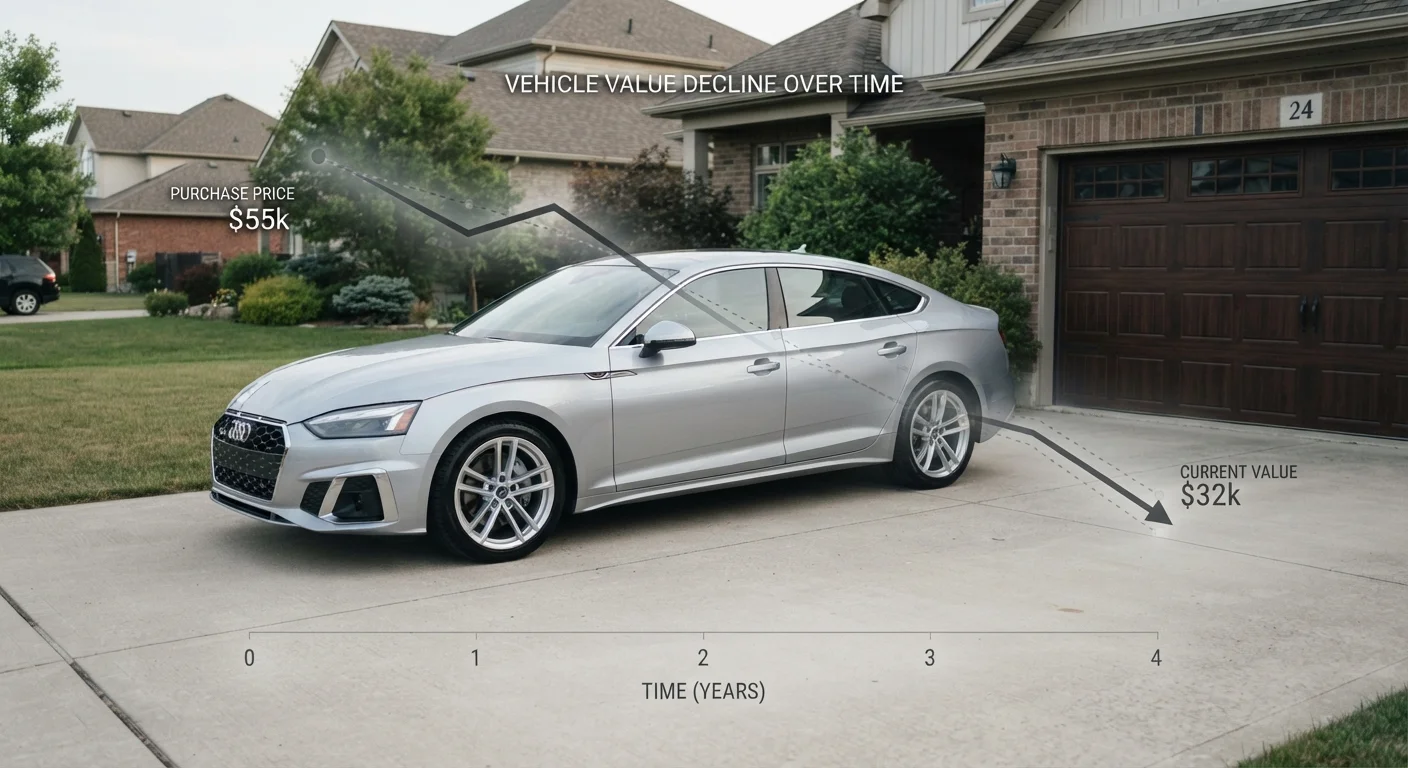
Depreciation is the decline in a vehicle's market value over time. From the moment a new car is driven off the lot, it begins losing worth - not because anything is wrong with it, but because it is now a used vehicle. This loss of value affects what you can get if you sell or trade in the car, how much your insurance will pay if it is totaled, and whether you owe more on a loan than the car is worth.
In accounting, depreciation is also recorded as a business expense to reflect asset wear; vehicle owners encounter it primarily as a market-value concept, not an accounting entry, unless they use the vehicle for business purposes.
Why a Car Loses Value the Moment You Buy It
The instant a new vehicle is registered and driven away, it transitions from new to used in the eyes of the market - and its resale value reflects that immediately. This is not a flaw in the vehicle; it is simply how the used-car market prices goods. A buyer purchasing your car the next day would expect a discount compared to the new price, because they are taking on a vehicle with an ownership history.
Beyond that initial drop, depreciation continues at a more gradual pace driven by age, mileage, wear, and shifts in supply and demand. For most conventional passenger vehicles, the first three years represent the steepest cumulative loss. Understanding this curve helps owners plan when to sell or trade in a vehicle for maximum return.
~20%
Average new car value lost in year one
Industry data commonly cited by vehicle valuation services suggests new cars lose roughly 15-25% of value in the first 12 months.
~50%
Value lost over five years on average
Many conventional new vehicles retain only about half their original purchase price after five years of typical use and mileage.
12,000-15,000
Average annual miles driven in the US
The Federal Highway Administration estimates the average American driver covers approximately 14,000 miles per year, a benchmark used in vehicle valuations.
If you are currently shopping or have recently purchased, the guide for first-time car owners covers how depreciation fits into the broader picture of new ownership responsibilities.
What Drives the Rate of Depreciation
Not every vehicle depreciates at the same pace. Several factors accelerate or slow the loss of value:
- Mileage: Higher annual mileage shortens the perceived remaining useful life of a vehicle, reducing what buyers are willing to pay.
- Condition: Scratches, worn interiors, and mechanical issues all lower appraisal values. Regular maintenance tends to preserve both function and perceived value.
- Vehicle segment: Trucks and SUVs with strong consumer demand have historically held value better than some sedans, though market conditions vary over time.
- Brand reputation for reliability: Vehicles associated with long-term dependability in consumer data tend to retain more value than those with weaker reliability histories.
- Fuel type and technology shifts: As the automotive market evolves, older powertrain technologies can depreciate faster if buyer preference shifts significantly.
Slow Depreciation With Consistent Maintenance
Keeping up with scheduled service intervals, addressing minor cosmetic issues promptly, and maintaining accurate service records can meaningfully support your vehicle's resale value. Buyers and dealers both factor condition into their offers, so a well-maintained vehicle with documented history typically appraises higher than a neglected one of the same age and mileage. Review the annual car ownership checklist to stay on top of tasks that protect long-term value.
For a comprehensive look at how depreciation fits alongside fuel, insurance, and maintenance costs, see the real cost of owning a car in the US.
How Depreciation Affects Loans, Trade-Ins, and Insurance
Depreciation has direct financial consequences beyond a future selling price. Three situations where it becomes immediately relevant are:
Loan Balance vs. Market Value
When you finance a vehicle, your loan balance decreases according to a fixed payment schedule, while the car's value follows the market depreciation curve. In the early years of a loan - especially with low down payments or extended loan terms - it is common for the outstanding balance to exceed what the vehicle is currently worth. This condition, called negative equity or being "upside down," can create problems if you need to sell or replace the car before the balance catches up to the market value. Consulting a credit resource can help you understand how loan structuring affects this risk.
Trade-In Offers
Dealers calculate trade-in offers based on the vehicle's current wholesale market value, which incorporates depreciation. Understanding roughly where your vehicle sits on the depreciation curve helps you evaluate whether a trade-in offer is reasonable or whether a private party sale might return more value.
Insurance Payouts on Total Losses
Most standard auto policies pay the actual cash value (ACV) of a vehicle if it is declared a total loss - meaning the depreciated market value at the time of the incident, not what you originally paid. If your loan balance exceeds the ACV, the gap is not automatically covered. Gap insurance, an optional add-on, is designed specifically to bridge that difference. For more on how coverage types work, see car insurance coverage types every owner should recognize.
Gap Insurance Is Not Automatically Included
Gap coverage is typically an optional add-on to an auto insurance policy or a product offered through a lender at the time of financing. It does not come standard with most policies. If you financed your vehicle with a small down payment or a long loan term, it is worth reviewing your current policy to determine whether gap protection is in place. Coverage terms, eligibility, and costs vary by provider and individual situation - consult a licensed insurance agent for guidance specific to your circumstances.
Comparing Depreciation to Home Equity
It is worth noting that vehicle depreciation works in the opposite direction from home equity. A home, under most market conditions, tends to appreciate over time, building equity that owners can borrow against or realize upon sale. A vehicle, by contrast, consistently loses value - meaning ownership does not build a financial asset in the same way. This distinction matters when thinking about overall household finances. For a direct comparison, the explainer on how home equity works is a useful reference.
“The moment you drive a new car off the lot, you have already made a financial decision - the question is whether you understood the full cost of that decision going in.”
— Consumer Financial Protection Bureau, US federal agency providing consumer financial education
Keeping depreciation in mind is one of the most practical ways to approach vehicle ownership with clear financial expectations. It does not mean avoiding car purchases - it means understanding the true cost structure so you can budget accurately, time trade-ins wisely, and choose appropriate insurance coverage from the start.