

Key Takeaways
Vehicle Title & Registration
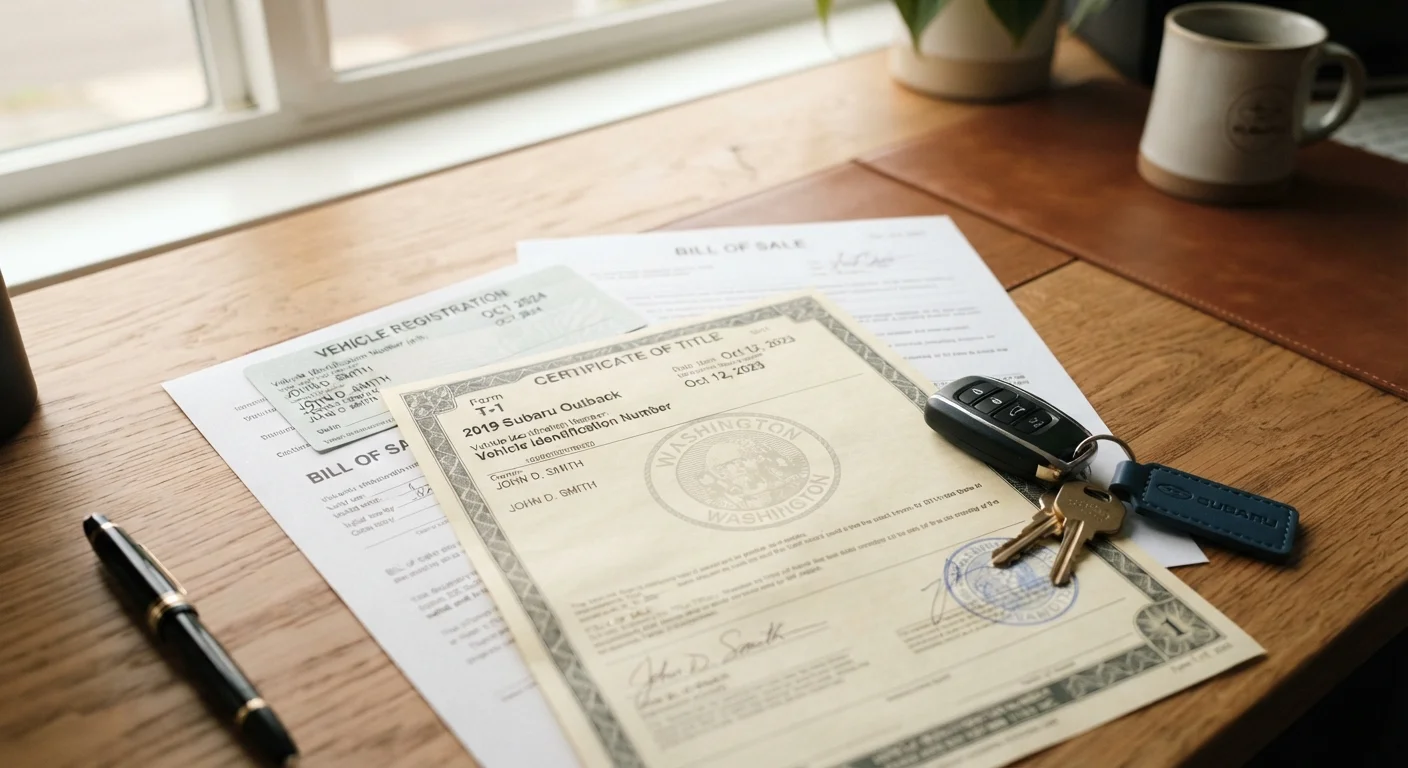
A vehicle title is a legal document that proves who owns a car. Registration is a separate government-issued credential that authorizes the vehicle to be driven on public roads. Both are required, but they serve distinct purposes and are issued by different processes.
Titles are typically issued by a state's Department of Motor Vehicles (DMV) or equivalent agency, while registration must be renewed periodically - usually annually - and is tied to the vehicle's license plate.
The Title: Proof of Legal Ownership
A vehicle title - sometimes called a "pink slip" - is the official document that establishes who legally owns a car. Think of it the way you would a deed to a house: it names the owner, describes the property, and records any claims against it.
Key details printed on a title typically include the owner's name and address, the vehicle identification number (VIN), the make, model, year, and odometer reading at the time of transfer. If you financed the purchase, your lender is also listed as a lienholder, meaning they hold a legal interest in the vehicle until your loan is repaid.
When ownership changes - through a sale, gift, or inheritance - the title must be formally transferred. The seller signs the back of the title, the buyer completes the required sections, and both parties submit the paperwork to the state DMV. For a detailed look at how this works across states, see how title transfers work state by state.
Electronic Titles Are Becoming Common
Many states now offer or require electronic titles (e-titles), which are held digitally in the DMV's system rather than mailed as paper documents. If your state uses e-titles, you may not receive a physical certificate unless you specifically request one. Check with your state DMV to understand how your title is stored and how to access it when needed.
Registration: Permission to Drive on Public Roads
Registration is separate from ownership - it's the state's authorization for a specific vehicle to operate legally on public roads. When you register a vehicle, you receive a registration certificate and a license plate (or a renewal sticker for an existing plate).
Unlike a title, registration is not permanent. Most states require annual renewal, and the process typically involves paying a fee based on factors like the vehicle's age, weight, or value. Many states also require proof of valid auto insurance before they'll process a renewal. Some require a passing emissions or safety inspection.
Missing your renewal deadline can result in fines and, in some states, the inability to legally drive the vehicle. Staying current on registration is one of those routine tasks that's easy to overlook - see annual car ownership tasks most drivers forget for a checklist that keeps you on track.
Set a Registration Renewal Reminder
Registration deadlines can sneak up on you, especially in states that don't send physical notices. Add your renewal date to your phone's calendar as soon as you register or renew. Many states allow online renewal, making it a quick task when you're prepared for it.
How the Process Works When Buying a Vehicle
Whether you buy from a dealership or a private seller, the title and registration steps differ slightly.
Dealership purchase: Licensed dealers typically handle the title application and initial registration on your behalf, collecting applicable taxes and fees at closing. You'll sign paperwork at the dealership, and the title and registration documents arrive by mail weeks later.
Private party purchase: The seller signs over the title to you at the time of sale. You then take the signed title - along with required forms, fees, and proof of insurance - to your local DMV to complete the transfer and register the vehicle in your name. Deadlines for completing this step vary by state, but acting promptly is important. If you're weighing the two purchase paths, this overview of private sales versus dealership trade-ins explains what each process entails.
50
Separate state DMV systems governing title and registration
Each US state operates its own vehicle title and registration rules, meaning fees, deadlines, and required documents vary considerably depending on where you live.
30-90 days
Typical window to register after establishing residency
Most states give new residents between 30 and 90 days to register an out-of-state vehicle locally before penalties apply, though the exact timeframe depends on state law.
Common Complications and What to Know
A few situations can complicate the title and registration process:
- Lost titles: If a seller can't produce a title, the DMV can issue a duplicate - but this takes time. Avoid purchasing a vehicle without a clear title unless you understand the steps required to resolve it.
- Out-of-state vehicles: Bringing a vehicle from another state typically requires a VIN inspection, a title transfer, and re-registration in your new home state. Requirements vary significantly.
- Salvage or rebuilt titles: Vehicles that have been declared a total loss carry a salvage title. If repaired and inspected, some states issue a rebuilt title. These designations affect insurability and resale value and should be disclosed in any transaction.
For new car owners navigating these processes for the first time, this guide to first-car ownership covers registration, insurance, and other essentials in one place.
This article provides general informational guidance on vehicle title and registration processes in the US. Rules, fees, and requirements vary by state. Always verify current requirements with your state's DMV or an equivalent authority.