

Key Takeaways
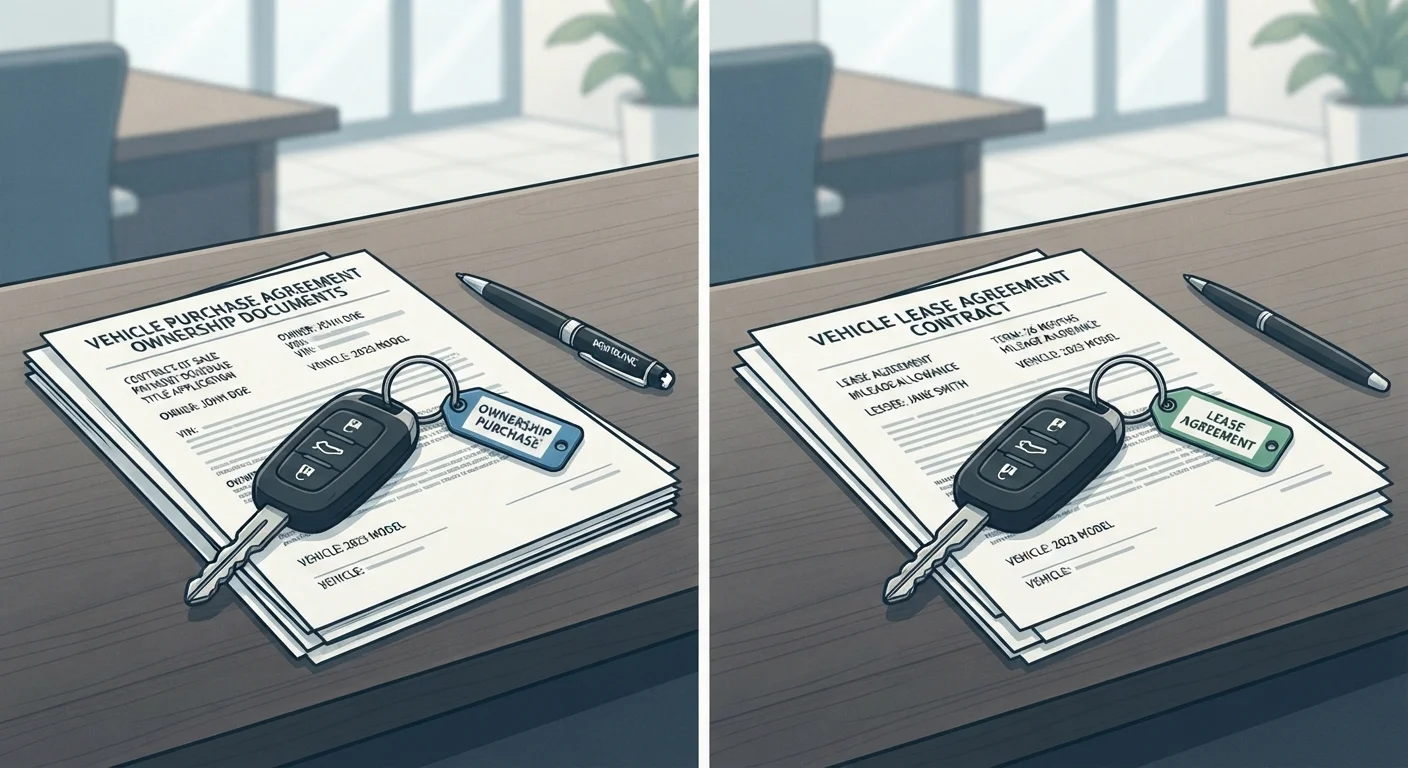
Option A
Financing a Car (Auto Loan)
The path to full ownership over time.
Best for: Drivers who want to build equity, drive without mileage restrictions, and keep the vehicle long-term.
Option B
Leasing a Car
Lower monthly costs with structured terms and a return date.
Best for: Drivers who prefer lower payments, like switching vehicles regularly, and drive predictable annual mileage.
If you drive more than 15,000 miles per year
Financing a Car (Auto Loan)
Lease agreements typically cap annual mileage at 10,000-15,000 miles; exceeding that triggers per-mile fees that can significantly inflate your total cost.
If you want the lowest possible monthly payment
Leasing a Car
Lease payments cover depreciation during the term rather than the full vehicle value, making them structurally lower than most loan payments for the same car.
If you plan to keep the vehicle for seven or more years
Financing a Car (Auto Loan)
Once your loan is paid off, you own the asset outright. Long-term financing often costs less overall than cycling through consecutive leases.
If you want to drive a newer model every two to three years
Leasing a Car
Leasing is structured around term-end returns, making it straightforward to transition to a newer vehicle without navigating a private sale or trade-in.
If you want to customize or modify your vehicle
Financing a Car (Auto Loan)
You own the vehicle, so modifications are your decision. Leased vehicles must typically be returned in near-original condition, making permanent changes costly.
Who Actually Owns the Car - and Why It Matters Day to Day
The single most consequential difference between financing and leasing is title. When you take out an auto loan, you own the vehicle from the moment you drive off the lot - the lender holds a lien until the loan is paid, but the car is yours. With a lease, the financing company (or dealership's leasing arm) retains ownership throughout the entire term. You are, in legal terms, a long-term renter.
That distinction has practical ripple effects. A financed vehicle can be sold privately, traded in, or refinanced at any point. If you want to exit a lease early, you typically face an early termination fee that can rival several months of payments. For households weighing whether one vehicle is enough, see our guide on one-car vs. two-car households for a realistic cost comparison.
Ownership also determines who absorbs depreciation. Financed buyers own an asset whose market value fluctuates - that can work in your favor or against you when it's time to sell. Lessees are insulated from depreciation risk but gain no equity in return.
Mileage, Condition, and Lease-Specific Obligations
Lease contracts introduce a set of ongoing obligations that financed buyers simply don't face. Chief among them is the mileage cap - most standard leases allow between 10,000 and 15,000 miles per year. Exceeding the cap triggers per-mile overage charges, commonly ranging from $0.15 to $0.30 per mile, which are assessed at lease return.
| Criterion | Financing (Auto Loan) | Leasing |
|---|---|---|
| Vehicle ownership | Buyer (lien until paid off) | Leasing company throughout |
| Monthly payment level | Typically higher | Typically lower |
| Mileage restrictions | None | Annual cap (usually 10K-15K miles) |
| Early exit flexibility | Sell or refinance anytime | Early termination fees apply |
| Equity built | Yes - grows as loan is paid down | None |
| Modifications allowed | Yes | Generally not permitted |
| End-of-term outcome | Full ownership, clear title | Return, buyout, or new lease |
| Insurance minimums | Lender-required minimums | Often higher minimums required |
Condition standards are equally important. At lease end, the vehicle is inspected against the leasing company's definition of "normal wear and tear." Dings, stains, worn tires beyond a threshold, or windshield chips can each result in charges. Financed owners absorb cosmetic wear as a reduction in resale value - but that's their call to make, not a contractual obligation.
Before signing any vehicle lease, it's worth understanding exactly what the agreement requires of you. Our breakdown of what lease agreements actually say covers how to read dense contractual language - principles that apply equally to vehicle leases.
Insurance, Maintenance, and Monthly Cost Realities
Both financing and leasing require continuous auto insurance, but lease contracts often mandate higher minimums - typically higher liability limits and lower comprehensive/collision deductibles than a lender might require on a loan. Some leases also require gap insurance, which covers the difference between what you owe and the vehicle's market value if it's totaled. That's an added monthly cost worth factoring in upfront.
~$586
Average monthly new-car loan payment (US)
According to Experian's State of the Automotive Finance Market report, the average monthly new-vehicle loan payment in the US was approximately $586 as of 2023.
~$597
Average monthly new-vehicle lease payment (US)
Experian data from 2023 shows average monthly lease payments approaching loan payments, though lease terms typically cover higher-priced vehicles with lower down payments.
30%
Share of new vehicles financed via lease (US)
Experian and industry analysts have historically estimated that roughly one in three new vehicles in the US is obtained through a lease arrangement rather than a traditional loan.
Maintenance responsibilities differ more subtly. Financed owners choose when to service their vehicle and which shop to use. Many lease agreements don't mandate specific service intervals, but returning a vehicle with a neglected service history can affect the wear assessment. Some manufacturers bundle complimentary maintenance into lease packages - a genuine cost offset worth comparing against loan scenarios.
Monthly payment comparisons deserve context. Lease payments are lower because they cover only the depreciation during the lease term plus fees and interest - not the full purchase price. That arithmetic makes leasing appear cheaper monthly, but consecutive leases mean perpetual payments with no ownership outcome. Financing eventually ends; leasing, if repeated, does not.
End-of-Term Decisions: What Happens When the Contract Closes
For financed buyers, the end of the loan is straightforward: the lien is released, you receive the title, and the vehicle is yours free and clear. At that point, you can drive it for another decade, sell it privately, or trade it in. Our comparison of private sales versus dealership trade-ins outlines what each exit path actually involves.
Lease-end choices are more structured. Most lessees have three options: return the vehicle, purchase it at the pre-agreed residual value, or - where available - transfer into a new lease. The residual value is set at contract signing, which means market conditions at lease-end may make the buyout attractive or unattractive depending on how vehicle prices have moved.
Neither path is universally superior. The right arrangement depends on how you use your vehicle, how much predictability you need in your monthly budget, and how long you plan to keep a particular car. Understanding these obligations before signing - not after - is what puts drivers in a stronger position regardless of which path they choose.
General Information Only - Not Financial Advice
This article provides general educational information about auto financing and leasing arrangements. It is not personalized financial or legal advice. Individual loan and lease terms vary significantly by lender, dealership, credit profile, and market conditions. Consult a licensed financial professional or carefully review any contract before committing to a financing or leasing arrangement.