

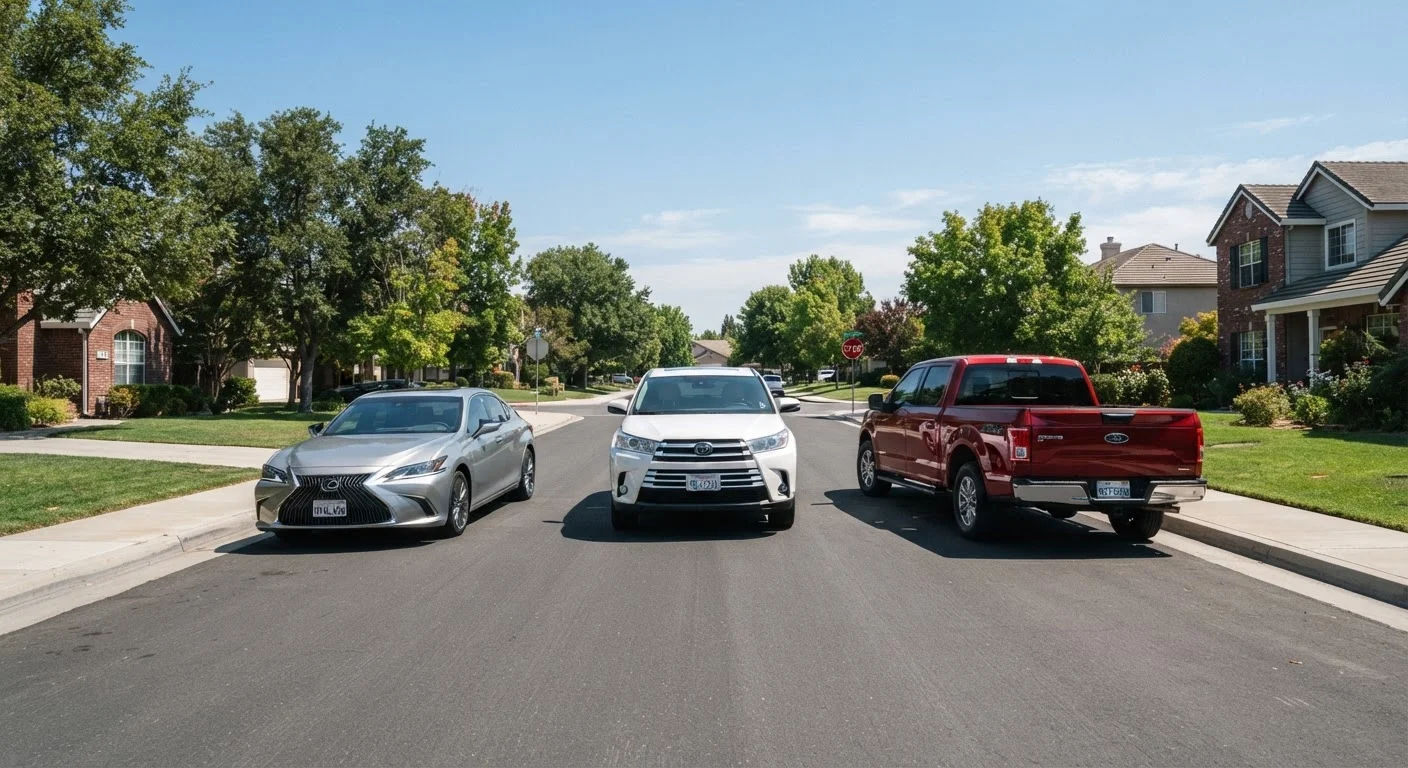
Key Takeaways
Our Verdict
For solo commuters and city dwellers, sedans offer the most efficient, cost-effective daily drive. Families and those needing flexible cargo and passenger space will find SUVs the most adaptable choice. Drivers with regular towing, hauling, or work-site demands will benefit most from a truck - provided they are prepared for the fuel and parking trade-offs that come with it.
| Best for | Recommended |
|---|---|
| Urban commuters and fuel-conscious drivers | Sedan |
| Families needing passenger space and versatility | SUV |
| Drivers with regular towing or hauling requirements | Truck |
| Those wanting a balance of utility and comfort | SUV |
Why Body Style Is a Practical Decision, Not Just a Preference
The body style of a vehicle - sedan, SUV, or truck - shapes almost every aspect of the ownership experience: how much you spend at the pump, whether you can find a parking space downtown, how many passengers or how much cargo you can carry, and even how you feel behind the wheel after a long day.
Most buyers start with a general sense of what looks appealing. But matching body style to actual daily use patterns tends to produce better long-term satisfaction. This comparison maps out what each format does well and where it falls short, so you can make a more informed choice. For those weighing whether a vehicle can serve an entire household, see our guide on owning one car vs. two.
Sedan: Efficiency and Ease for Everyday Driving
Sedans are the three-box classic - separate engine, passenger, and trunk compartments - and they remain a strong choice for commuters and smaller households. Their lower ride height and compact footprint make urban parking and tight garage spaces significantly easier to navigate compared to taller, wider vehicles.
On fuel economy, sedans generally hold an advantage. Their lighter weight and more aerodynamic shape mean many models return notably better miles-per-gallon figures than comparable SUVs or trucks in both city and highway driving. For drivers logging high annual mileage, that difference accumulates meaningfully at the pump.
The trade-offs are real: trunk space is limited by the separate compartment design, rear visibility can be restricted, and carrying more than four adults comfortably is difficult. Drivers who regularly haul bulky items - bicycles, furniture, large sports equipment - will find the sedan's enclosed trunk a consistent frustration.
| Sedan | SUV | Truck | |
|---|---|---|---|
| Fuel Economy | Highest among the three | Moderate; varies by size | Lowest; especially full-size |
| Passenger Capacity | Up to 5, limited rear room | 5-8 depending on rows | 5 in crew cab; less in others |
| Cargo Space | Enclosed trunk; limited volume | Flexible; rear seats fold flat | Open bed; large but exposed |
| Towing Capacity | Very limited or none | Moderate; varies widely | High; best of the three |
| Urban Parking | Easiest; compact footprint | Moderate; size varies | Difficult; long and wide |
| Typical Purchase Cost | Generally lower | Mid to high range | Mid to high; trucks trend pricey |
| Ride Height & Visibility | Lower; limited sightlines | Elevated; good forward view | High cab; good forward view |
SUV: Flexibility Across Multiple Use Cases
Sport utility vehicles (SUVs) have become the dominant US vehicle category by sales volume, and the reasons are practical. A mid-size SUV typically seats five to seven passengers, offers a split-folding rear seat that can dramatically expand cargo room when needed, and rides higher than a sedan - improving visibility in traffic and making entry and exit easier for many drivers.
The distinction between a traditional SUV and a crossover is worth noting: most vehicles sold as SUVs today are crossovers built on car-like unibody platforms, rather than the truck-based body-on-frame SUVs of earlier decades. That shift means better ride quality and fuel economy, but generally less off-road and towing capability than the original format. For a closer look at that distinction, see our piece on crossovers vs. SUVs.
SUVs do consume more fuel than sedans, and larger three-row models can feel unwieldy in dense city environments. Insurance and purchase costs also tend to run higher. But for households balancing kids, pets, gear, and occasional road trips, the SUV format handles more scenarios without compromise than either of the alternatives.
Test Your Real-World Scenarios Before Deciding
Before settling on a body style, spend time in each vehicle doing the things you actually do daily - not just a dealership lot loop. Load the cargo area with your typical gear, attempt the parking structures you use regularly, and seat everyone in your household at once. Real-world fit often differs from showroom impressions, and a body style that handles your specific routines without friction will serve you far better long-term.
Truck: Purpose-Built Capability with Daily-Use Trade-Offs
Full-size pickup trucks lead US sales charts consistently, reflecting genuine utility for a large portion of American drivers. Trucks are engineered for towing trailers and hauling payload in an open bed - capabilities that sedans and most SUVs simply cannot match. For anyone with a boat, horse trailer, or regular need to move construction materials, a properly configured truck is often the only practical answer.
Modern crew-cab trucks also offer four full doors and a proper rear seat, making them reasonable daily drivers in terms of passenger comfort. Technology, safety features, and interior refinement in current-generation trucks have advanced substantially.
But trucks carry genuine daily-use costs. Fuel economy lags well behind sedans and most SUVs. Parking a full-size truck in an urban garage or standard parking space requires patience and practice. The open bed is versatile but offers no weather protection without accessories. And common assumptions about truck capability - particularly around towing and payload ratings - often don't match real-world expectations. Understanding the spec sheet before buying matters.
#1
Pickup trucks by US sales volume
Full-size pickup trucks have consistently ranked as the top-selling individual vehicle models in the US market for multiple consecutive years, according to industry sales data.
~5-10 MPG
Typical fuel economy gap: sedan vs. full-size truck
EPA combined ratings generally show a meaningful fuel economy difference between a comparable mid-size sedan and a full-size pickup truck, with exact figures varying by engine and configuration.
Matching Body Style to Your Actual Driving Life
The most useful question is not which body style is objectively best, but which one handles your specific daily demands without constant compromise. A few factors clarify the decision quickly:
- Commute and parking environment: Dense urban or suburban settings with limited parking favor the sedan's compact dimensions. Rural or highway-heavy commutes are more forgiving of a truck or large SUV's footprint.
- Passenger needs: Regularly carrying more than four people tips strongly toward a three-row SUV or, for families, potentially a minivan.
- Cargo type: Enclosed, weather-protected storage (sedan trunk or SUV cargo area) suits most everyday needs. An open truck bed excels for bulky, dirty, or oversized loads.
- Towing requirements: If you tow regularly, verify tow ratings carefully; most sedans and many crossovers have limited or no rated towing capacity.
For those exploring specific model lineups before deciding, Toyota's full US lineup offers a useful cross-section of how one major manufacturer approaches each body style category. Understanding the full range of vehicle ownership considerations - from insurance to maintenance - also helps set realistic expectations before committing.