

Auto

Questions to Ask Yourself Before Committing to a Minivan

Share
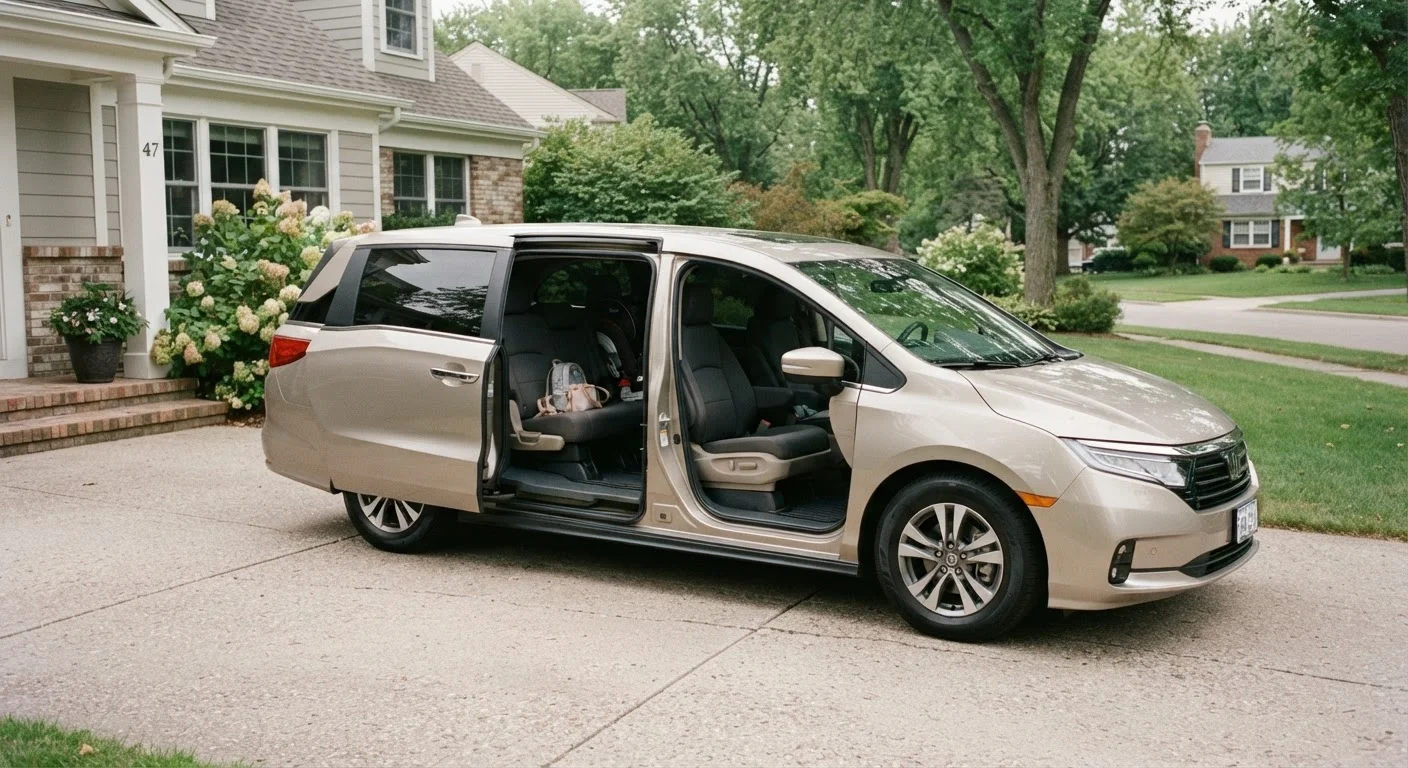
A minivan with open sliding doors parked in a suburban driveway showing three-row interior

Key Takeaways

A minivan suits families with three or more passengers who regularly travel together.
Sliding rear doors offer a practical edge in tight parking lots that SUVs cannot match.
Total ownership cost — not just sticker price — is the right financial metric to apply.
Your driving environment (urban, suburban, rural) heavily influences whether a minivan is a fit.
Honest self-assessment of ego versus utility will prevent buyer's remorse.
15–25 min

Summary

18 items · 15–25 minutes

Why This Decision Deserves More Thought Than Most

Minivans occupy a unique and often underappreciated spot in the US vehicle market. They are, by most objective measures, highly practical family haulers — offering more passenger volume, easier entry and exit, and more flexible cargo configurations than the average three-row SUV. Yet they remain polarizing because buying one feels like a definitive lifestyle statement to many shoppers.

That tension between practicality and perception is exactly why this decision deserves deliberate reflection. The checklist below is designed to cut through the noise. Work through each question honestly before visiting a dealership. If your answers skew toward the minivan's strengths, the format may serve you better than any alternative. If they don't, other body styles may be a stronger match — see how each compares in our body style comparison guide.

Passenger & Cargo Needs

Count your regular passengers — if you routinely carry three or more children or adults, confirm that a minivan's seating capacity genuinely serves that number. Must
Assess whether you need all three rows occupied simultaneously, or whether occasional overflow seating would actually suffice with a smaller vehicle. Must
Consider how often you haul large cargo — sports equipment, furniture, strollers, or musical instruments — and whether flat-folding floors would eliminate a recurring hassle. Should
Think about car-seat logistics: sliding rear doors allow caregivers to buckle children in tight parking spaces without hitting adjacent vehicles. Should

Daily Driving Environment

Measure your garage opening width and interior depth; many minivans exceed 16 feet in length and require verification before purchase. Must
Evaluate the types of roads you drive most — minivans perform well on highways and suburbs but can feel cumbersome in dense urban parking structures with low clearances. Must
Check whether your regular destinations — school drop-offs, grocery stores, sports fields — have large-vehicle-friendly parking to avoid chronic frustration. Should
Ask whether you tow a trailer, boat, or camper; minivans typically carry lower tow ratings than body-on-frame trucks and many SUVs. Should

Financial Fit

Compare total cost of ownership — insurance, fuel economy, depreciation, and maintenance — not just the purchase price against competing formats. Must
Verify that your monthly budget comfortably absorbs the payment without straining other household priorities, understanding that vehicle costs vary widely by trim and configuration. Must
Research resale value trends for minivans in your region; well-maintained examples can hold value reasonably well, though this varies and is never guaranteed. Should
Investigate whether available safety and driver-assistance features on the trim you're considering meet your family's protection priorities before finalising a budget. Nice to have

Lifestyle & Longevity

Project your household composition three to five years out — if your children will age out of needing close supervision, a smaller vehicle may serve future needs better. Must
Ask yourself honestly whether perception concerns — about how a minivan reflects on your identity — are influencing the decision more than genuine utility analysis. Must
Determine whether the built-in entertainment and convenience features (rear climate zones, USB ports, power doors) genuinely reduce friction in your daily routine. Should
Consider whether a minivan would replace or supplement your current vehicle, and how that affects total household transportation costs. Should
Test-drive the specific configuration you'd buy — driver visibility, turning radius, and seat comfort vary noticeably across minivan models. Nice to have
Check manufacturer warranty coverage and service interval requirements to understand the long-term maintenance commitment you're taking on. Nice to have

What to Do With Your Answers

No single answer disqualifies or confirms a minivan as your right vehicle. The value of this exercise is in the pattern of your responses. If you answered yes to most items in the Passenger & Cargo Needs and Daily Driving Environment groups, a minivan almost certainly delivers more usable utility per dollar than competing formats.

If your responses are mixed — particularly around garage fit, long-term household changes, or financial comfort — it may be worth exploring whether a two-vehicle household solves your transport equation more efficiently than one large minivan. Families planning frequent road trips should also consider the logistics involved: our guide on traveling with kids across state lines pairs well with any minivan ownership decision.

Lifestyle Projection Matters More Than Current Needs

Many families buy a minivan when their children are young and find it undersized or oversized within a few years as household needs shift. Think beyond today's carpool and school run. A vehicle purchased now will likely stay in the household for seven to ten years, so align your choice with where your family is headed, not just where it is today.

Once you've committed and the vehicle is in your driveway, make every trip count safely. Before long journeys, work through a pre-trip vehicle safety check to keep your passengers protected on the road.

This article provides general vehicle information for educational purposes only and does not constitute personalised financial or purchasing advice. Consult a licensed professional for guidance specific to your situation.

Auto Editorial Team is the collective byline for our editorial team and contributor network. Articles published under this byline or an editorial pen name are researched, written, and reviewed according to our editorial standards for clarity, consistency, and independence before publication.

View all articles by Auto Editorial Team →
Disclaimer: The content on this site is for informational purposes only and is not a substitute for professional advice. Always consult a qualified professional for guidance specific to your situation.