

Key Takeaways
Hyundai Motor Group
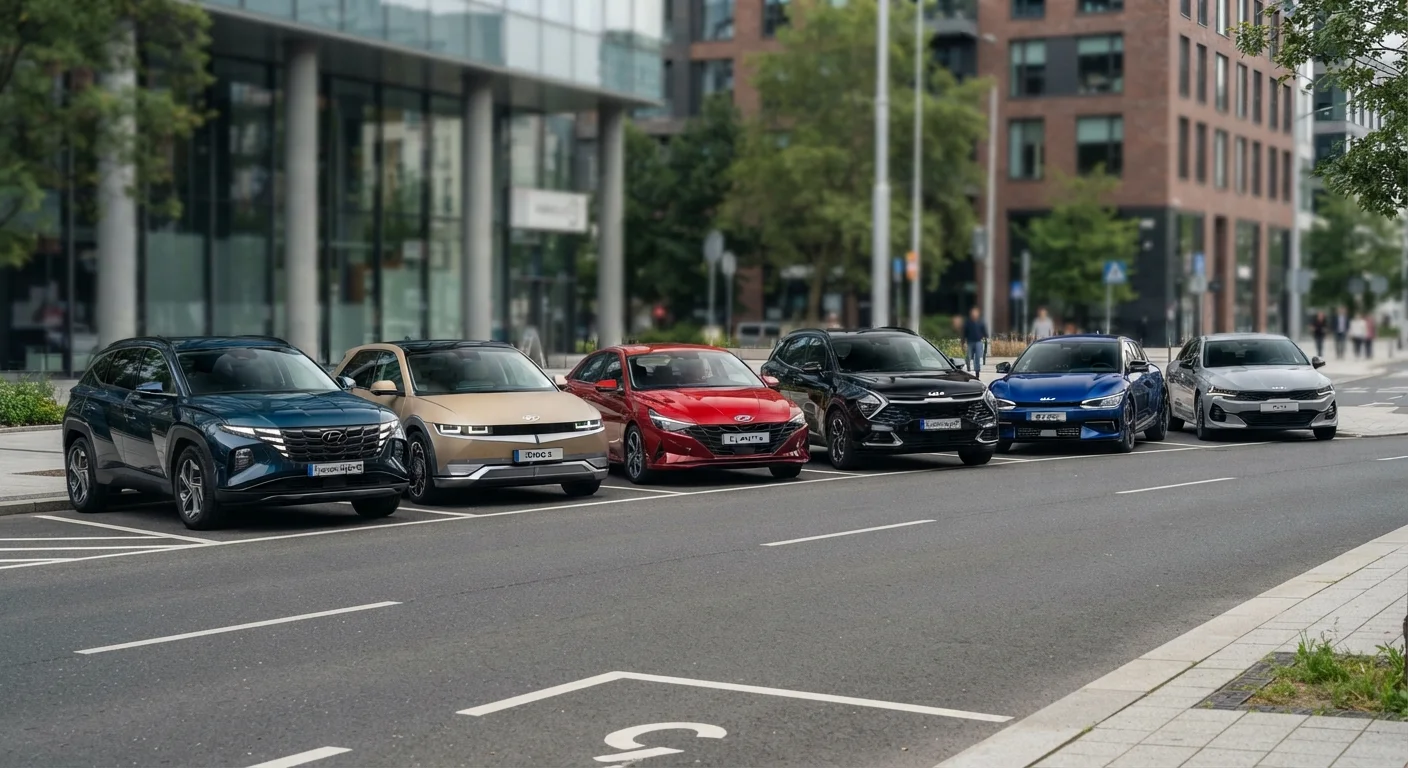
Hyundai Motor Group is the South Korean automotive conglomerate that owns both the Hyundai and Kia brands. Although the two brands share a common parent company, vehicle platforms, and some powertrains, they are marketed and positioned as separate brands with distinct styling philosophies and target audiences. Owning both allows the group to compete across a wider range of buyer preferences without the two brands directly cannibalizing each other.
Shared platforms - such as the modular N3 architecture used across several Hyundai and Kia models - allow both brands to split engineering costs while tuning each vehicle differently for ride, handling, and interior character.
How One Company Built Two Brands
Hyundai Motor Group's ownership of both Hyundai and Kia is not a recent merger story - it traces back to a financial crisis. Hyundai acquired a controlling stake in the struggling Kia Motors in 1998 during South Korea's economic downturn. Rather than folding Kia into the Hyundai brand, the group kept both operating independently.
That decision created a deliberate two-brand strategy. Hyundai would anchor the group's mainstream family vehicle image, while Kia would carve out its own identity - initially focused on value, and later repositioned toward sportier, design-forward vehicles. Both brands share research, development, and manufacturing efficiencies, but they maintain separate design studios and product planning teams.
This arrangement is not unique in the auto industry. Volkswagen Group owns Audi, SEAT, Škoda, and others. Stellantis manages Jeep, Ram, Dodge, and Chrysler under one roof. The logic is consistent: share what buyers don't see, differentiate what they do. For Hyundai and Kia, that means common platforms and powertrains underneath, with genuinely different exteriors, interiors, and brand personalities above.
Platform Sharing Is an Industry-Wide Practice
Many major automakers share vehicle platforms across multiple brands - it is a standard engineering and cost strategy, not a shortcut. Shared platforms allow manufacturers to invest savings into differentiating factors like design, technology features, and ride tuning. The end vehicles can feel and look quite different despite identical underpinnings.
What They Actually Share - and What They Don't
The most significant shared elements between Hyundai and Kia are vehicle platforms and powertrain families. A platform is essentially the underlying architecture - the floor structure, suspension mounting points, and wheelbase dimensions - that determines how a vehicle handles and how its interior space is organized. Sharing a platform dramatically lowers development costs for both brands.
For example, the Hyundai Tucson and Kia Sportage ride on the same underlying architecture. So do the Hyundai Santa Fe and Kia Sorento. The Ioniq 5 and Kia EV6 both use the Electric-Global Modular Platform (E-GMP) designed specifically for battery electric vehicles.
#3
Hyundai Motor Group global sales rank
Hyundai Motor Group has ranked among the top three global automakers by annual sales volume in recent years, competing alongside Toyota Group and Volkswagen Group.
1998
Year Hyundai acquired Kia
Hyundai took a controlling stake in Kia Motors during South Korea's 1997-98 financial crisis, forming the foundation of today's Hyundai Motor Group.
2
Separate design studios maintained
Despite shared ownership, Hyundai and Kia each maintain independent design centers responsible for exterior and interior styling decisions.
Despite these shared foundations, the vehicles are tuned differently. Suspension calibration, steering weight, and throttle response are adjusted independently for each model. Interior design - including dashboard layout, material choices, and infotainment interfaces - is developed separately. Kia's interiors in recent years have adopted a notably different visual language than Hyundai's, with models like the EV6 receiving wide praise for a more dramatic, driver-focused cockpit.
For a deeper look at how automakers differentiate vehicles within a shared platform strategy, the model year update guide explains what changes between cycles and what stays the same.
Brand Identity: Who Each Brand Is Talking To
Hyundai has traditionally positioned itself around reliability, family practicality, and accessible technology. Its marketing has emphasized peace-of-mind ownership - historically backed by an industry-notable warranty program - and broad model availability ranging from subcompact sedans to three-row SUVs.
Kia's identity has shifted more visibly over the past decade. The brand invested heavily in design, most notably by bringing in Peter Schreyer - co-creator of the Audi TT - as chief design officer. The results have been evident: Kia models now regularly draw attention for exterior styling that punches above their price class. The brand's tagline and marketing have leaned into the idea of movement and energy, targeting buyers who want a vehicle that feels considered rather than merely sensible.
“Design is not just what it looks like and feels like. Design is how it works - and for Kia, that philosophy became central to a full brand transformation.”
— Peter Schreyer, Former Chief Design Officer, Kia Motors
This distinction matters when shopping. If you prioritize a well-rounded family SUV with a strong dealership network and straightforward ownership experience, Hyundai's lineup is a natural starting point. If exterior design and a sportier interior character weigh more heavily in your decision, Kia's equivalent models are worth a close look. The crossover vs. SUV breakdown is also useful context, since both brands compete heavily in that segment.
For households weighing whether to align on one brand or diversify, see the practical discussion in owning one car vs. two.
Test Drive Both Before Deciding
Because Hyundai and Kia models often share platforms, it's tempting to assume they drive identically. In practice, suspension tuning, steering feel, and interior ergonomics differ enough to matter. If you're cross-shopping equivalent models - such as the Tucson versus the Sportage - sit in both and drive both before committing.
Where Genesis Fits In
No discussion of the Hyundai Motor Group is complete without mentioning Genesis, the group's standalone luxury brand. Launched in the US as a separate marque in 2016, Genesis targets buyers who might otherwise consider German luxury options like BMW, Mercedes-Benz, or Audi.
Genesis vehicles share some underpinnings with Hyundai models but are engineered and trimmed to a premium standard, with distinct dealer experiences and brand positioning. The G80 sedan and GV80 SUV represent the brand's flagship efforts. Genesis's emergence illustrates how Hyundai Motor Group uses its multi-brand structure intentionally - each label addresses a different buyer, at a different price point, with a different promise.
Understanding all three brands together - Kia, Hyundai, and Genesis - gives US car shoppers a clearer map of what the group actually offers and where each vehicle genuinely fits in the market.