

Key Takeaways
Our Verdict
BMW, Mercedes-Benz, and Audi are all credible choices in the German luxury segment, but they reward different priorities. The right brand depends on whether driving dynamics, passenger comfort, or technology integration matters most to you. Understanding each brand's core identity helps narrow the decision before you ever visit a showroom.
| Best for | Recommended |
|---|---|
| Drivers who prioritize sharp handling and an engaging behind-the-wheel experience | BMW |
| Those who value opulent interiors, ride comfort, and prestige cachet | Mercedes-Benz |
| Tech-focused buyers who want refined all-wheel-drive capability and understated styling | Audi |
Three Brands, Three Philosophies
German automakers dominate the US luxury segment, and BMW, Mercedes-Benz, and Audi together account for a significant share of premium vehicle sales. Despite frequent comparisons, the three operate from genuinely different engineering and brand philosophies - differences that shape every vehicle they produce.
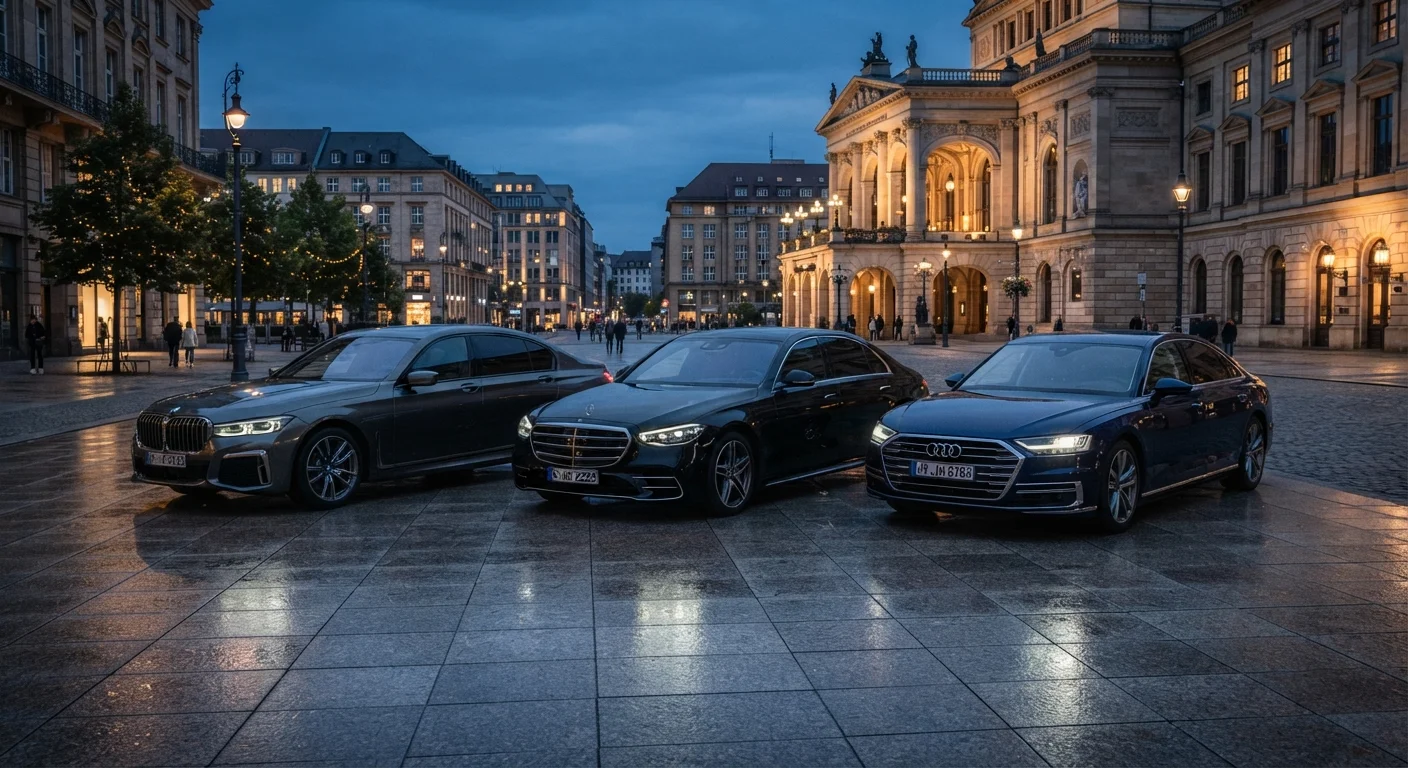
BMW has long oriented itself around the driver. Its tagline "The Ultimate Driving Machine" is not purely marketing; engineers at BMW historically prioritize rear-wheel-drive dynamics, balanced weight distribution, and steering feedback. The result is a lineup that feels more involving to drive, particularly on twisty roads or in sport-oriented trims.
Mercedes-Benz places the emphasis differently. Comfort, opulence, and occupant experience take precedence, especially in the brand's flagship S-Class and its derivatives. Mercedes cabins tend to feature more ornate materials, softer suspension tuning, and a focus on isolating passengers from road imperfections. The brand also carries strong prestige associations in the US market.
Audi arrives from a third angle: technology and Quattro all-wheel-drive. The brand built its US reputation through engineering precision and a design language that reads as restrained rather than flashy. Audi interiors have historically led the segment in digital cockpit integration, and the Quattro system remains a benchmark for everyday all-weather traction. For shoppers who want capability without conspicuousness, Audi often resonates.
For a contrast with brands that share corporate ties but differ in identity, see how Hyundai and Kia differ despite shared ownership.
| BMW | Mercedes-Benz | Audi | |
|---|---|---|---|
| Core brand identity | Driver-focused dynamics | Passenger comfort & prestige | Technology & all-wheel drive |
| Default drivetrain (most models) | Rear-wheel drive | Rear-wheel drive | All-wheel drive (Quattro) |
| Interior design tone | Sport-oriented, driver-centric | Ornate, comfort-forward | Understated, tech-integrated |
| Performance sub-brand | M (Motorsport) | AMG | RS / S |
| Flagship sedan | 7 Series | S-Class | A8 |
| EV / electrified lineup | i Series, iX | EQ family | e-tron family |
| Styling approach | Athletic, bold kidney grille | Elegant, sometimes ornate | Clean, restrained, Quattro heritage |
Lineup Structure and US Model Availability
Each brand covers similar segments - sedans, SUVs, coupes, and electric vehicles - but internal naming conventions differ and can confuse shoppers.
BMW uses a number-based system: the 3 Series is the entry sport sedan, the 5 Series is mid-size, and the 7 Series is flagship. X-prefixed models (X3, X5, X7) are SUVs. M-badged variants are performance variants engineered by BMW's Motorsport division.
Mercedes-Benz uses letter classes: C-Class, E-Class, and S-Class mark the sedan progression from compact to flagship. GLC, GLE, and GLS cover the SUV range. AMG designates high-performance variants produced or tuned by the brand's performance subsidiary. The Maybach sub-brand represents the ultra-luxury tier.
Audi uses alphanumeric designations: A3, A4, A6, and A8 form the sedan ladder. Q3, Q5, Q7, and Q8 are SUVs. RS and S designations mark performance variants. The e-tron family covers Audi's electric and plug-in hybrid offerings.
Test Drive All Three Before Deciding
Because BMW, Mercedes-Benz, and Audi feel genuinely different behind the wheel, a back-to-back test drive on similar roads is one of the most effective ways to identify which brand's priorities align with your own. Request the same general segment - such as mid-size sedan or compact SUV - from each brand for a fair comparison. Pay attention to steering feel, cabin noise levels, and seat comfort over varied road surfaces.
Understanding model year cycles also matters when shopping any of these brands. How model year updates affect features and value is worth reading before committing to a specific year.
Ownership Considerations for US Buyers
Acquisition price is only one dimension of cost. German luxury vehicles - regardless of brand - typically carry higher maintenance expenses than mainstream alternatives. Scheduled service, parts pricing, and out-of-warranty repairs can be meaningfully higher than for non-luxury vehicles.
All three automakers offer complimentary scheduled maintenance programs on new vehicles, though the terms, duration, and scope differ by brand and model year. Prospective buyers should confirm current program details directly with dealers, as these programs change periodically.
Reliability data from long-term owner surveys has historically shown variability across all three brands, and rankings shift with new model generations. No single brand consistently leads - a given model year or platform can outperform or underperform its predecessor. Consulting multiple independent data sources before purchase is advisable.
For practical guidance on living with any vehicle after purchase, the auto ownership hub covers maintenance planning, insurance considerations, and more.
~35%
US luxury segment share held by German brands
BMW, Mercedes-Benz, and Audi collectively represent a substantial portion of US premium vehicle registrations, according to industry tracking data.
50+ years
Quattro all-wheel-drive heritage
Audi introduced its Quattro all-wheel-drive system in 1980, giving the brand decades of refinement in traction-focused engineering.
Shoppers comparing German luxury brands with electric-first alternatives may also find it useful to review how Tesla's model lineup is structured, since all three German brands now compete in the EV segment as well.