

| Federal accessibility law | Americans with Disabilities Act (ADA), enacted 1990 (U.S. Department of Justice) |
| Air travel accessibility rule | Air Carrier Access Act (ACAA) governs airline disability accommodations (U.S. Department of Transportation) |
| Advance notice for accommodations | 48–72 hours recommended; some carriers require earlier notice (General industry guidance) |
| Hotel accessible room availability | ADA requires a minimum percentage of accessible rooms per property size (ADA Standards for Accessible Design) |
| Service animal rules | Permitted in most public spaces and transportation under ADA (U.S. Department of Justice) |
| Complaint filing body | U.S. DOT Aviation Consumer Protection for air travel issues (U.S. Department of Transportation) |
Understanding Your Rights as an Accessible Traveler
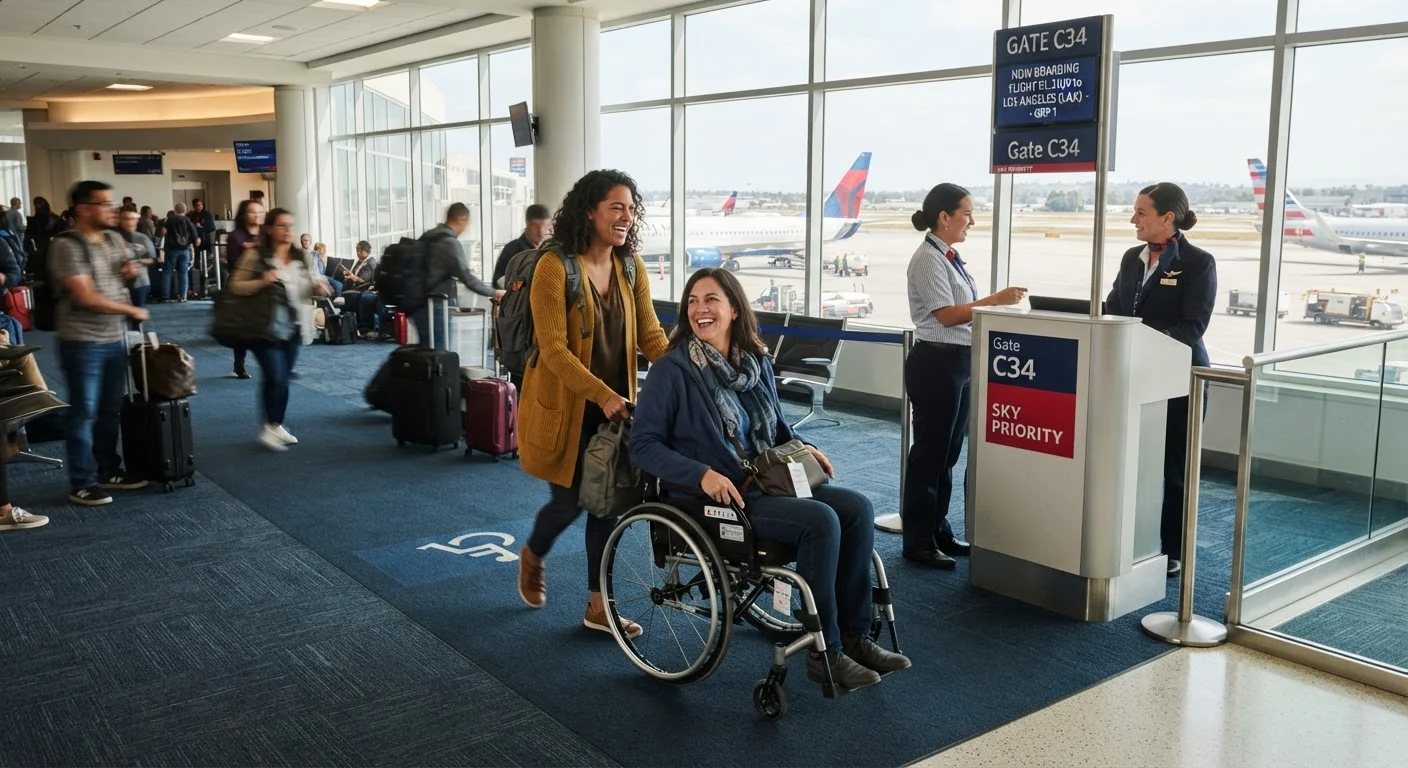
Travelers with disabilities in the United States are protected by a layered framework of federal law. The Americans with Disabilities Act (ADA) sets baseline requirements for public accommodations, transportation, and facilities. For air travel specifically, the Air Carrier Access Act (ACAA) governs what airlines must provide — covering everything from priority boarding and on-board wheelchairs to assistance moving through terminals.
Knowing which law applies to your situation is the first step. Ground transportation, hotels, and airlines each operate under different regulations, so the protections available — and how to request them — vary by context. For a broader look at how your transportation choice affects your overall trip experience, see our comparison of road trips versus flying.
If an issue arises during travel, the U.S. Department of Transportation's Aviation Consumer Protection division handles ACAA complaints. Keeping documentation of your requests and any denials is always advisable.
Booking Transportation and Lodging: Key Questions to Ask
Accessible travel requires more active pre-booking research than standard trip planning. Generic online listings may not capture what a property or carrier actually offers day-to-day.
| Federal accessibility law | Americans with Disabilities Act (ADA), enacted 1990 (U.S. Department of Justice) |
| Air travel accessibility rule | Air Carrier Access Act (ACAA) governs airline disability accommodations (U.S. Department of Transportation) |
| Advance notice for accommodations | 48–72 hours recommended; some carriers require earlier notice (General industry guidance) |
| Hotel accessible room availability | ADA requires a minimum percentage of accessible rooms per property size (ADA Standards for Accessible Design) |
| Service animal rules | Permitted in most public spaces and transportation under ADA (U.S. Department of Justice) |
| Complaint filing body | U.S. DOT Aviation Consumer Protection for air travel issues (U.S. Department of Transportation) |
Air Travel
- Does the airline require advance notice for wheelchair assistance or medical equipment? Most carriers request 48 hours minimum.
- How will a power wheelchair or scooter be handled — stored in the cabin or as checked baggage?
- Is an on-board wheelchair available for use during the flight?
- Are accessible lavatories available on the specific aircraft type assigned to your route?
Ground Transportation
- Do rental car companies at your destination offer hand-control or other adaptive vehicles, and must they be reserved well in advance?
- Does the local public transit system comply with ADA requirements, and are paratransit services available?
Hotels and Lodging
- Request an accessible room by specific feature — roll-in shower, grab bars, lowered bed height — rather than just asking for an "ADA room."
- Confirm the accessible route from parking or drop-off to the room, especially in older properties.
- Ask about elevator availability and whether accessible rooms are located on accessible paths throughout the property.
Always Verify Directly with Providers
Accessibility features described online or in listings do not always reflect current on-the-ground conditions. Before booking, call the hotel, airline, or transit provider directly to confirm specific accommodations. Conditions can change due to renovation, equipment availability, or staffing. Verifying details at least 48 to 72 hours before departure is strongly recommended.
For a full pre-departure planning approach, our pre-trip checklist for US travel covers documentation, reservations, and contingency planning relevant to all travelers.
Destination-Specific Accessibility Considerations
Accessibility varies significantly across US destinations. Urban areas with robust transit infrastructure — such as New York, Chicago, or Washington, D.C. — generally offer more accessible public options than rural or remote destinations. That said, even well-served cities can present challenges: older subway systems, cobblestone historic districts, or limited accessible rideshare availability during peak hours.
Remote or nature-focused destinations present their own distinct planning demands. National parks, for instance, vary widely in what accessible trails, visitor centers, and lodging they can offer. The National Park Service publishes accessibility information for individual parks, but conditions on specific trails or facilities should be confirmed directly before visiting. If Alaska is on your list, planning a trip to Alaska involves infrastructure and geographic challenges that require especially thorough advance research for any traveler, particularly those with mobility needs.
Browsing destination guides can help you identify what a location offers in general terms, but direct outreach to local tourism offices or accessibility-focused travel communities will give you the most reliable picture of on-the-ground conditions.
26%
US adults living with a disability
According to the CDC, approximately one in four US adults has some form of disability that may affect daily activities, including travel.
700+
US airports with ADA requirements
All commercial service airports in the US receiving federal funds must comply with ADA accessibility standards, covering ramps, signage, and restrooms.
This article provides general travel information for educational purposes. Accessibility conditions, legal requirements, and provider policies can change. Always verify specifics directly with transportation providers, accommodations, and official sources before booking or traveling.