

Key Takeaways
Start here
What the Southwest Actually Covers
Next
Climate and When to Visit
Then explore
Landmark Destinations to Know
Before you go
Practical Things First-Timers Miss
What the Southwest Actually Covers
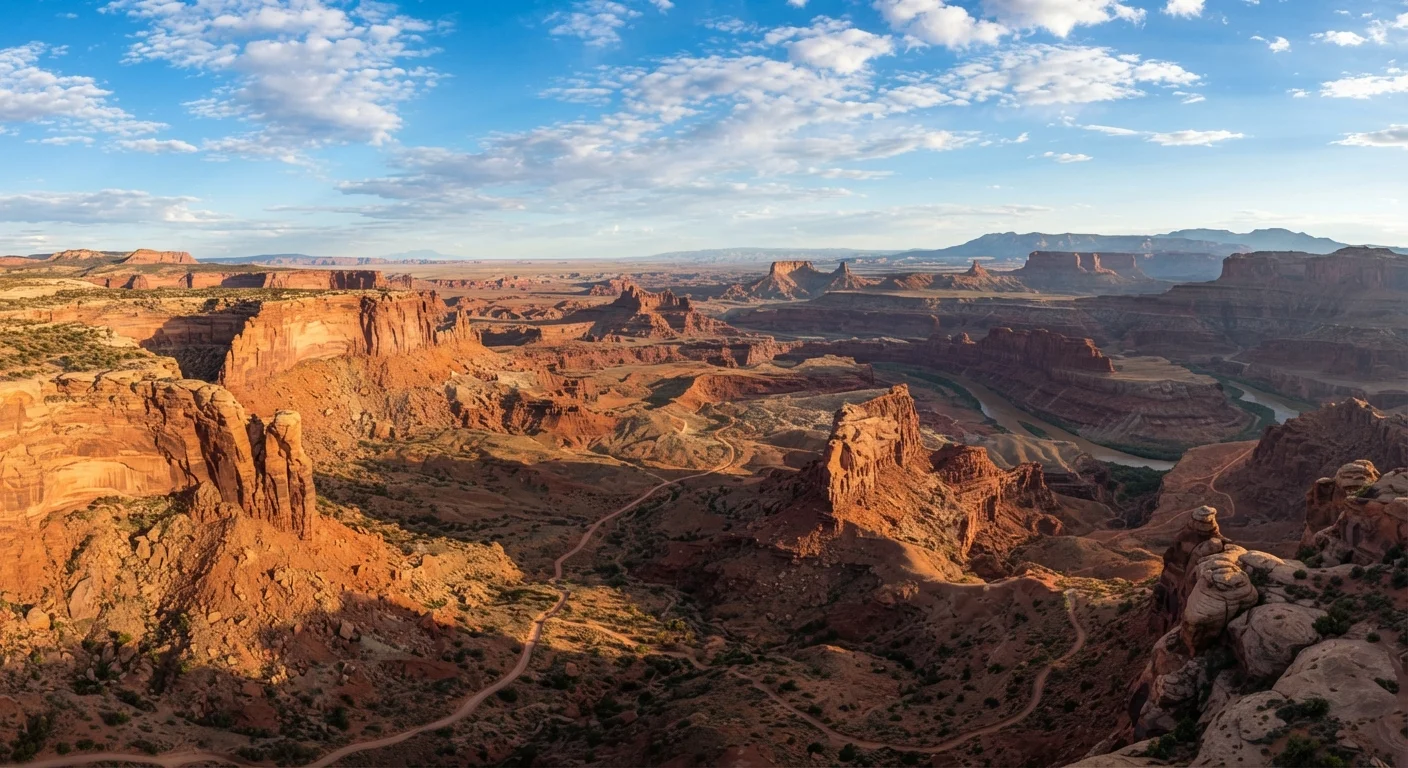
The term "American Southwest" is used loosely, but it generally refers to a core group of states: Arizona, New Mexico, Utah, Nevada, and parts of Colorado. Together they cover a land area larger than many countries, encompassing desert basins, high plateaus, ancient cliff dwellings, and dramatic canyon systems carved over millions of years.
What surprises most first-timers is the variety. The Sonoran Desert around Phoenix looks nothing like the red rock country of southern Utah, and the pine-forested rim of the Grand Canyon feels nothing like the flat salt flats near Wendover. Thinking of the Southwest as simply "hot desert" will leave you unprepared for its actual range.
Colorado Plateau
A large elevated region covering parts of Utah, Arizona, Colorado, and New Mexico, known for its layered red rock landscapes, mesas, and deep river-carved canyons.
Elevation gain
The increase in altitude over a trail or route. Higher elevation means thinner air, cooler temperatures, and greater physical exertion — important for planning hikes.
Slot canyon
A narrow, winding canyon with walls much taller than they are wide, carved by flash floods through sandstone. Antelope Canyon near Page, Arizona is a well-known example.
Navajo Nation
The largest Native American territory in the US, covering parts of Arizona, Utah, and New Mexico. Several iconic Southwest sites, including Monument Valley and Antelope Canyon, sit within its boundaries.
Timed-entry reservation
A system used by many national parks to limit crowding by requiring visitors to book a specific entry time in advance, separate from any entrance fee.
Cities anchor the region's logistics. Phoenix, Las Vegas, Albuquerque, and Salt Lake City each serve as practical entry points. Las Vegas, despite its reputation, sits within driving distance of the Grand Canyon, Zion, and Bryce Canyon — making it a surprisingly useful base for first-time visitors who want to see canyon country without committing to a remote rural stay.
Climate and When to Visit
Climate in the Southwest depends heavily on elevation. Desert floor cities like Phoenix and Las Vegas can reach temperatures above 110°F in July and August. At the same time, the Grand Canyon's North Rim sits above 8,000 feet and receives significant snowfall, closing to vehicles from mid-October through mid-May each year.
Spring and fall are the most consistently pleasant seasons for a first visit. Temperatures across most elevations are moderate, wildflowers emerge in canyon country during April, and crowds — while still present — are smaller than the summer peak. Summer is manageable in higher-elevation areas like Sedona or Moab but should be approached cautiously in valley cities and exposed canyon hikes.
Book Canyon Tours Early
Popular slot canyon tours and inner-canyon accommodations at sites like Phantom Ranch fill up months in advance. If specific experiences are on your list, check availability and booking windows as soon as your travel dates are confirmed. Last-minute options in peak season are scarce.
The Southwest's monsoon season runs roughly from mid-June through September, bringing brief but intense afternoon thunderstorms. Flash flooding in slot canyons is a genuine risk during this period — always check weather forecasts and heed ranger warnings before entering narrow canyon systems.
Landmark Destinations to Know
A few destinations define the Southwest experience for most visitors:
- Grand Canyon National Park (Arizona) — One of the world's most recognized natural landmarks. The South Rim is open year-round and far more accessible than the North Rim. Even a single day at the rim is genuinely impactful, though an overnight stay allows for early-morning and sunset views without day-tripper crowds.
- Zion National Park (Utah) — Known for its towering sandstone cliffs and the Narrows, a slot canyon hike through the Virgin River. Zion's shuttle system is mandatory in peak season; private vehicles are restricted on the main scenic drive.
- Monument Valley (Arizona/Utah border) — The butte formations here are among the most photographed landscapes in the world. The valley sits within the Navajo Nation, and visitors should follow posted rules and respect land-use guidelines at all times.
- Santa Fe (New Mexico) — For those wanting a cultural counterpoint to natural scenery, Santa Fe offers centuries of art, architecture, and cuisine shaped by Indigenous, Spanish colonial, and American influences.
- Antelope Canyon (Arizona) — This photogenic slot canyon near Page, Arizona is accessible only through guided tours operated by Navajo-permitted companies. Booking well in advance is essential in peak season.
For a broader perspective on what to expect before entering any of these parks, our guide on what first-time national park visitors often underestimate covers permits, elevation, and logistics that catch many visitors off guard.
Practical Things First-Timers Miss
Distances between Southwest highlights are consistently underestimated. The drive from Las Vegas to the Grand Canyon's South Rim is roughly four and a half hours. Zion to Bryce Canyon is about 1.5 hours but feels longer on narrow canyon roads. Build realistic drive times into every day of your itinerary and avoid the temptation to stack too many stops.
Cell service is unreliable or absent across large stretches of the region. Download offline maps before leaving Wi-Fi, carry a physical backup if possible, and make sure your accommodation bookings are confirmed and saved offline before you head into remote areas.
Never Underestimate the Heat and Dryness
Heat-related illness is a genuine medical risk in the Southwest, particularly for hikers who underestimate how quickly the desert dehydrates the body. Symptoms such as dizziness, nausea, and confusion warrant immediate rest and hydration, and in serious cases, emergency assistance. If someone in your group shows signs of heat stroke, seek help immediately.
Water is the most critical supply in the Southwest. Dehydration sets in faster than most visitors expect, particularly at elevation and during midday sun. Carry significantly more water than any trail sign recommends, and never start a canyon descent without a full supply. Many trailheads have no potable water sources.
If your itinerary blends outdoor exploration with city time, weighing a city break against a nature-focused trip can help you decide how to balance both. And if you're traveling alone, solo travel in the US offers practical guidance specific to first-time independent travelers.