

Key Takeaways
Appraisal Gap
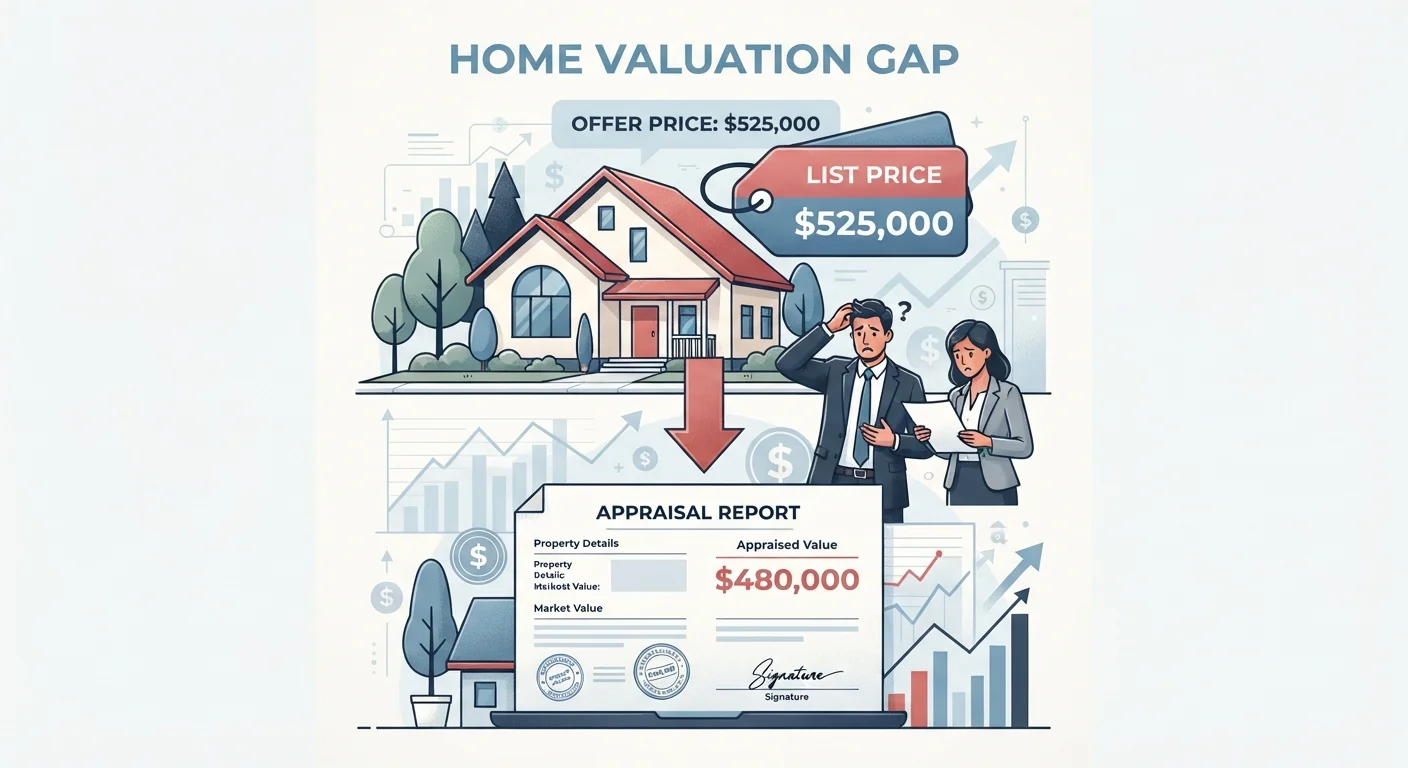
An appraisal gap is the difference between what a buyer has agreed to pay for a home and the lower value a licensed appraiser assigns to it. Lenders typically will not finance more than a home's appraised value, so this shortfall can put the entire transaction at risk. Buyers must then decide whether to make up the difference out of pocket, renegotiate the price, or walk away from the deal.
Lenders base the loan-to-value (LTV) ratio on the appraised value — not the contract price — meaning any gap directly affects how much financing is available and what the borrower must cover independently.
How an Appraisal Gap Happens
When you apply for a mortgage, your lender orders an independent appraisal to confirm the property is worth what you've agreed to pay. A licensed appraiser evaluates the home's condition, size, features, and recent sales of comparable properties nearby. If the appraiser's conclusion comes in below your contract price, you have an appraisal gap.
This is especially common in heated markets where buyer competition pushes offers well above asking price. If comparable sales data doesn't support those inflated prices, the appraisal will reflect what the market objectively supports — not what bidding wars have temporarily produced. Understanding this risk before you make an offer is a core part of homebuyer due diligence. See our homebuyer due-diligence checklist for what else to verify before committing.
~12%
Contracts delayed or cancelled due to appraisal issues
National Association of Realtors (NAR) surveys have found that appraisal problems account for a meaningful share of delayed and terminated contracts in any given month.
11%
Share of terminated contracts citing appraisal issues
NAR's Realtors Confidence Index has periodically identified appraisals as a leading cause of contract terminations, particularly during periods of rapid price appreciation.
Your Options When the Appraisal Comes In Low
Facing an appraisal gap doesn't mean the deal is automatically dead, but it does require a decision. Buyers generally have four paths forward:
- Cover the gap out of pocket. You pay the difference between the appraised value and the purchase price in cash. Your lender finances up to the appraised value, and you bridge the rest. This keeps the deal intact but requires additional liquidity beyond your down payment and closing costs.
- Renegotiate the purchase price. You can request that the seller reduce the price to match — or partially meet — the appraised value. Sellers may agree if they are motivated or if few alternative buyers exist. Neither party is obligated to accept.
- Challenge the appraisal. Your agent can submit a reconsideration of value (ROV) to the lender with evidence of comparable sales the appraiser may have missed or weighted differently. This process takes time and doesn't guarantee a different result, but it is a legitimate option.
- Exit using your appraisal contingency. If your contract includes an appraisal contingency, you can withdraw and recover your earnest money. This is the primary consumer protection built into standard purchase agreements for this scenario.
Include an Appraisal Contingency When You Can
Unless you have substantial cash reserves and fully understand the risk, keeping an appraisal contingency in your contract is a sensible safeguard. It preserves your right to renegotiate or exit if the home doesn't appraise at the purchase price. Talk with your agent about how to remain competitive while still protecting your earnest money deposit.
Appraisal gaps are one of the more common reasons home purchases fall through. See a broader look at why homebuyers lose deals for more context on protecting your transaction.
The Role of the Appraisal Contingency
An appraisal contingency is a clause in your purchase contract that makes the sale conditional on the home appraising at or above the agreed price. If it doesn't, you have the right to renegotiate or exit without forfeiting your earnest money deposit.
In competitive markets, some buyers waive this contingency to make their offer more attractive to sellers. This can work if you have the financial reserves to cover a potential gap — but it carries real risk. Without the contingency, you are legally committed to completing the purchase at the contract price regardless of what the appraisal finds.
Waiving Contingencies Carries Real Financial Risk
In fast-moving markets, some buyers waive the appraisal contingency to strengthen their offer. This is a legal choice, but it means you're financially committed to the contract price regardless of the appraisal result. Before waiving any contingency, consult with your real estate agent and, if needed, a real estate attorney to understand what you're agreeing to.
For a plain-language explanation of contingencies, earnest money, and related terms, the homebuyer glossary is a useful starting point before your purchase contract is drafted.
Reducing Your Risk Before It Becomes a Problem
The best time to manage appraisal gap risk is before you make an offer. Ask your real estate agent to run a comparative market analysis (CMA) on any home you're seriously considering. This gives you a realistic sense of what the property is likely to appraise for, independent of the list price or competing offers.
If you're in a market where bidding wars are common, talk with your lender about how much cash reserve you'd need to bridge potential gaps at various offer levels. Going in informed puts you in a far stronger position to make confident decisions — whether that's offering with a contingency, negotiating firmly after a low appraisal, or walking away cleanly when the numbers don't work. A thorough home inspection is another layer of protection; issues found there can affect value and negotiation leverage alike. Our guide on what happens during a home inspection walks through what inspectors look for and why that matters to buyers.