

Key Takeaways
Macronutrients
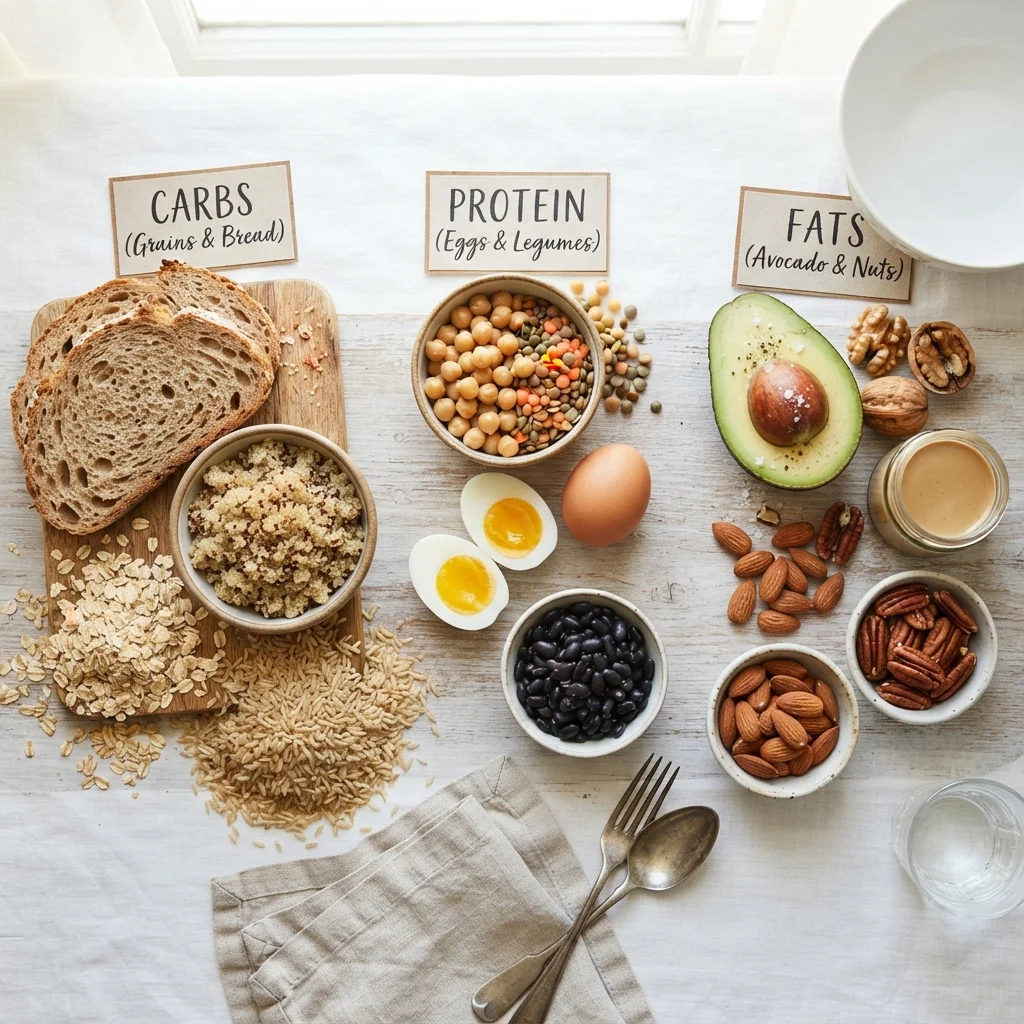
Macronutrients are the three major nutrient categories — carbohydrates, proteins, and fats — that supply your body with energy and the raw materials it needs to function. Unlike vitamins and minerals (micronutrients), your body requires macronutrients in relatively large amounts every day. Each gram of carbohydrate and protein provides 4 calories, while each gram of fat provides 9 calories.
The Dietary Guidelines for Americans express macronutrient targets as Acceptable Macronutrient Distribution Ranges (AMDRs): 45–65% of calories from carbohydrates, 10–35% from protein, and 20–35% from fat for most adults.
Carbohydrates: Your Body's Preferred Fuel
Carbohydrates are the body's primary energy source. When you eat carbs — whether from oatmeal, fruit, or bread — your digestive system breaks them down into glucose. That glucose enters the bloodstream and powers your cells, with your brain alone relying on it almost exclusively under normal conditions.
Not all carbohydrates behave the same way. Simple carbohydrates (found in table sugar, fruit juice, and refined grains) digest quickly and raise blood sugar rapidly. Complex carbohydrates — found in whole grains, legumes, and vegetables — release energy more gradually and come packaged with fiber, vitamins, and minerals that refined options lack.
Fiber, a type of carbohydrate the body can't fully digest, deserves special mention. It supports gut health, helps regulate blood sugar, and is linked to reduced cardiovascular risk. Most Americans fall well short of recommended fiber intake. Learn more in our article on fiber and why most Americans don't get enough.
Choose Whole Food Carb Sources
When selecting carbohydrate-rich foods, whole grains, legumes, fruits, and vegetables consistently outperform refined alternatives in terms of fiber, vitamins, and sustained energy. Reading the ingredients list can help you identify truly whole-grain products — the first ingredient should name a whole grain, such as 'whole wheat' or 'oats.'
The quality of your carbohydrate sources matters enormously. Swapping refined grains for whole grains and choosing whole fruit over juice are simple shifts backed by strong nutritional evidence.
Protein: The Body's Building Material
Protein is composed of amino acids — organic compounds the body uses to build and repair tissues, produce enzymes and hormones, support immune function, and transport nutrients. Of the 20 amino acids, nine are considered essential, meaning your body cannot synthesize them and must obtain them from food.
Animal proteins (meat, poultry, fish, eggs, and dairy) typically provide all nine essential amino acids and are called complete proteins. Many plant proteins are incomplete, but combining varied plant sources — such as beans with rice, or hummus with whole-grain bread — over the course of a day can meet all essential amino acid needs.
0.8 g/kg
Minimum daily protein RDA for sedentary adults
Per the National Academies of Sciences, Engineering, and Medicine; active individuals and older adults typically benefit from higher amounts.
45–65%
Recommended calorie share from carbohydrates
According to the Acceptable Macronutrient Distribution Ranges set by the U.S. Dietary Guidelines for most healthy adults.
~90%
US adults falling short of recommended fiber
The USDA estimates the vast majority of Americans do not meet dietary fiber recommendations, largely due to low intake of whole grains, legumes, and vegetables.
Protein needs increase with physical activity, aging (older adults are prone to muscle loss, or sarcopenia), pregnancy, and recovery from illness or surgery. If any of these apply to you, it's worth discussing your intake with a registered dietitian or physician.
Dietary Fat: Essential, Not the Enemy
Fat has long been mischaracterised as unhealthy, but it is indispensable. Dietary fat supports the absorption of fat-soluble vitamins (A, D, E, and K), cushions organs, insulates the body, and is essential for brain structure and function. Fat also contributes to satiety — meals containing fat tend to keep you fuller longer.
The type of fat matters considerably:
- Unsaturated fats (olive oil, avocados, nuts, fatty fish) are associated with reduced cardiovascular risk.
- Saturated fats (red meat, butter, full-fat dairy) should be consumed in moderation, per current dietary guidance.
- Trans fats produced industrially are associated with increased cardiovascular disease risk; the FDA has largely eliminated them from the US food supply.
The goal isn't to eat as little fat as possible — it's to favour unsaturated sources while limiting saturated fat. For a broader look at persistent myths around fat and other nutrients, see our piece on nutrition myths the evidence has debunked.
Balance Over Elimination: How Macros Work Together
No single macronutrient is inherently harmful, and no popular diet that eliminates one entirely has been shown to be superior for long-term health outcomes in the general population. The body's systems are designed to use all three — often simultaneously. During exercise, carbohydrates fuel intensity while fat sustains longer, lower-intensity effort. Protein underpins recovery after both.
The proportions that work best vary by individual. Factors including age, health status, activity level, and personal preferences all influence optimal intake. The U.S. Dietary Guidelines offer broad ranges precisely because one ratio doesn't fit everyone.
Macros and Nutrition Labels
Nutrition facts labels on US packaged foods list grams of total fat, total carbohydrate, and protein per serving — along with sub-categories like saturated fat, dietary fiber, and total sugars. Understanding these numbers helps you apply macronutrient knowledge to real food choices. Our guide on reading a nutrition label covers this in detail, and for micronutrients like vitamins and minerals that work alongside macros, see micronutrients at a glance.
To put macronutrients in context on everyday packaged foods, our guide on reading a nutrition label walks through how grams and percentages translate to real servings. For practical meal-building using these principles, see building a balanced plate.
This article provides general nutrition information and is not a substitute for personalised medical or dietary advice. Consult a qualified healthcare professional for guidance specific to your health needs.