

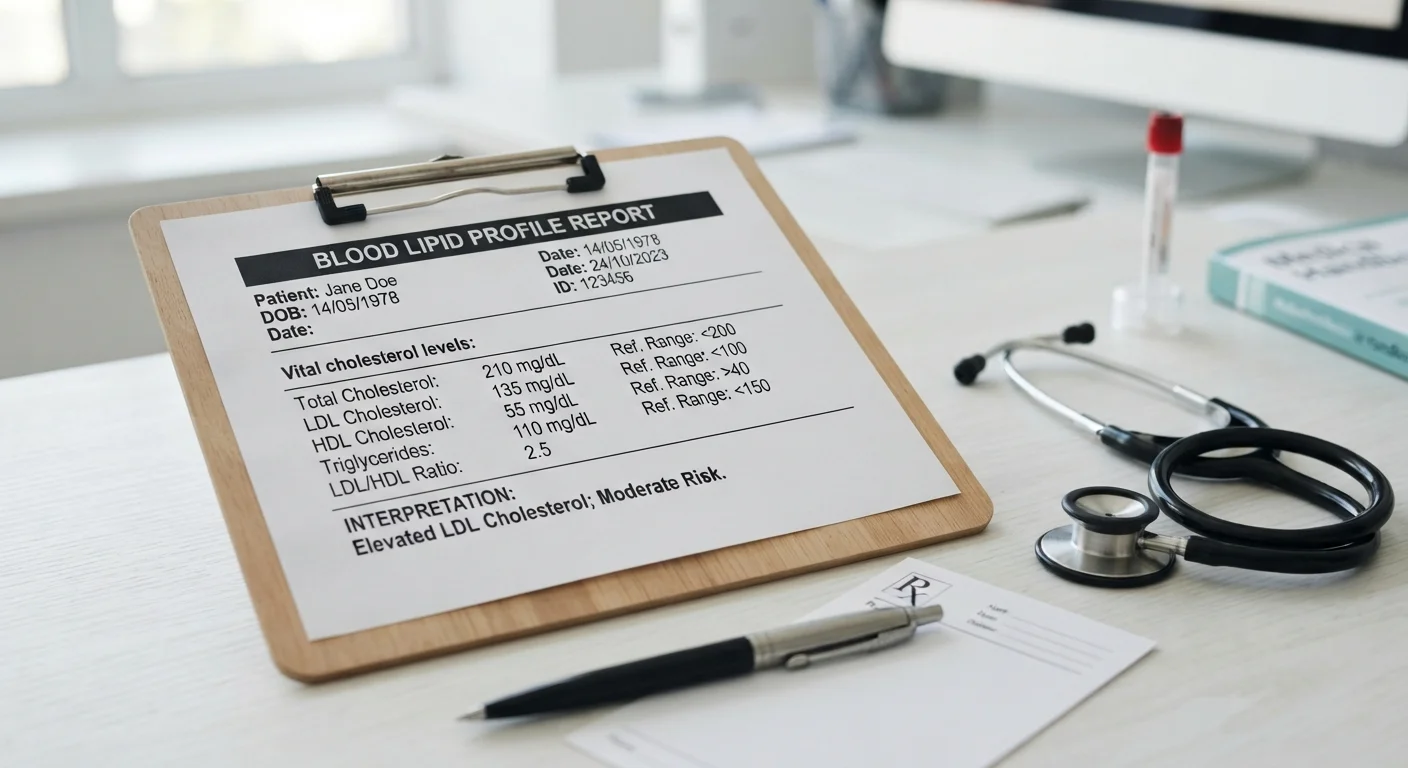
| Test Name | Lipid Panel (Lipid Profile) (American Heart Association) |
| Fasting Required | Usually 9–12 hours before blood draw (Most clinical guidelines; confirm with your provider) |
| Desirable Total Cholesterol | Less than 200 mg/dL (American Heart Association) |
| HDL Goal (Men) | 40 mg/dL or higher (American Heart Association) |
| HDL Goal (Women) | 50 mg/dL or higher (American Heart Association) |
| Normal Triglyceride Range | Below 150 mg/dL (fasting) (National Heart, Lung, and Blood Institute) |
What Is a Lipid Panel?
When a clinician orders a cholesterol test, they are typically requesting a lipid panel — a blood test that measures several types of fats circulating in your bloodstream. The four numbers you will usually see on the results are: total cholesterol, HDL cholesterol, LDL cholesterol, and triglycerides. Understanding what each figure represents is the first step toward having an informed conversation with your healthcare provider.
Cholesterol itself is a waxy, fat-like substance produced by the liver and also consumed through food. It is essential for building cell membranes and producing hormones — but the type and quantity of cholesterol in your blood matters considerably for cardiovascular health.
| Test Name | Lipid Panel (Lipid Profile) (American Heart Association) |
| Fasting Required | Usually 9–12 hours before blood draw (Most clinical guidelines; confirm with your provider) |
| Desirable Total Cholesterol | Less than 200 mg/dL (American Heart Association) |
| HDL Goal (Men) | 40 mg/dL or higher (American Heart Association) |
| HDL Goal (Women) | 50 mg/dL or higher (American Heart Association) |
| Normal Triglyceride Range | Below 150 mg/dL (fasting) (National Heart, Lung, and Blood Institute) |
HDL, LDL, and Triglycerides: What Each Number Means
HDL (High-Density Lipoprotein) is often called "good" cholesterol because it helps carry excess cholesterol back to the liver, where it can be processed and removed from the body. Higher HDL levels are generally associated with a lower risk of heart disease. Clinicians typically look for HDL levels of 40 mg/dL or higher in men and 50 mg/dL or higher in women, with levels above 60 mg/dL considered protective.
LDL (Low-Density Lipoprotein) is commonly referred to as "bad" cholesterol. When LDL levels are elevated, cholesterol can build up in artery walls, contributing to plaque formation — a process known as atherosclerosis. Most clinical guidelines suggest that lower LDL levels reduce cardiovascular risk, though target levels vary based on individual health history and risk factors. Your provider will set a goal appropriate for your situation.
Triglycerides are a separate type of blood fat, not cholesterol, but they appear on the same panel. The body converts excess calories — particularly from sugar and refined carbohydrates — into triglycerides stored in fat cells. High triglyceride levels are associated with increased cardiovascular risk, particularly when combined with low HDL or high LDL. A fasting triglyceride level below 150 mg/dL is generally considered within the normal range.
Just as decoding financial figures requires context — the way credit score ranges only make sense alongside lending criteria — cholesterol numbers need clinical context to be fully meaningful.
Lipoprotein
A particle made of fat and protein that carries cholesterol and triglycerides through the bloodstream. HDL and LDL are both types of lipoproteins.
Atherosclerosis
A condition in which fatty deposits, called plaques, build up inside artery walls and can restrict blood flow. Elevated LDL is a contributing factor.
Triglycerides
A type of fat found in the blood, distinct from cholesterol. The body stores excess calories as triglycerides and releases them for energy between meals.
Lipid Panel
A blood test that measures total cholesterol, HDL, LDL, and triglycerides. It provides a comprehensive snapshot of cardiovascular risk factors related to blood fats.
mg/dL
Milligrams per deciliter — the unit used in the United States to measure the concentration of substances such as cholesterol and triglycerides in blood.
How to Interpret Your Total Cholesterol
Total cholesterol is a combined measure of all cholesterol types in your blood, including HDL, LDL, and a portion of triglycerides. While it provides a broad snapshot, clinicians rarely rely on total cholesterol alone. A high total cholesterol reading driven by elevated HDL may carry a very different risk profile than the same number driven by high LDL.
86 million
US adults with high total cholesterol
According to the CDC, roughly 86 million American adults have total cholesterol levels above 200 mg/dL.
~55%
Adults with high LDL not on medication
The CDC estimates that only about half of adults with high LDL cholesterol are currently receiving treatment for it.
That context — understanding which components drive a number — is what makes the full lipid panel more informative than any single figure. Diet is one factor clinicians often discuss alongside results; knowing how to read a nutrition label can help you make more informed food choices as part of a broader strategy discussed with your provider.
This article is for general informational and educational purposes only and is not a substitute for professional medical advice, diagnosis, or treatment. Always consult a qualified healthcare provider about your cholesterol results and any health decisions.