

Key Takeaways
Reduces exposure to any single investment failing
When one asset declines sharply, gains or stability in others can offset some of that loss. This cushioning effect is the core argument for holding a mix of uncorrelated assets.
Smooths out portfolio volatility over time
A diversified portfolio tends to experience smaller peak-to-trough swings than a concentrated one, which can make it psychologically easier to stay invested during market downturns.
Captures growth across different market segments
Different asset classes, sectors, and regions tend to outperform at different times. Broad exposure means a portfolio may benefit from multiple sources of return rather than depending on one.
Accessible through simple, low-cost vehicles
Index funds and target-date funds provide broad diversification in a single product, making the strategy practical for investors who lack the time or expertise to build a complex portfolio manually.
Supports consistent long-term investing discipline
Because diversified portfolios typically decline less dramatically during downturns, investors may be less likely to panic-sell — a behavior that can permanently impair long-term results.
Cannot eliminate systemic or market-wide risk
When broad economic crises occur, most asset classes can fall simultaneously. Diversification provides no shield against events that affect the entire financial system.
May limit upside during strong bull markets
Holding assets that lag a surging market means a diversified portfolio often underperforms a concentrated one during extended rallies in a specific sector or asset class.
Over-diversification can dilute meaningful returns
Holding too many overlapping funds or assets can result in performance that merely mirrors average market returns at best, while adding unnecessary complexity and transaction costs.
Requires periodic rebalancing to remain effective
Over time, asset values drift and the original mix shifts. Without rebalancing — buying and selling to restore target allocations — a portfolio may become more concentrated in assets that have risen most.
Our Verdict
Diversification remains one of the most widely endorsed principles in personal finance because it addresses a fundamental reality: no single investment is reliably safe forever. Done thoughtfully, it can meaningfully reduce volatility without requiring expertise. The challenge is finding the right breadth — enough variety to protect against concentrated losses, but not so much that your portfolio becomes unmanageable or its returns are perpetually muted.
Diversification is most valuable for long-term investors who want steady, sustainable growth while limiting exposure to sharp, unpredictable losses in any one area.
What Diversification Actually Means
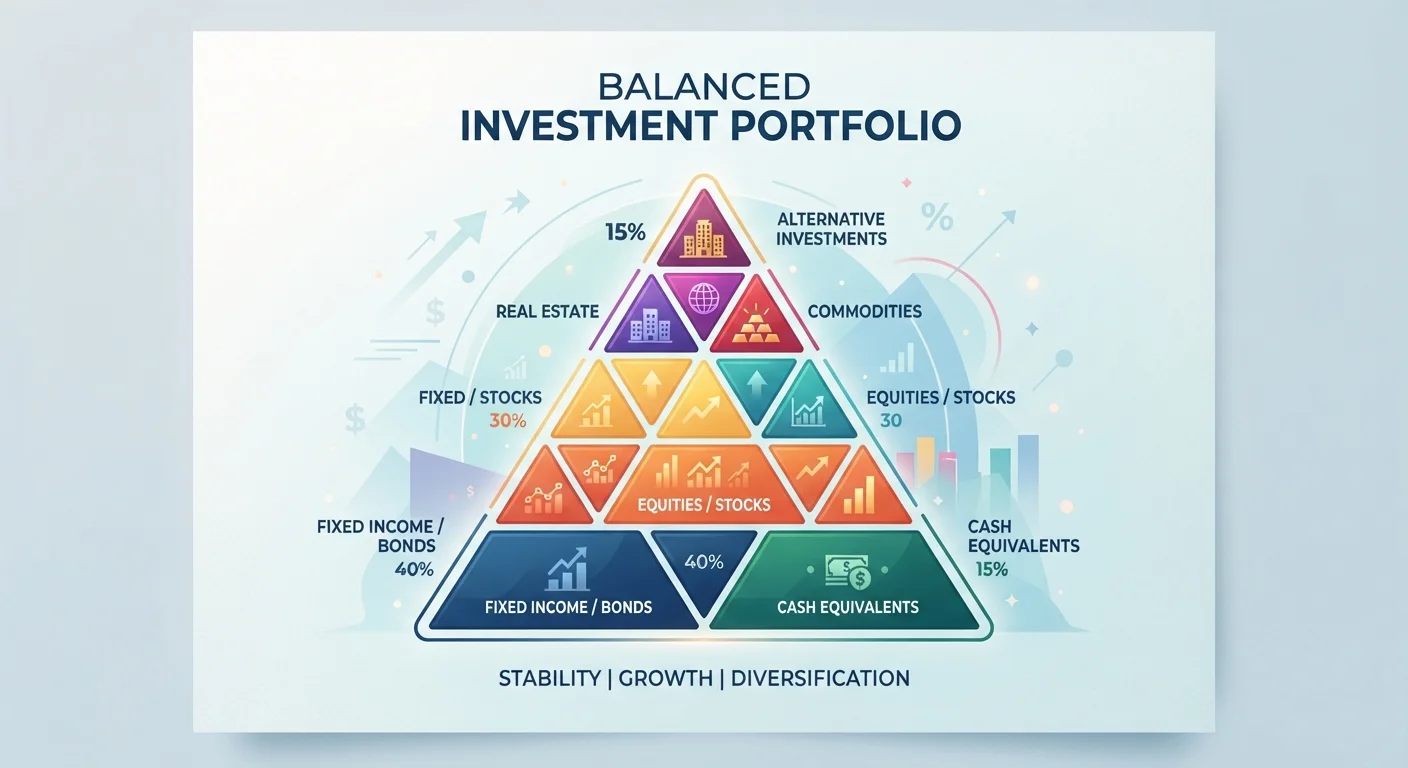
Diversification is the practice of spreading investments across different assets, sectors, and geographies so that a loss in one area does not devastate the whole portfolio. The underlying logic is straightforward: if two investments tend to move independently of each other, owning both reduces the chance that both fall sharply at the same time.
In practice, diversification can happen at several levels. Asset-class diversification means holding a mix of stocks, bonds, and potentially other categories such as real estate investment trusts (REITs). Sector diversification means not concentrating equity holdings in a single industry — for example, owning only technology stocks. Geographic diversification means including international as well as domestic holdings.
If you are new to investing, a foundational overview of investing concepts can help clarify the terminology before diving deeper into portfolio construction.
The Advantages of a Diversified Portfolio
The most direct benefit of diversification is concentration risk reduction. Investors who hold a large proportion of their wealth in a single stock, sector, or asset class are exposed to an outsized loss if that holding declines. Spreading capital across uncorrelated assets limits how much damage any single failure can cause.
Reduces exposure to any single investment failing
When one asset declines sharply, gains or stability in others can offset some of that loss. This cushioning effect is the core argument for holding a mix of uncorrelated assets.
Smooths out portfolio volatility over time
A diversified portfolio tends to experience smaller peak-to-trough swings than a concentrated one, which can make it psychologically easier to stay invested during market downturns.
Captures growth across different market segments
Different asset classes, sectors, and regions tend to outperform at different times. Broad exposure means a portfolio may benefit from multiple sources of return rather than depending on one.
Accessible through simple, low-cost vehicles
Index funds and target-date funds provide broad diversification in a single product, making the strategy practical for investors who lack the time or expertise to build a complex portfolio manually.
Supports consistent long-term investing discipline
Because diversified portfolios typically decline less dramatically during downturns, investors may be less likely to panic-sell — a behavior that can permanently impair long-term results.
Beyond protection, diversification also provides exposure to multiple growth engines. Asset classes rarely perform in lockstep — periods when domestic stocks surge may coincide with weaker returns in international equities or bonds, and vice versa. Holding a variety of assets can mean capturing returns from whichever segment is leading at a given time.
For many everyday investors, index funds offer a practical path to broad diversification without requiring active stock selection or deep market expertise.
The Disadvantages Worth Understanding
Diversification has real trade-offs that are worth acknowledging honestly.
Cannot eliminate systemic or market-wide risk
When broad economic crises occur, most asset classes can fall simultaneously. Diversification provides no shield against events that affect the entire financial system.
May limit upside during strong bull markets
Holding assets that lag a surging market means a diversified portfolio often underperforms a concentrated one during extended rallies in a specific sector or asset class.
Over-diversification can dilute meaningful returns
Holding too many overlapping funds or assets can result in performance that merely mirrors average market returns at best, while adding unnecessary complexity and transaction costs.
Requires periodic rebalancing to remain effective
Over time, asset values drift and the original mix shifts. Without rebalancing — buying and selling to restore target allocations — a portfolio may become more concentrated in assets that have risen most.
Perhaps the most important limitation is that diversification cannot protect against systemic risk — the risk that affects virtually all asset classes simultaneously. Major financial crises, for example, have shown that correlations between assets can increase sharply during periods of extreme stress, reducing the protective benefit precisely when it is most needed.
Investors should also be cautious of common portfolio mistakes, including building a portfolio so broad and complex that it becomes impossible to monitor or rebalance effectively.
Diversification Is Not a Guarantee
Diversification is a risk-management strategy, not a promise of profit or protection from loss. All investing involves risk, including the possible loss of principal. This article provides general educational information only and is not personalised financial or investment advice. Please consult a qualified, licensed financial adviser before making decisions about your own portfolio.
Building Diversification Without Overcomplicating Things
A well-diversified portfolio does not need to contain dozens of individual holdings. The goal is meaningful variety, not maximum quantity. Overlapping funds — for instance, multiple index funds tracking the same benchmark — add complexity without adding real diversification.
~30
Stocks needed to approach full diversification benefit
Finance researchers have long suggested that holding roughly 20–30 uncorrelated stocks captures most of the diversification benefit available within a single asset class.
60/40
Classic stock-to-bond portfolio ratio
The 60% stock, 40% bond allocation has historically been a common benchmark for balanced, diversified portfolios among moderate-risk investors in the US.
One practical starting point is to consider how your asset mix aligns with your time horizon and risk tolerance. Asset allocation typically shifts as investors age, with younger investors often holding more equities and those closer to retirement shifting toward more stable assets such as bonds.
Rebalancing — periodically restoring your portfolio to its intended allocation — is a necessary maintenance step that is often overlooked. Without it, a long bull market in stocks, for example, can leave a portfolio far more heavily weighted toward equities than originally intended.
Sound budgeting also supports a consistent investing habit. If you are building your financial foundation, exploring straightforward budgeting strategies can help free up funds to invest regularly.
This article is for general informational and educational purposes only and does not constitute personalised financial, investment, tax, or legal advice. All investing involves risk, including the possible loss of principal. Consult a qualified, licensed financial adviser before making decisions about your individual financial situation.