

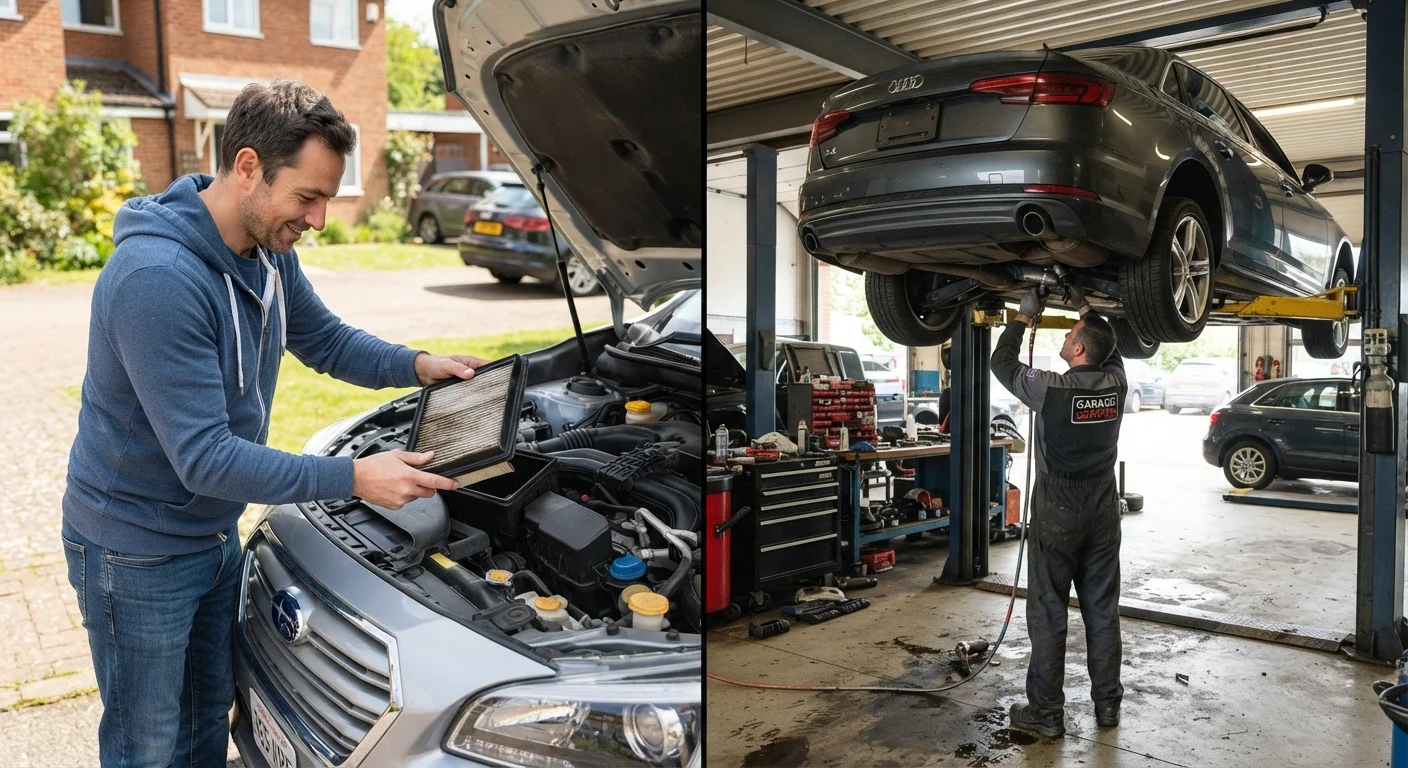
Key Takeaways
Our Verdict
DIY car care makes sense for straightforward, low-risk tasks that require only basic tools and no specialized training. For anything involving brakes, steering, suspension, fuel, or safety systems, a qualified mechanic has the tools, training, and diagnostic equipment to do the job safely. The dividing line is not cost - it's consequence.
| Best for | Recommended |
|---|---|
| Drivers comfortable with basic maintenance on non-safety-critical parts | DIY car care |
| Work involving brakes, airbags, suspension, or fuel systems | Professional mechanic |
| Owners without access to specialty tools or a vehicle lift | Professional mechanic |
The Real Standard: Safety Consequence, Not Difficulty
The question most car owners ask is, "Is this task hard?" The better question is, "What happens if I get it wrong?" Replacing wiper blades incorrectly means streaky glass. Installing brake calipers incorrectly can mean brake failure at highway speed. That distinction - consequence, not complexity - is the most reliable way to sort DIY tasks from professional jobs.
Understanding where your vehicle fits into this framework also depends on your skill level, available tools, and willingness to follow manufacturer specifications carefully. A task that's genuinely DIY-friendly for one person may be out of scope for another. See road safety guidance for broader context on keeping your vehicle roadworthy.
| DIY Car Care | Professional Mechanic | |
|---|---|---|
| Typical tasks | Filters, wipers, fluids, bulbs, battery cleaning | Brakes, suspension, airbags, fuel system, transmission |
| Tools required | Basic hand tools, owner's manual | Lifts, torque wrenches, diagnostic scanners, specialty tools |
| Skill level needed | Basic mechanical awareness | Trained technician with hands-on experience |
| Risk if done incorrectly | Minor inconvenience or cosmetic issue | Safety failure, vehicle damage, injury |
| Cost implication | Lower upfront cost for parts | Labor costs add up; skipping pros can cost far more later |
| When it makes sense | Non-safety-critical, accessible components | Any system affecting braking, steering, or occupant safety |
Tasks That Are Generally Safe to Do Yourself
The following jobs are widely considered appropriate for informed, careful car owners with basic tools. Always consult your owner's manual before starting any maintenance.
- Windshield wiper blades: Most designs clip or pin on without tools. Replacement takes under five minutes and the risk of error is minimal.
- Engine air filter and cabin air filter: Both are accessible on most vehicles without special tools. Dirty filters are easy to identify visually.
- Checking and topping off fluids: Coolant, washer fluid, and power steering fluid reservoirs are labeled under the hood. Oil checks require only a clean rag and reading a dipstick correctly.
- Replacing interior and exterior bulbs: Many turn signal and brake light bulbs can be swapped without removing bumpers, though some modern vehicles require more disassembly - check first.
- Battery terminal cleaning: Removing corrosion with a wire brush and baking soda solution is low-risk, provided the vehicle is off and you avoid shorting the terminals.
Staying current on these basics is one of the easiest ways to avoid larger problems. The annual car ownership checklist is a useful reference for timing these tasks throughout the year.
Always Cross-Check Your Owner's Manual
Even tasks labeled as simple can have model-specific steps that differ significantly from generic instructions found online. Your owner's manual is the authoritative source for fluid types, filter part numbers, and torque values for your specific vehicle. If you no longer have a physical copy, most manufacturers make digital versions available through their official websites.
Jobs That Belong in a Professional Shop
Some vehicle systems are engineered with tight tolerances, high pressures, or explosive components. Mistakes on these systems can fail silently - meaning you may not know something is wrong until a critical moment on the road.
- Brake pads, rotors, and calipers: While brake pad replacement appears straightforward, improper reassembly, incorrect torque on caliper bolts, or failure to compress the piston correctly can cause brake fade or sudden loss of stopping power.
- Suspension and steering components: Ball joints, tie rods, and control arm bushings require a vehicle lift and alignment equipment. Incorrect installation affects handling and tire wear in ways that may not be immediately detectable.
- Airbag and SRS system work: Supplemental Restraint System components can deploy without warning if handled incorrectly. Federal guidelines and manufacturer specifications universally recommend leaving this work to trained technicians.
- Fuel system repairs: Fuel injectors, fuel pumps, and fuel lines operate under pressure and involve flammable liquid. Without proper equipment and ventilation, this work presents a fire and health hazard.
- Transmission service: Fluid changes on some transmissions are DIY-accessible, but internal transmission work - valve bodies, solenoids, clutch packs - requires specialized diagnostic tools and expertise.
Skipping professional service on these systems can compound into major repair bills. Research and mechanics consistently show that deferred maintenance on critical systems costs significantly more over time.
Don't Rely on Feel Alone for Brake Work
A common mistake when doing brake work is judging completion by how the pedal feels in the driveway. Brake systems require proper bedding-in procedures and, in some cases, electronic resetting of the parking brake actuator on newer vehicles. If brake components are not installed to manufacturer torque specifications, failure may not occur immediately - making it especially dangerous. When in doubt, have any brake work inspected by a qualified mechanic before driving at speed.
Before Any Job: A Practical Checklist
Whether you're tackling a task yourself or preparing to hand it off, these steps apply universally:
- Consult your vehicle's owner's manual for model-specific procedures and torque specifications.
- Confirm you have the correct tools - not just close equivalents. Torque wrenches, for example, are not interchangeable with standard ratchets for critical fasteners.
- Research whether your specific model has known quirks for the task you're attempting. Online owner forums and manufacturer technical service bulletins (TSBs) are useful sources.
- If a task requires the vehicle to be raised, use rated jack stands - never rely solely on a hydraulic floor jack to support the vehicle while you work beneath it.
- Know when to stop. If you remove a component and find unexpected damage, corrosion, or unclear wiring, that is a signal to bring in a professional rather than improvise.
Before long trips, a quick pre-drive review using our pre-trip vehicle safety check can catch fluid, tire, and light issues before they become roadside problems.