

Key Takeaways
What the Monroney Sticker Is and Why It Exists
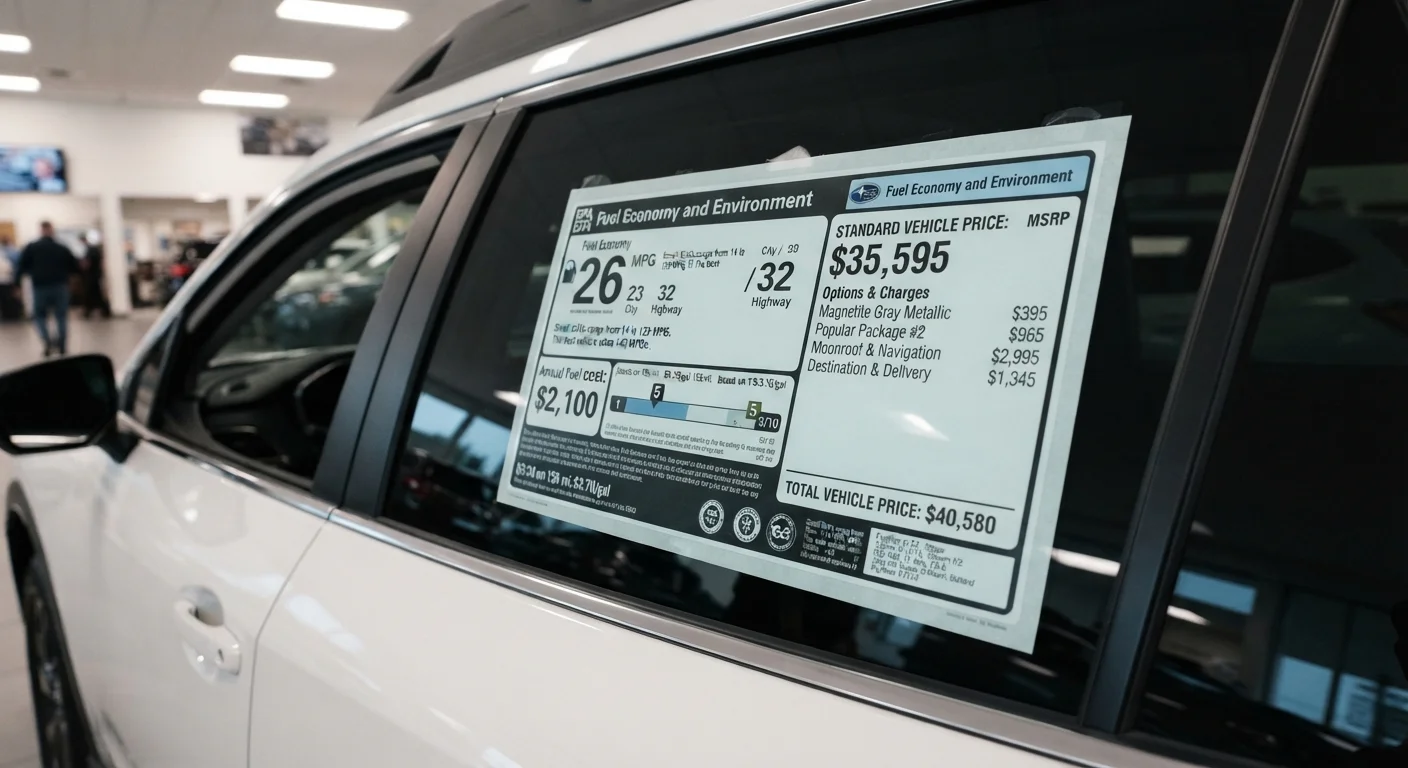
Every new passenger vehicle sold in the United States is required by the Automobile Information Disclosure Act to carry a Monroney sticker - a standardized label that gives buyers consistent, comparable information about the vehicle they are considering. The sticker covers five core areas: vehicle identification, fuel economy, safety ratings, standard and optional equipment, and pricing. Understanding how to read each section puts you in a much stronger position when you walk into a dealership.
The sticker is a manufacturer document, not a dealer document. That distinction matters: what you see on it is not a sales pitch - it is federally mandated disclosure. Think of it similarly to how a seller's disclosure form works in a real estate transaction - a structured document designed to surface key facts before you commit.
EPA Fuel Economy Guide (fueleconomy.gov)
Cross-reference the EPA fuel economy estimates on the sticker with official government data and real-world driver-reported figures.
NHTSA Safety Ratings Database (nhtsa.gov)
Look up the full crash-test results and safety ratings referenced on the sticker for deeper context.
Smartphone camera
Photograph the sticker for reference during price negotiation and after purchase.
How to Read the Sticker: Step by Step
The seven steps below walk you through the sticker from top to bottom. Each section serves a specific purpose, and knowing what to look for in each prevents both confusion at the dealership and unwelcome surprises after you sign.
What you will need
Locate and photograph the Monroney sticker
The Monroney sticker - named after the senator who championed the 1958 Automobile Information Disclosure Act - must be affixed to the side window of every new vehicle offered for sale in the US. It is typically on a rear side window. Do not remove it before purchase; federal law prohibits its removal by anyone other than the buyer.
Take a clear photo of the entire sticker before you start reviewing it so you can zoom in on specific sections later.
Read the vehicle identification section
The top section identifies the vehicle: make, model, trim level, model year, and the 17-character Vehicle Identification Number (VIN). Confirm these match what the salesperson described. The trim level determines which features come standard, so verifying it here prevents misunderstandings later. For background on how trim and model year updates affect what you get, see our guide on vehicle model years and what changes between them.
Review the fuel economy section
The center of the sticker prominently displays EPA-estimated city, highway, and combined fuel economy in miles per gallon (MPG) - or MPGe and range figures for electric and plug-in hybrid vehicles. A 5-year fuel cost estimate and a comparison against similar vehicles in the class are also shown.
These figures come from standardized EPA testing and represent estimates, not guarantees. Actual fuel economy varies based on driving habits, terrain, load, and weather conditions.
Examine the safety ratings
This section references federal safety standards the vehicle meets and may include crash-test ratings from the National Highway Traffic Safety Administration (NHTSA) and the Insurance Institute for Highway Safety (IIHS). Ratings are shown as star scores (NHTSA uses a 5-star scale) or descriptive grades. Not every new vehicle will have a complete set of ratings at the time of sale; some models are tested after they reach market.
Safety technology features - such as automatic emergency braking or lane-departure warning - may be listed here or in the standard equipment section below.
Parse the standard features and installed options
The lower portion of the sticker lists standard equipment included in the base trim, followed by any factory-installed options or packages added to this specific vehicle. Each package or option has an individual price. Add these figures together with the base MSRP to arrive at the total MSRP shown at the bottom.
Cross-reference this list against what the dealer verbally described. If a feature you were told is standard doesn't appear here, ask for written clarification.
Review the destination and handling charge
Near the bottom, below the options total, you will find the destination and delivery charge - a fixed fee set by the manufacturer to cover shipping the vehicle from the assembly plant to the dealership. This charge is non-negotiable and applies uniformly to all buyers regardless of how close the dealership is to the factory. It is part of the MSRP total but is listed separately for transparency.
Compare the total MSRP to the dealer's asking price
The bottom line of the Monroney sticker is the total MSRP, which is the sum of the base price, all installed options, and the destination charge. Use this as your negotiating baseline. Remember that taxes, title, registration, and dealer document fees are not included in the MSRP and will be added at the point of sale. For a broader picture of what to expect as a new owner, the guide Your First Car: Everything You Need to Know Before Driving Off the Lot covers post-purchase essentials including registration and insurance.
Dealer Add-On Stickers Are Not the Monroney
Some dealers place a second sticker next to the Monroney that lists dealer-installed accessories or "market adjustment" fees. These are not federally mandated disclosures - they represent additional dealer charges. Review both stickers carefully and ask for a full itemized breakdown before agreeing to any price.
The Sticker Price Is Not the Final Price
The Manufacturer's Suggested Retail Price (MSRP) on the Monroney sticker is a starting point, not a binding sale price. Dealers may sell above or below MSRP depending on market demand. Always clarify what the out-the-door price includes - taxes, destination charges, and dealer fees can add thousands of dollars to the sticker figure.
Save the Sticker for Future Reference
Photograph or scan the Monroney sticker before you drive away. The VIN, trim level, and options listed can be valuable when filing an insurance claim, researching resale value, or verifying what the previous owner paid. Keeping this record also makes it easier to understand how depreciation affects your vehicle's value over time.
Using Sticker Data to Make a More Informed Decision
The Monroney sticker is most useful when you treat it as a comparison tool, not just a price tag. When you are evaluating multiple vehicles, bring photos of each sticker and line up the fuel economy estimates, safety ratings, and included features side by side. A vehicle with a lower MSRP but higher five-year fuel cost estimate may end up costing more over time. Similarly, a lower trim without a particular safety package may carry a different NHTSA score than the higher trim version of the same model.
Understanding the sticker also sets a factual foundation for negotiating. You know exactly what you are paying for, which features are factory-installed versus dealer-added, and what the manufacturer considers the fair starting price. That knowledge is difficult for a salesperson to talk around.
For ongoing ownership context - including how the vehicle's value will change over time - our companion article on how vehicle depreciation works and why it matters is a practical next read. And once you've signed and driven off the lot, essential car ownership guidance can help you stay ahead of maintenance, insurance, and registration requirements.