

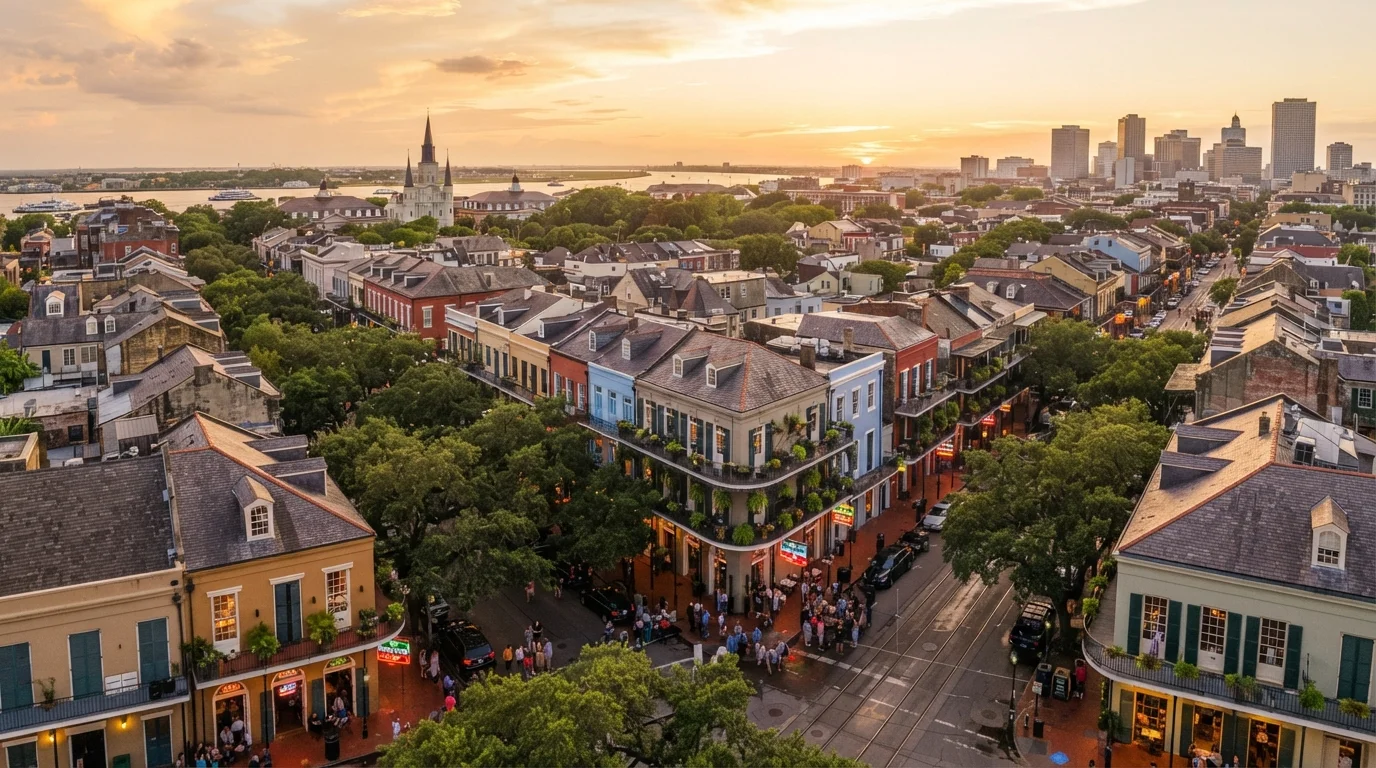
How New Orleans Is Laid Out
New Orleans sits in a crescent bend of the Mississippi River, which is why locals historically use "riverside" and "lakeside" rather than compass directions. The city's neighborhoods follow the river's curve, and understanding that basic geography prevents a lot of confusion for first-time visitors.
Most visitors arrive anchored to the French Quarter, but the city's distinct character lives just beyond it — in the residential blocks of the Garden District, the creative corridors of the Marigny, and the sprawling Uptown avenues. Each area has its own rhythm, price point, and relationship to tourism.
New Orleans is also one of those American cities that rewards deliberate exploration beyond the well-worn tourist path. If your travel interests run toward authentically layered urban destinations, it fits a category explored in our piece on US cities worth treating as real destinations.
Neighborhood by Neighborhood Breakdown
French Quarter
The oldest neighborhood in New Orleans and the most visited. Bourbon Street is loud and commercial; the surrounding streets — Royal, Chartres, Decatur — are considerably more layered, with antique shops, architecture dating to the 1700s, and quieter courtyards. Walking is the best way to navigate it. Noise and crowds are significant on weekends and during festivals.
Marigny and Bywater
Directly downriver from the Quarter, the Marigny is a historically Creole neighborhood now known for its music clubs along Frenchmen Street, colorful shotgun houses, and a younger artistic community. Bywater sits adjacent and skews even more residential and local-feeling. Both neighborhoods are walkable from the Quarter and offer a contrast in atmosphere.
Central Business District (CBD) and Warehouse Arts District
The CBD is New Orleans' commercial downtown. The adjacent Warehouse District has repositioned itself around galleries, restaurants, and several of the city's major museums, including the National WWII Museum. Hotels here tend toward larger convention-style properties.
Garden District and Uptown
The Garden District is lined with antebellum mansions and mature live oaks. It's a residential neighborhood best experienced on foot or via the St. Charles Avenue streetcar, one of the oldest continuously operating street railways in the world. Uptown extends further along St. Charles toward Tulane and Loyola universities, with a neighborhood commercial strip on Magazine Street.
Mid-City
Mid-City sits between downtown and the lake and is largely residential. It's home to City Park — a sprawling green space with museums, botanical gardens, and sculpture — and the local institution of Parkway Bakery for po-boys. Visitors who make it here generally find a quieter, less performative version of local life.
Shotgun House
A narrow, single-story home style common throughout New Orleans, where rooms are arranged in a straight line from front to back with no hallway. The name refers to the idea that a shot fired through the front door would exit the back.
Creole
In New Orleans context, Creole refers to the city's historical population of French, Spanish, African, and Caribbean descent, as well as the distinct architecture, cuisine, and culture they developed. The term has complex and layered meanings locally.
Lakeside / Riverside
Directional terms used by New Orleans residents instead of north and south, oriented toward Lake Pontchartrain (lakeside) or the Mississippi River (riverside). The river's curve makes traditional compass directions confusing.
Po-Boy
A New Orleans sandwich served on French bread, typically filled with fried seafood or roast beef. It's a local staple and widely considered a defining food of the city's culinary culture.
Practical Considerations by Area
Getting between neighborhoods requires planning. The French Quarter, Marigny, and Bywater are walkable from each other. The St. Charles streetcar connects the CBD to the Garden District and Uptown reliably. Mid-City and Tremé are best reached by rideshare or bicycle.
Verify Current Conditions Before You Travel
Neighborhood conditions, transit schedules, and safety advisories in New Orleans can shift seasonally and around major events like Mardi Gras or Jazz Fest. Always check current guidance from official city sources and your accommodation before finalizing plans. Travel conditions described here reflect general, durable patterns rather than real-time status.
Flooding history varies by neighborhood and is worth understanding. Areas closer to the lake historically experienced more severe flooding during major storms. Visitors don't need to act on this information, but it provides useful context for understanding the city's ongoing infrastructure and resilience conversations.
Accommodation costs and noise levels differ considerably by area. The French Quarter commands premium pricing and significant nighttime noise. The Garden District and Uptown offer quieter, residential-adjacent options. The Marigny sits somewhere between the two on both counts.
Street safety follows general urban patterns — well-trafficked tourist corridors are heavily monitored, while some residential streets warrant the same awareness you'd apply in any major city. Asking hotel staff for current, specific guidance is always a reasonable step before exploring unfamiliar blocks after dark.