

Key Takeaways
Option A
Homeowners Insurance
The foundational safeguard against catastrophic loss.
Best for: Homeowners who need protection against sudden, accidental damage from weather, fire, theft, or liability claims.
Option B
Home Warranty
The budget buffer for predictable system and appliance breakdowns.
Best for: Owners who want to limit out-of-pocket costs when heating systems, appliances, or plumbing fail due to normal wear and tear.
If you are buying a home and your lender requires coverage
Homeowners Insurance
Homeowners insurance is a standard mortgage requirement and protects against structural damage, fire, theft, and personal liability — all of which lenders need secured.
If you own an older home with aging HVAC, plumbing, or appliances
Home Warranty
A home warranty can offset the cost of repairing or replacing systems that are past their manufacturer's warranty and prone to wear-related failure.
If you want comprehensive protection as a new homeowner
Homeowners Insurance
Homeowners insurance is the non-negotiable baseline. A home warranty can complement it once the essentials are in place.
If you recently bought a home with a seller-offered warranty
Home Warranty
Sellers sometimes include a one-year home warranty as part of the transaction. Evaluate whether renewal makes financial sense once it expires.
The Core Distinction: What Each Product Actually Protects
Many homeowners assume these two products overlap — or worse, that one makes the other unnecessary. They do not. Homeowners insurance and home warranties are built to address fundamentally different risks, and conflating them can leave real gaps in your financial protection.
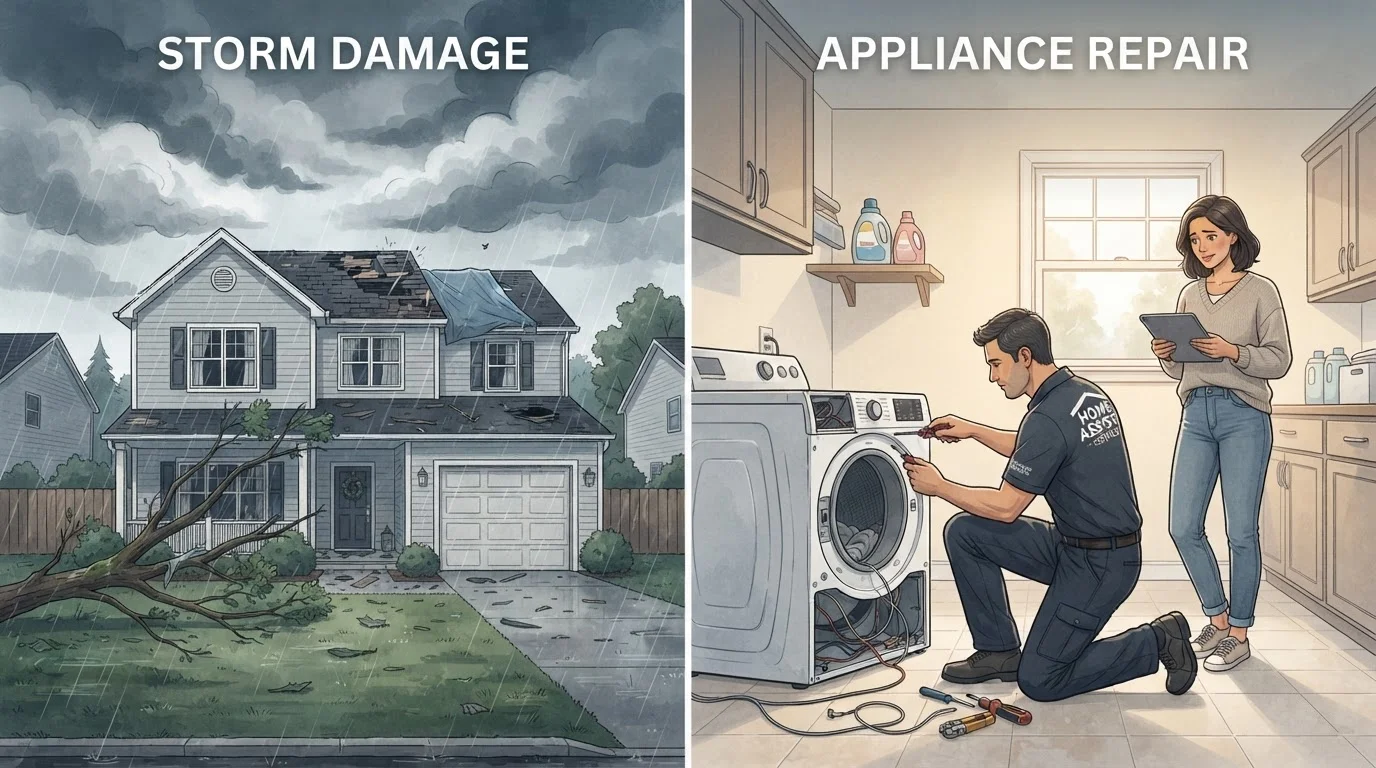
Homeowners insurance is designed to cover sudden, unexpected events — a fire, a windstorm, a burst pipe caused by freezing temperatures, or a liability claim after a guest is injured on your property. It protects the structure of your home and, typically, your personal belongings. For a fuller picture of what standard policies include and exclude, see what homeowners insurance covers and doesn't.
A home warranty, by contrast, is a service contract — not an insurance policy in the regulatory sense. It covers the repair or replacement of home systems and appliances that break down due to normal wear and tear. Think: your HVAC unit failing after years of use, a water heater giving out, or a dishwasher motor wearing down. These are exactly the scenarios homeowners insurance will not pay for.
| Criterion | Homeowners Insurance | Home Warranty |
|---|---|---|
| What it covers | Structural damage, personal property, liability | System and appliance mechanical breakdowns |
| Cause of loss covered | Sudden, accidental events (fire, storm, theft) | Normal wear and tear over time |
| Required by lenders | Yes — mandatory with a mortgage | No — entirely optional |
| Typical annual cost | $1,000–$2,000+ depending on location | $300–$700 per year |
| Out-of-pocket at claim | Deductible (agreed at policy start) | Service call fee per visit ($75–$150) |
| Contractor choice | Generally flexible | Warranty company assigns its own contractors |
| Regulated as insurance | Yes — state-regulated insurance product | No — a service contract, not an insurance policy |
Cost, Structure, and How Claims Work
Homeowners insurance is typically paid as an annual premium, often escrowed into your monthly mortgage payment. According to the National Association of Insurance Commissioners (NAIC), the average annual premium in the US has generally ranged between $1,000 and $2,000, though this varies considerably by location, home value, and coverage level. When you file a claim, you pay a deductible — a fixed amount you agreed to at policy inception — before insurance covers the rest.
Home warranties are also billed annually, with plans generally running between $300 and $700 per year depending on scope. The key difference: every time a covered system fails and you call for service, you pay a service call fee (sometimes called a trade call fee), typically ranging from $75 to $150. The warranty company then dispatches a contractor they have vetted. You do not choose the contractor. This is a meaningful distinction for homeowners who prefer to use their own trusted vendors.
$1,000–$2,000+
Typical US annual homeowners insurance premium
According to the National Association of Insurance Commissioners, premiums vary widely by state, home value, and coverage selections.
$300–$700
Typical annual home warranty plan cost
Basic plans covering major appliances only tend toward the lower end; comprehensive system-plus-appliance plans cost more.
$75–$150
Service call fee per home warranty visit
This fee is paid each time a technician is dispatched, regardless of whether the repair is ultimately covered.
Before purchasing a home warranty, reading the fine print carefully is essential. Coverage caps — limits on how much the company will pay per item per year — are common. Some contracts exclude pre-existing conditions or require proof of proper maintenance. Common exclusions may include cosmetic damage, improper installation, or code upgrades required during repair. For more on how extended service contracts can fall short of expectations, see what owners often get wrong about extended warranties.
When You Need One, the Other, or Both
If you have a mortgage, homeowners insurance is not optional — your lender will require it as a condition of the loan. It is also simply prudent: the financial exposure from a house fire or major liability claim far exceeds what most households could absorb out of pocket. Common misconceptions about what standard policies cover are worth addressing early; common homeowners insurance myths is a useful reference before you shop or renew.
A home warranty is discretionary. It tends to offer the most value when:
- You are buying an older home where systems and appliances are mid-life or older.
- You have limited cash reserves for unexpected repair bills.
- A seller has offered to include one as part of the sale negotiation.
Owning both products means you have addressed two distinct categories of risk: catastrophic or accidental loss (insurance) and mechanical deterioration over time (warranty). They do not duplicate each other. For homebuyers thinking through the full range of ownership costs, our homebuying guidance covers what to budget for at closing and beyond.
Neither Product Covers Everything
Standard homeowners insurance typically excludes flood and earthquake damage — those require separate policies. Home warranties, meanwhile, generally exclude pre-existing conditions, improper installation, and cosmetic issues. Always read both documents carefully before assuming a loss is covered. If you rent rather than own, a different product applies entirely — see what renters insurance covers and doesn't.
This article is for general informational purposes only and does not constitute insurance, financial, or legal advice. Coverage terms, costs, and exclusions vary by insurer, warranty provider, and state. Consult a licensed insurance agent or financial professional before making decisions specific to your situation.