

Key Takeaways
Autoimmune Disease
An autoimmune disease is a condition in which the body's immune system — normally responsible for fighting off viruses and bacteria — mistakenly attacks healthy cells and tissues. Instead of protecting the body, the immune response causes inflammation and damage to organs or systems. There are more than 80 recognized autoimmune diseases, ranging from rheumatoid arthritis to multiple sclerosis.
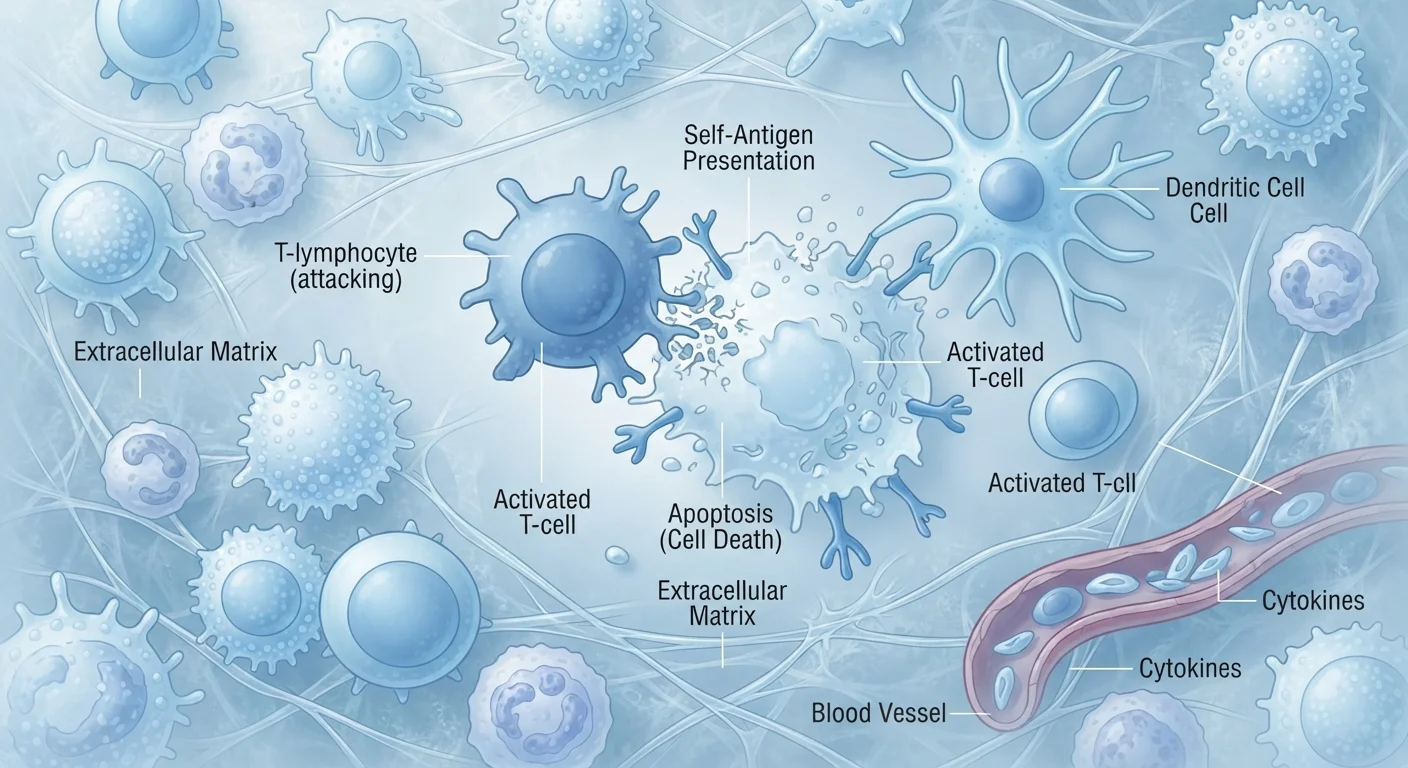
In autoimmune conditions, the immune system fails to distinguish between self-antigens (proteins on the body's own cells) and foreign antigens, triggering an inappropriate immune response that can be systemic or organ-specific.
How the Immune System Normally Works
The immune system is a complex network of cells, tissues, and proteins that defends the body against harmful invaders like bacteria, viruses, and parasites. Central to this system is its ability to distinguish between self — the body's own cells — and non-self, meaning foreign substances called antigens.
When a genuine threat is detected, immune cells such as T-cells and B-cells mount a targeted response: producing antibodies, triggering inflammation at the site of infection, and clearing out damaged tissue. Once the threat is neutralized, the response is supposed to wind down.
In autoimmune disease, this carefully regulated system breaks down. The immune system loses its ability to accurately distinguish self from non-self, and begins treating the body's own healthy tissue as a target.
The Immune System Is Not Simply 'Overactive'
A common misconception is that autoimmune disease means the immune system is universally too strong. In reality, it is misdirected rather than uniformly overactive — it may be entirely normal in fighting real infections while simultaneously attacking healthy tissue. This distinction matters for how treatments are designed and why suppressing the immune system entirely is not a straightforward solution.
The Core Mechanism Behind Autoimmune Conditions
Regardless of which organ or system is affected, most autoimmune diseases share the same fundamental problem: the immune system produces autoantibodies — antibodies directed against the body's own proteins — or activates T-cells that attack healthy tissue.
This misdirected immune activity causes chronic inflammation, which over time damages the targeted tissues. The location and nature of that damage determines what disease a person develops and which symptoms they experience.
Autoimmune diseases are broadly categorized into two types:
- Systemic autoimmune diseases affect multiple organs or systems simultaneously. Lupus (SLE) is a well-known example, potentially involving the skin, kidneys, joints, and heart.
- Organ-specific autoimmune diseases are confined to one target. Type 1 diabetes, for instance, involves immune destruction of insulin-producing cells in the pancreas only.
80+
Recognized autoimmune diseases worldwide
According to the National Institutes of Health, more than 80 distinct autoimmune diseases have been identified, with some estimates placing the number higher.
~24M
Americans estimated to have an autoimmune disease
The American Autoimmune Related Diseases Association estimates that approximately 24 million Americans are affected by autoimmune conditions.
2x
Higher diagnosis rate in women than men
Research consistently shows women are diagnosed with autoimmune diseases at roughly twice the rate of men, a disparity thought to involve hormonal and immunological differences.
Common Autoimmune Diseases and How They Differ
While all autoimmune diseases share a core mechanism, their clinical presentations vary dramatically. Here is a brief overview of several widely recognized conditions:
- Rheumatoid Arthritis (RA): Targets the joints, causing pain, swelling, and eventual deformity. Unlike osteoarthritis, RA is driven by immune activity rather than wear and tear.
- Multiple Sclerosis (MS): The immune system attacks myelin, the protective sheath around nerve fibers, disrupting signals between the brain and body. Symptoms include muscle weakness, coordination problems, and fatigue.
- Hashimoto's Thyroiditis: Immune cells gradually destroy the thyroid gland, leading to hypothyroidism and symptoms such as weight gain, fatigue, and cold intolerance.
- Inflammatory Bowel Disease (IBD): Includes Crohn's disease and ulcerative colitis, both driven by immune-mediated inflammation in the digestive tract.
- Psoriasis: An accelerated immune response causes skin cells to multiply too quickly, resulting in scaly patches on the skin.
Diagnosis, Treatment, and Living With Autoimmune Disease
Diagnosing autoimmune disease can be challenging. Many conditions share overlapping symptoms — fatigue, joint pain, and rashes are common across multiple diagnoses — and standard blood markers are not always definitive. Patients may see several specialists before receiving a clear diagnosis.
Treatment is tailored to the specific disease and its severity, but common approaches include:
- Immunosuppressants to reduce the overall activity of the immune system
- Corticosteroids (such as prednisone) to manage acute inflammation flares
- Biologics, which are targeted therapies blocking specific immune pathways
- Disease-modifying antirheumatic drugs (DMARDs), used especially in RA and similar conditions
Managing lifestyle factors — including stress, sleep, and diet — may also support overall wellbeing, though these do not replace medical treatment. Anyone experiencing persistent, unexplained symptoms should consult a qualified healthcare professional for evaluation.
Keep a Symptom Journal Before Appointments
Because autoimmune symptoms can be episodic and varied, tracking them over time is genuinely useful. Note when symptoms appear, their severity, and any potential triggers such as stress, illness, or dietary changes. This record can help clinicians identify patterns and reach a diagnosis more efficiently.
This article is for general informational purposes only and does not constitute medical advice. Always consult a licensed healthcare professional for diagnosis, treatment, or questions about a specific health condition.