
Key Takeaways
Progressive Overload
Progressive overload is the practice of gradually increasing the demands placed on your muscles over time so they continue to grow stronger and more capable. When your body adapts to a given level of exercise stress, progress slows — adding more challenge forces continued adaptation. This principle applies to strength training, cardio, and virtually every other form of structured exercise.
At the cellular level, progressive overload stimulates mechanotransduction — the process by which mechanical stress on muscle fibers triggers protein synthesis and structural remodeling via pathways such as mTOR signaling.
Why Your Body Stops Responding to the Same Workout
If you have ever followed a workout routine for a few months and noticed your results slowly stalling, you have experienced what exercise scientists call adaptation. Your body is remarkably efficient — when exposed to a physical challenge repeatedly, it rebuilds itself to handle that challenge with less effort. That is a biological success story, but it is also why doing the exact same workout indefinitely stops producing change.
This is where progressive overload comes in. The principle holds that for continued improvement — whether in muscle size, strength, endurance, or general fitness — the training stimulus must increase over time. The stress has to stay slightly ahead of what your body has already mastered.
To understand how different exercise types drive adaptation, it helps to know that the underlying mechanism is the same: a demand is placed on the body, the body recovers, and it rebuilds slightly stronger to handle that demand more easily next time. Remove the escalating demand and the rebuilding slows dramatically.
Overload Is Not the Same as Overtraining
Progressive overload is about applying a manageable increase in training stress — not maximizing effort every session. Overtraining occurs when cumulative stress repeatedly exceeds the body's capacity to recover, leading to fatigue, performance decline, and increased injury risk. Incremental increases paired with adequate rest keep you in the productive adaptation zone.
The Biology of Muscle Adaptation
When you perform resistance exercise, you create microscopic damage to muscle fibers. During the recovery period that follows, the body repairs those fibers and adds contractile proteins — primarily actin and myosin — making the tissue denser and stronger. This process, known as muscle protein synthesis, is the engine behind strength and hypertrophy (muscle growth).
For protein synthesis to remain elevated and for growth to continue, the mechanical tension on the muscle must periodically increase. Research consistently shows that muscles trained at the same load plateau in their hypertrophic response after a period of adaptation, typically within a few weeks to a few months depending on the individual.
“The body will only adapt to the stresses placed upon it. Without progressive overload, training becomes maintenance at best and regression at worst.”
— Brad Schoenfeld, Exercise scientist and researcher specializing in muscle hypertrophy
Crucially, this process depends on adequate recovery time. Rest days are not optional extras — they are when adaptation actually occurs. Overload without recovery leads to accumulated fatigue and, eventually, overtraining rather than growth.
Practical Ways to Apply Progressive Overload
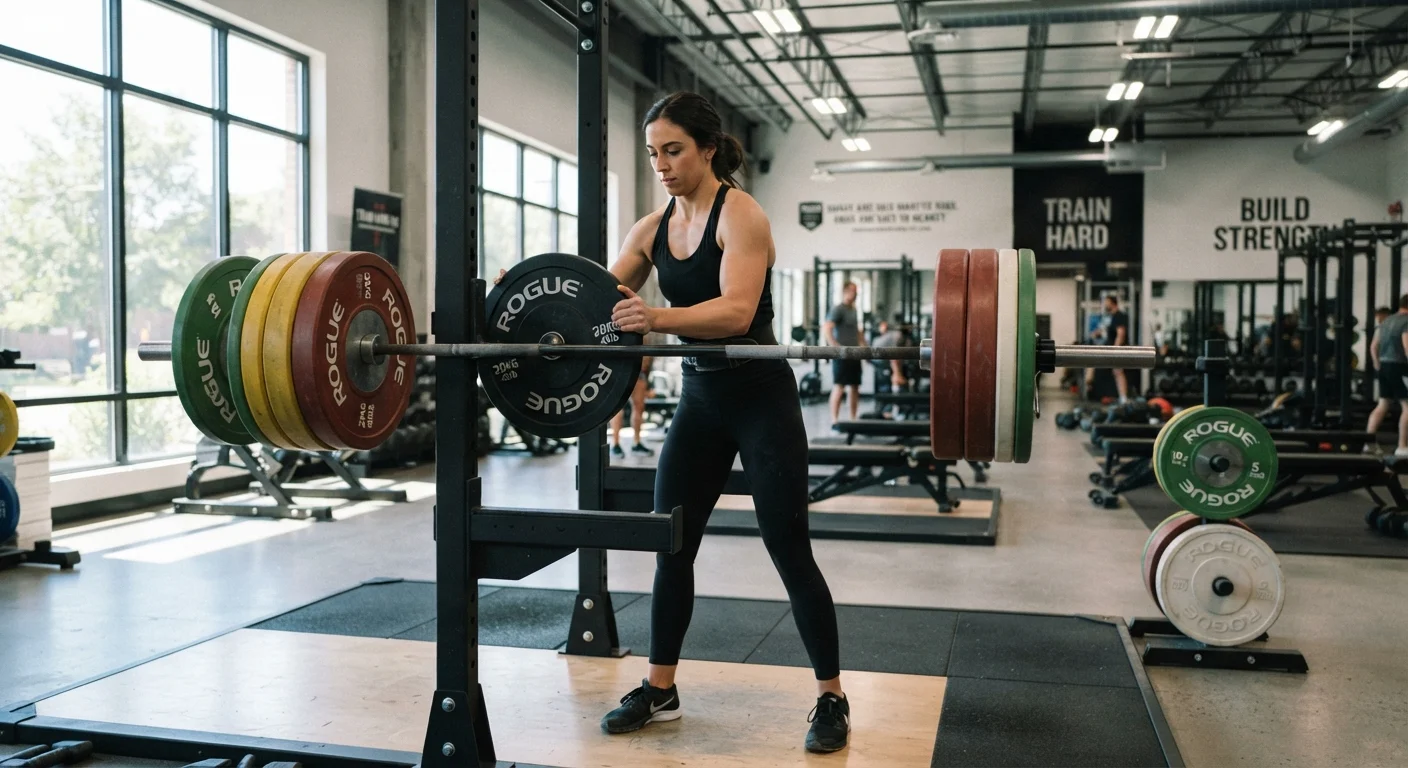
Progressive overload is not synonymous with simply lifting heavier weights each session. There are several variables you can manipulate:
- Load (weight): The most familiar method — gradually increasing the resistance used.
- Volume (sets × reps): Performing more total work at the same load, such as moving from two sets to three.
- Frequency: Training a muscle group more often per week than before.
- Rest intervals: Reducing rest periods increases metabolic demand without adding weight.
- Exercise complexity: Progressing from a machine exercise to a free-weight variation or adding a balance component.
- Range of motion: Performing movements through a fuller range as mobility improves, increasing the effective stimulus.
Small, consistent increases — often as little as 2.5 to 5 pounds on a lift, or one additional repetition — accumulate substantially over months and years. This measured approach also significantly reduces injury risk compared to aggressive load jumps.
~2.5–5 lbs
Typical weekly load increase for beginner lifters
Exercise science guidelines commonly recommend increases of 2.5 to 5 pounds per session or per week for new trainees on major lifts, to balance adaptation with injury prevention.
6–8 weeks
Approximate time before initial beginner adaptation slows
Research published in sports medicine literature suggests the initial rapid strength gains in beginners — driven largely by neural adaptation — begin to plateau within roughly 6 to 8 weeks without progressive challenge.
~1–2%
Annual muscle mass loss without resistance training after age 30
According to data cited by the National Institutes of Health, adults can lose roughly 1 to 2 percent of muscle mass per year after the age of 30, underscoring the importance of ongoing progressive resistance exercise.
It is equally important to avoid the common misconception that more is always better. Many fitness myths revolve around extremes — progressive overload is grounded in gradual, sustainable challenge, not maximum effort every single session.
Making Progressive Overload a Long-Term Practice
The most effective fitness programs are built on consistency over intensity. Progressive overload works best when embedded in a structured routine you can sustain — not in a month-long push followed by burnout. Building an exercise habit that you maintain for years produces far greater cumulative adaptation than sporadic peaks of high effort.
Tracking your workouts — even informally, in a notebook or a simple app — allows you to see progress objectively and identify when it is time to add challenge. If you have been performing the same weights and reps without difficulty for two or more consecutive sessions, that is generally a signal your body is ready for the next increment.
For adults over 40, the principle remains highly applicable, though recovery between sessions may take longer and load increases may be more conservative. Strength training in midlife and beyond carries particular importance for preserving muscle mass and bone density, and progressive overload is central to that benefit.
Track Your Workouts to Guide Progression
Keeping a simple log of the weights, sets, and reps you perform each session takes less than two minutes but makes progressive overload far easier to apply. When you can see that you have completed the same workout comfortably for two consecutive sessions, you have a clear, objective signal that it is time to add a small increment of challenge.
This article is for general informational purposes only and does not constitute medical or personal fitness advice. Consult a qualified healthcare provider or certified fitness professional before starting or significantly changing an exercise program, especially if you have existing health conditions or injuries.