

Key Takeaways
Credit Utilization
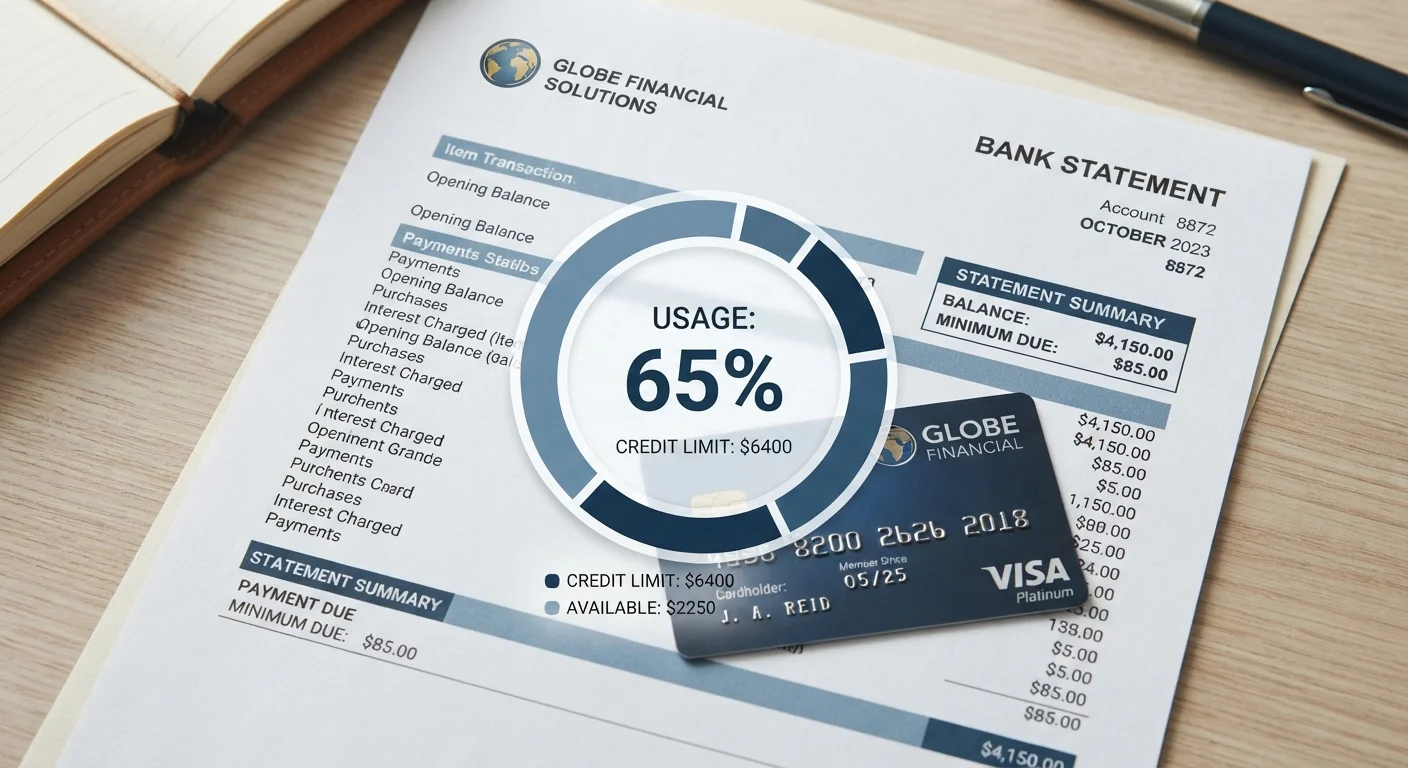
Credit utilization is the percentage of your available revolving credit that you are currently using. It is calculated by dividing your total credit card balances by your total credit limits. For example, if you have a $2,000 balance across cards with a combined $10,000 limit, your utilization is 20%. Most major credit scoring models treat this as the second most important factor in your score, after payment history.
Scoring models typically measure utilization both in aggregate (all cards combined) and per individual card. A high balance on a single card can hurt your score even if your overall utilization is low.
How Utilization Is Calculated
Credit utilization applies exclusively to revolving credit-primarily credit cards and lines of credit. Installment loans like mortgages or auto loans are not factored into the utilization calculation, even though they appear on your credit report.
The math is straightforward:
- Overall utilization: Total balances ÷ Total credit limits across all revolving accounts
- Per-card utilization: Individual card balance ÷ That card's credit limit
Both ratios are evaluated separately in most major scoring models. A card that is maxed out can drag your score down even if all your other cards have zero balances. This makes managing individual accounts just as important as managing your aggregate balance.
30%
Commonly cited utilization caution threshold
Credit scoring educators widely reference 30% as the point beyond which utilization begins to have a more meaningful negative impact on scores.
~30%
Weight of amounts owed in FICO scoring
FICO's publicly disclosed scoring breakdown attributes approximately 30% of a score to the 'amounts owed' category, of which credit utilization is the primary driver.
Under 10%
Utilization range of highest scorers
Analysis of consumers in top credit score ranges consistently shows average revolving utilization in the single digits, according to credit bureau data.
The Thresholds That Actually Matter
No scoring model publishes an exact cutoff, but patterns in credit score data reveal useful benchmarks:
- Under 10%: Associated with the highest scoring ranges. This does not mean you need to carry no balance; it means keeping balances low relative to limits.
- 10%-29%: Generally considered a responsible range and unlikely to significantly hurt a strong score.
- 30%-49%: The point where scoring impact often becomes more noticeable. Many lenders also use 30% as an informal benchmark when reviewing applications.
- 50% and above: Increasingly negative impact, especially per-card. A maxed-out card signals potential financial stress to scoring algorithms.
It is worth noting that 0% utilization-meaning no reported balance at all-can also be slightly less favorable in some models than a very low balance, because it provides less data about active, responsible use of credit.
Check Your Per-Card Utilization Too
Many consumers focus only on their overall utilization ratio and miss that a single maxed-out card can drag down their score independently. Review each card's balance-to-limit ratio separately, not just the combined figure. Targeting the highest per-card utilization first is often the most efficient approach when paying down balances.
Why the Billing Cycle Timing Matters
Most consumers assume that paying their credit card in full each month produces a 0% utilization. In practice, the balance your card issuer reports to the credit bureaus is typically your statement closing balance, not the balance after you make your payment.
This means someone who spends $2,500 on a card with a $5,000 limit and pays in full will still show 50% utilization for that billing cycle-even though they owe nothing once the payment clears. If reported utilization is a concern, paying down the balance before the statement closing date results in a lower figure being reported.
Understanding this timing is part of managing credit responsibly over the long term, where consistent attention to reporting cycles pays off cumulatively.
Practical Ways to Reduce Utilization
If your utilization is higher than you'd like, there are several general approaches worth understanding-though what works best will depend on your specific financial situation:
- Pay down balances: The most direct method. Even partial paydowns reduce the ratio.
- Request a credit limit increase: If your income and account history support it, a higher limit lowers the ratio mathematically. Be aware this may involve a hard credit inquiry.
- Spread charges across cards: Rather than concentrating spending on one card, distributing balances can prevent any single card from reaching a high per-card utilization ratio.
- Time your payments: Paying before your statement closing date, rather than after your due date, can lower the balance that gets reported.
Some habits that seem harmless can quietly undermine these efforts. See credit behaviors that quietly drag down your score for a broader look at patterns that matter.
For a full overview of how utilization fits alongside payment history, account age, and other factors, the full picture on credit scores and reports provides useful context.
This article is for general informational and educational purposes only and does not constitute personalized financial or credit advice. Consult a licensed financial professional for guidance specific to your situation.