

Key Takeaways
Our Verdict
No single work arrangement is universally better. Remote work maximizes flexibility and autonomy for experienced, self-directed professionals; hybrid balances structure with independence for those who want both; and on-site remains strongest for roles requiring real-time collaboration or early-career development. The right choice depends on your field, career stage, and personal priorities.
| Best for | Recommended |
|---|---|
| Experienced professionals prioritizing flexibility and autonomy | Remote |
| Workers who want structured collaboration with some schedule control | Hybrid |
| Early-career professionals building skills and networks quickly | On-Site |
| Those navigating a career change into a new industry or role type | Hybrid or On-Site |
What These Three Arrangements Actually Look Like Day-to-Day
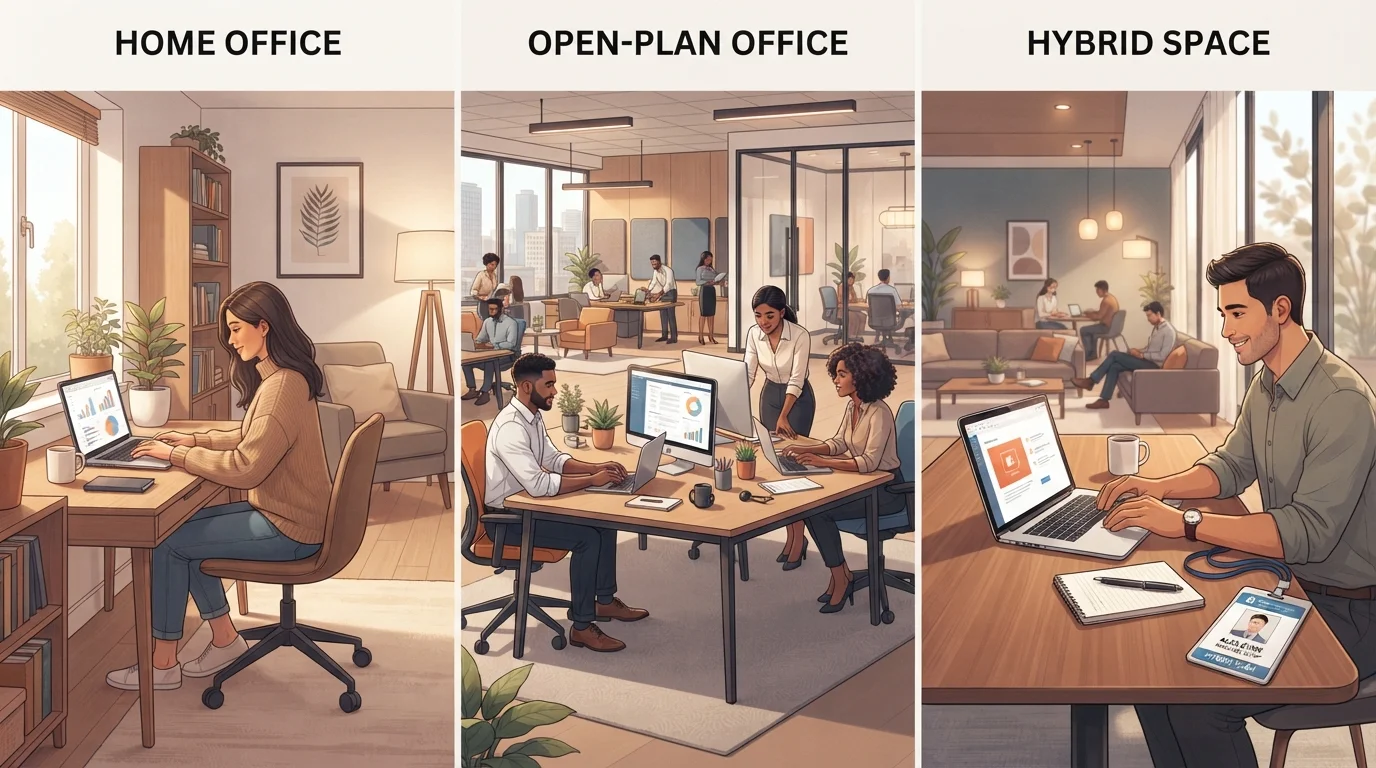
Remote means you work entirely outside a company office - typically from home, a co-working space, or anywhere with reliable internet. Your employer expects output, not physical presence. Communication happens through email, chat tools, and video calls.
Hybrid is less standardized than it sounds. Some hybrid roles require three days on-site weekly; others ask for one day per month. Before accepting any hybrid offer, ask the hiring manager for the specific schedule in writing - "flexible" and "hybrid" are often used loosely in job postings.
On-site (also called in-office or in-person) means you report to a physical workplace for most or all of your working hours. This can mean a traditional 9-to-5 in an office, a shift at a hospital, or daily presence at a retail or manufacturing facility.
Understanding these differences clearly is part of broader career development literacy that helps you evaluate opportunities more sharply.
How Each Arrangement Affects Career Growth
Work location shapes more than your commute - it influences visibility, mentorship access, and how quickly you develop professionally.
Remote
Remote workers face a documented proximity bias: managers tend to think of in-person colleagues first for high-profile projects and promotions. This doesn't make remote work a career dead-end, but it does require deliberate effort. Remote professionals who schedule regular check-ins, document accomplishments clearly, and stay vocal in team meetings generally offset this disadvantage.
Hybrid
Hybrid roles often represent a practical middle ground. On-site days can be used strategically - for relationship-building, attending key meetings, or catching informal conversations that don't happen over Slack. The challenge is that hybrid schedules are sometimes reduced over time without formal notice, so it's worth periodically confirming that the arrangement still matches what was agreed.
On-Site
Early-career professionals in particular tend to develop faster in on-site environments. Informal hallway conversations, spontaneous feedback loops, and close observation of senior colleagues are difficult to replicate digitally. On-site roles also make it easier to find a mentor or sponsor organically.
| Remote | Hybrid | On-Site | |
|---|---|---|---|
| Schedule flexibility | Highest - often fully asynchronous | Moderate - split between home and office | Lowest - set hours, fixed location |
| Commute burden | None | Partial - on designated days | Full - daily commute required |
| Visibility to leadership | Lower - requires active effort | Moderate - in-person days help | Highest - daily physical presence |
| Informal learning & mentorship | Limited - must be structured | Moderate - available on-site days | Strongest - organic and frequent |
| Early-career suitability | Challenging without proactive effort | Good with structured on-site time | Best for rapid skill building |
| Work-life boundary difficulty | High - harder to switch off | Moderate - varies by schedule | Lower - clear start/end times |
Trade-Offs to Weigh Before You Decide
Each arrangement involves real compromises. Here's what to think through honestly:
- Commute and cost: On-site roles add commuting time and expense. Remote roles may come with home-office costs - equipment, faster internet, or co-working memberships - that aren't always reimbursed.
- Work-life boundary management: Remote workers often report difficulty switching off. On-site workers may struggle with rigid hours. Hybrid can help, but only if the schedule is genuinely consistent.
- Collaboration style: If your work depends heavily on real-time, cross-functional brainstorming, remote arrangements require more structured communication. See our guide on collaboration vs. independent work for a deeper look at matching your style to your environment.
- Career stage: If you're changing careers or entering a new field, on-site or hybrid roles make it easier to absorb institutional knowledge quickly.
Negotiate the Details Before You Accept
Work arrangement terms are often negotiable, especially for hybrid roles. If a posting says three days on-site but you need two, raise it during the offer stage - not after you start. Many employers have more flexibility than their initial posting suggests, particularly for experienced candidates. Get any agreed schedule documented in your offer letter or onboarding paperwork.
If you're currently job searching while employed, clarifying a prospective employer's actual flexibility expectations - not just the job title's label - should be one of your first-round interview questions.
Questions to Ask Before Accepting Any Offer
The label on a job posting rarely tells the full story. Use these questions to get specifics:
- For hybrid roles: How many days on-site are required, and who sets the schedule - the team, the manager, or company policy?
- For remote roles: Is the role remote-first (built for distributed teams) or remote-allowed (an office-centric culture permitting exceptions)? The distinction matters for your day-to-day experience.
- For all roles: How does the team typically communicate - synchronously or asynchronously? What tools are standard?
- Are there in-person requirements for certain periods, such as onboarding, quarterly reviews, or client meetings?
- Has this arrangement changed in the past year, and what would trigger a change in the future?
Getting clear answers positions you to make a confident decision - and sets realistic expectations on both sides before you sign anything. Work arrangement is a meaningful factor in long-term job satisfaction, so treat it with the same seriousness as compensation and employment type.