

Key Takeaways
What a Maintenance Log Actually Is
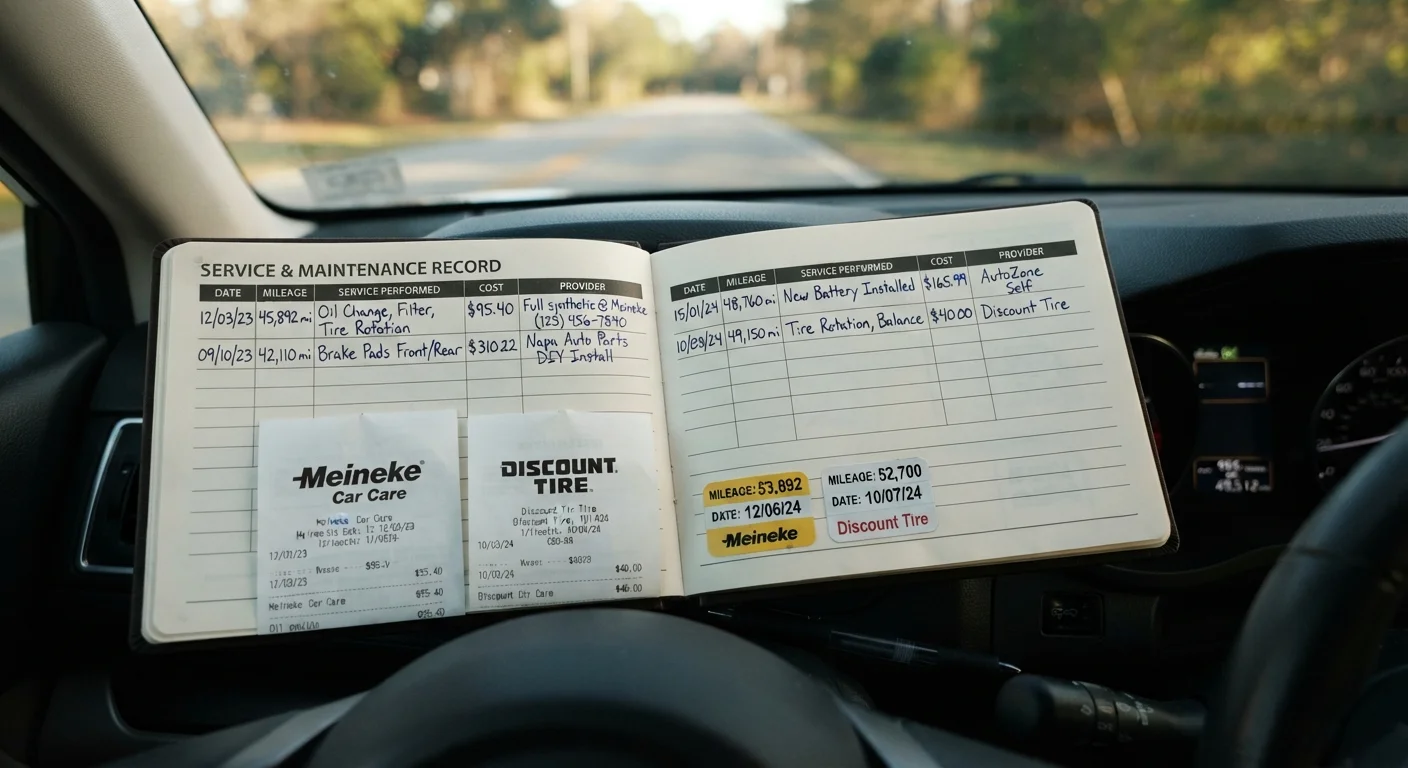
A maintenance log is a running record of every service, repair, and inspection performed on your vehicle. It captures what was done, when it was done, the mileage at the time, what it cost, and who performed the work. It is not complicated to create, but many owners never bother - and that gap often shows up at the negotiating table.
Think of it as a paper trail that speaks for the car when you are no longer there to explain its history. A buyer examining two otherwise similar vehicles will naturally gravitate toward the one that comes with documented evidence of care. As routine maintenance directly affects long-term vehicle health, proof that you kept up with it carries real weight.
Best Practices for Keeping a Reliable Log
The format you choose matters far less than your commitment to updating it regularly. Here are the practices that make a maintenance log genuinely useful.
Record every service event at the time it happens, not weeks later.
Memory fades quickly and gaps in a log raise buyer suspicion. Real-time entries ensure accuracy and completeness, which are the two qualities that make a log credible to a third party.
Keep physical receipts alongside your written entries.
Receipts serve as independent verification. A buyer can cross-reference your log entries against actual invoices, which eliminates doubt about whether the work was performed as described.
Include mileage for every entry, not just dates.
Mileage-based records help buyers calculate service intervals and gauge whether upcoming maintenance is due soon. Date-only entries are far less informative and harder to verify.
Log repairs and unscheduled work, not just routine services.
Buyers care about what has gone wrong as much as what has been maintained. Transparent documentation of repairs - including the diagnosis and fix - demonstrates that problems were addressed properly rather than ignored.
Use a consistent format so records are easy to scan at a glance.
A disorganized log is almost as unhelpful as no log. Buyers and dealers reviewing your history during a short inspection need to extract information quickly. A predictable structure makes that possible.
Quick Wins to Start Your Log Today
You do not need a full history to begin. Starting now - even mid-ownership - still delivers value to a future buyer and helps you stay on top of upcoming service needs. See also: annual car ownership tasks most drivers forget for a helpful complement to your logging routine.
Starting Late Is Still Worth It
If your vehicle is several years old and you have no records, do not assume a log is pointless. A partial history - especially one that covers the most recent years - still signals active ownership and care. Buyers understand that older records are not always recoverable. What they appreciate is seeing that you started tracking at some point and maintained the habit.
How a Log Pays Off at Sale Time
When you list your vehicle - privately or through a dealer trade-in - a complete maintenance log can reduce friction, support your asking price, and shorten the time it takes to close a deal. Buyers and dealers frequently negotiate harder when a car's history is opaque. Documented records shift that dynamic.
Up to $500+
Potential private-sale premium for documented service history
Industry observers and used-car analysts have noted that well-documented vehicles frequently command higher private-sale prices, though amounts vary by vehicle type, market, and buyer.
1 in 3
Used-car buyers who cite service history as a top purchasing factor
Consumer surveys conducted by automotive research organizations consistently rank documented maintenance history among the most influential factors in private used-car purchase decisions.
Beyond the financial angle, a log also demonstrates honesty. It shows the buyer you tracked problems as they arose and addressed them - rather than hoping they would go unnoticed. That transparency tends to accelerate buyer decisions. Pair your log with habits that extend vehicle life and you present a compelling ownership story.
This article is for general informational purposes only and does not constitute financial or legal advice. Vehicle resale values depend on many factors beyond maintenance history. Consult a qualified professional for guidance specific to your situation.